Best AI Tools for Personalized Learning Paths in 2026
Compare the best AI tools for personalized learning paths in 2026 — for L&D teams, educators, K-12, and self-learners. Real features, honest verdicts.
- AI tools for personalized learning paths adapt content delivery based on individual learner pace, gaps, and goals — not just raw scores.
- LearningStudioAI and CourseAI are the fastest picks for L&D teams that need to build and deploy adaptive courses quickly.
- Synthesis Tutor leads for K-12 and problem-based learning, using collaborative AI challenges that genuinely differentiate by skill level.
- LearnWorlds and Paradiso LMS are the go-to platforms for organizations that need a full LMS with built-in AI personalization at scale.
- Open-source option OpenEduCat gives full control but requires technical resources to deploy and maintain.
- Pricing ranges from open-source (free) to tiered SaaS subscriptions — the right model depends on learner volume and team size.
If you're an educator, L&D manager, or course creator trying to move beyond one-size-fits-all eLearning, AI-powered personalized learning path tools are the clearest upgrade available in 2026. The best options — including LearningStudioAI, Synthesis Tutor, and LearnWorlds — don't just serve content; they dynamically adjust what each learner sees based on what they already know, how fast they're progressing, and where they're struggling. This guide breaks down eight real tools, what each genuinely does well, and who should use which one.
What Are AI-Powered Personalized Learning Paths?
A personalized learning path is a dynamically ordered sequence of content, exercises, and assessments that adapts to a specific learner's current knowledge state. Unlike static eLearning modules — where everyone watches the same videos in the same order — AI-personalized systems assess what a learner already knows, skip what they've mastered, and focus effort on genuine gaps.
In practice, this happens through several mechanisms: pre-assessments that gate content entry points, ongoing performance data that reorders modules, spaced repetition algorithms that resurface forgotten material, and generative AI that creates custom explanations or exercises on demand. The result is faster skill acquisition and better retention — both critical for L&D budgets and for learners under time pressure.
The category spans a wide spectrum: purpose-built AI tutors for K-12 students, course creation tools for educators building from scratch, full enterprise LMS platforms with AI layered on top, and open-source frameworks for technical teams. The right tool depends entirely on your use case, not on which has the most impressive product demo.
Which AI Tools Build the Best Personalized Learning Paths in 2026?
Here is a quick overview of the eight tools in this guide, their primary positioning, and their ideal audience:
| Tool | Best For | Primary User | AI Approach |
|---|---|---|---|
| LearningStudioAI | Fast AI course creation + adaptive delivery | L&D teams, corporate trainers | AI-generated curriculum + adaptive sequencing |
| CourseAI | Course creators building AI-structured content | Solopreneurs, educators, creators | Generative AI course builder |
| Synthesis Tutor | K-12 adaptive problem-solving | Students aged 6–14, parents, schools | Collaborative AI challenges, game-like adaptive |
| Tutor AI | On-demand personalized tutoring | Self-learners, students | Conversational AI tutor with topic guidance |
| eSkilled AI Course Creator | SME-to-course rapid development | L&D specialists, training departments | AI drafts full courses from subject matter input |
| OpenEduCat | Open-source LMS with extensibility | Universities, institutions with dev teams | Modular open-source, full LMS customization |
| LearnWorlds | Full online school with AI tools | Course businesses, academies | AI assistant, adaptive assessments, page builder |
| Paradiso LMS | Enterprise LMS with AI personalization | Large organizations, HR/L&D | AI-powered recommendation engine, gamification |
How Do These Tools Compare on Core Features?
The table below compares each tool on the features that matter most for building and delivering truly adaptive learning experiences:
| Feature | LearningStudioAI | CourseAI | Synthesis Tutor | Tutor AI | eSkilled AI Course Creator | OpenEduCat | LearnWorlds | Paradiso LMS |
|---|---|---|---|---|---|---|---|---|
| AI course generation | Yes | Yes | No | No | Yes | No | Partial | No |
| Adaptive content sequencing | Yes | Partial | Yes | Yes | Partial | Via plugins | Yes | Yes |
| Pre-assessment / diagnostics | Yes | No | Yes | Partial | Partial | Yes | Yes | Yes |
| Conversational AI tutor | No | No | No | Yes | No | No | Partial | No |
| SCORM / LMS integration | Yes | Partial | No | No | Yes | Yes | Yes | Yes |
| White-label / branding | Partial | Yes | No | No | Yes | Yes | Yes | Yes |
| Open-source / self-hosted | No | No | No | No | No | Yes | No | No |
| Gamification | Partial | No | Yes | No | No | Yes | Yes | Yes |
| Analytics / reporting | Yes | Partial | Partial | No | Partial | Yes | Yes | Yes |
The trade-off to understand: some tools focus on creation speed (generating course content efficiently), while others focus on delivery-time adaptation (personalizing the experience while the learner is actively engaged). LearningStudioAI and eSkilled AI Course Creator lean toward creation speed; Synthesis Tutor and Paradiso LMS lean toward delivery-time personalization. LearnWorlds covers both as a full platform.
What Does Each Tool Actually Do — And Who Is It Really For?
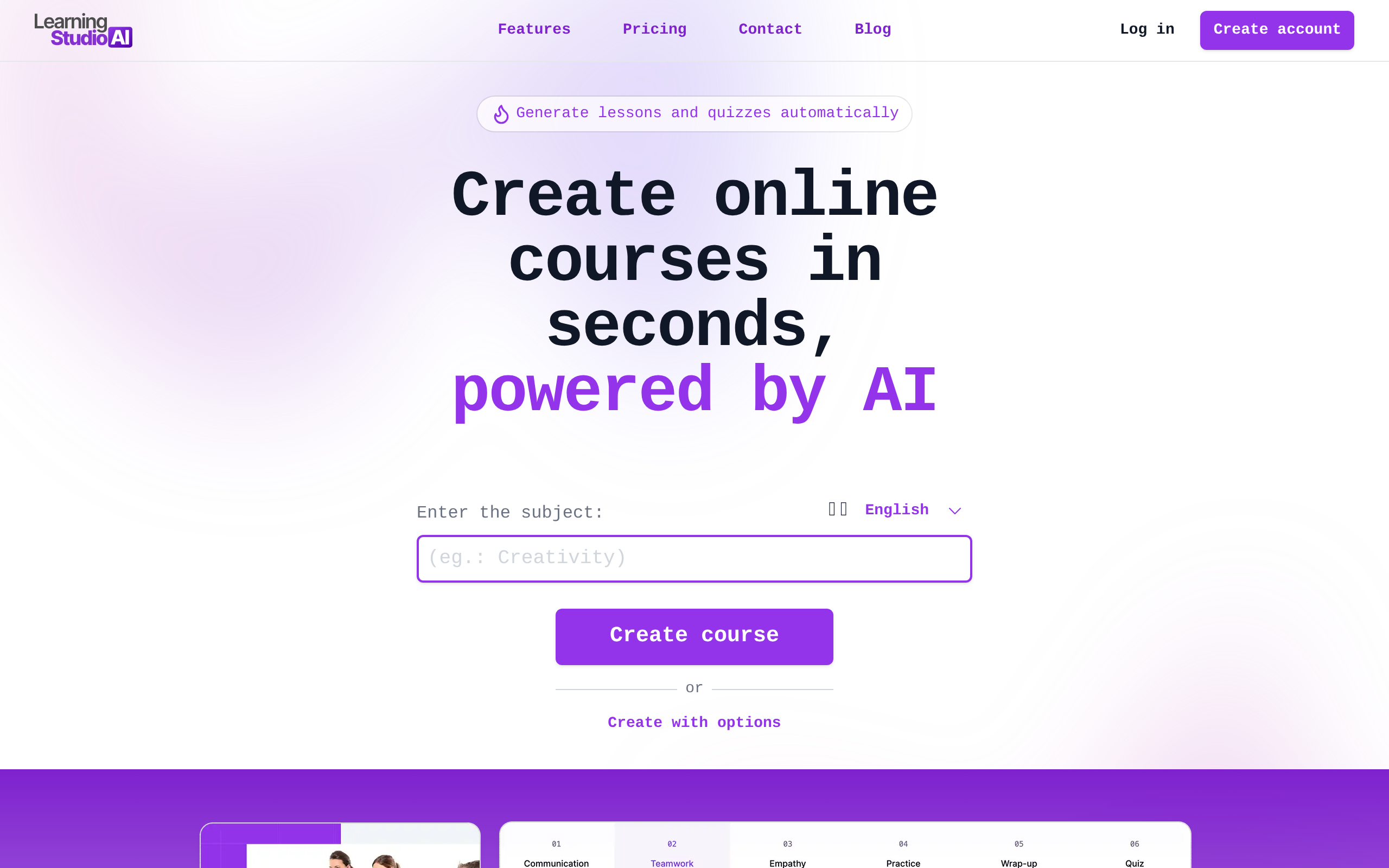
LearningStudioAI is built for teams that need to turn an SME's knowledge or an existing document into a structured, adaptive course fast. The AI drafts the curriculum, generates quiz questions, and sequences content intelligently. It's genuinely useful for corporate L&D departments that need to ship training at scale without a full instructional design team on every project. The adaptive layer adjusts content difficulty based on quiz performance, so learners who already know the basics get fast-tracked rather than sat through material they don't need.
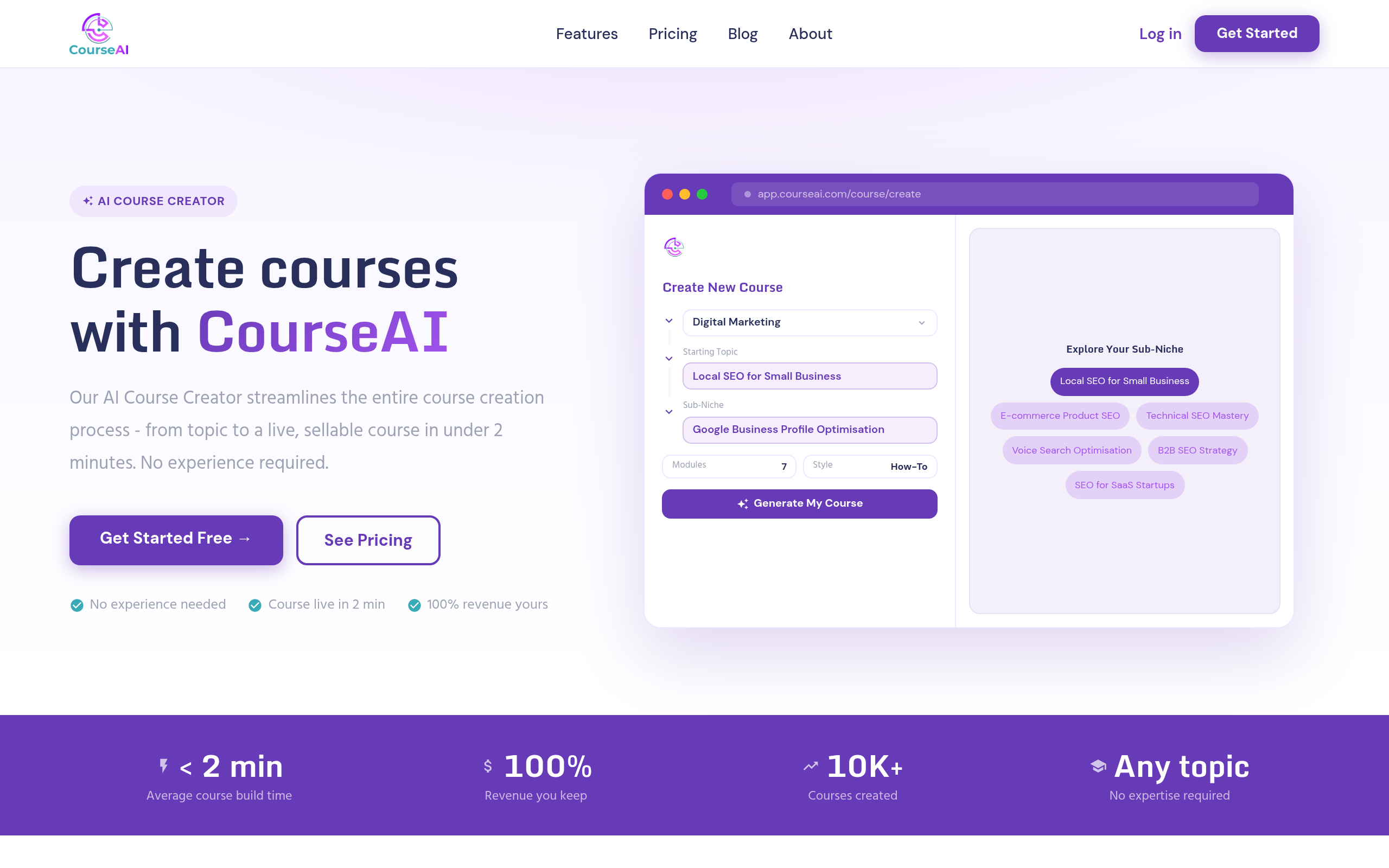
CourseAI is more creator-focused — think solopreneurs or educators building a paid course to sell. The AI helps structure the outline, write module content, and assemble a full course shell. The personalization is lighter than dedicated adaptive platforms, but it's an excellent starting point for educators who need a finished course product quickly. It pairs well with hosting platforms if you need to sell and deliver to your own audience.
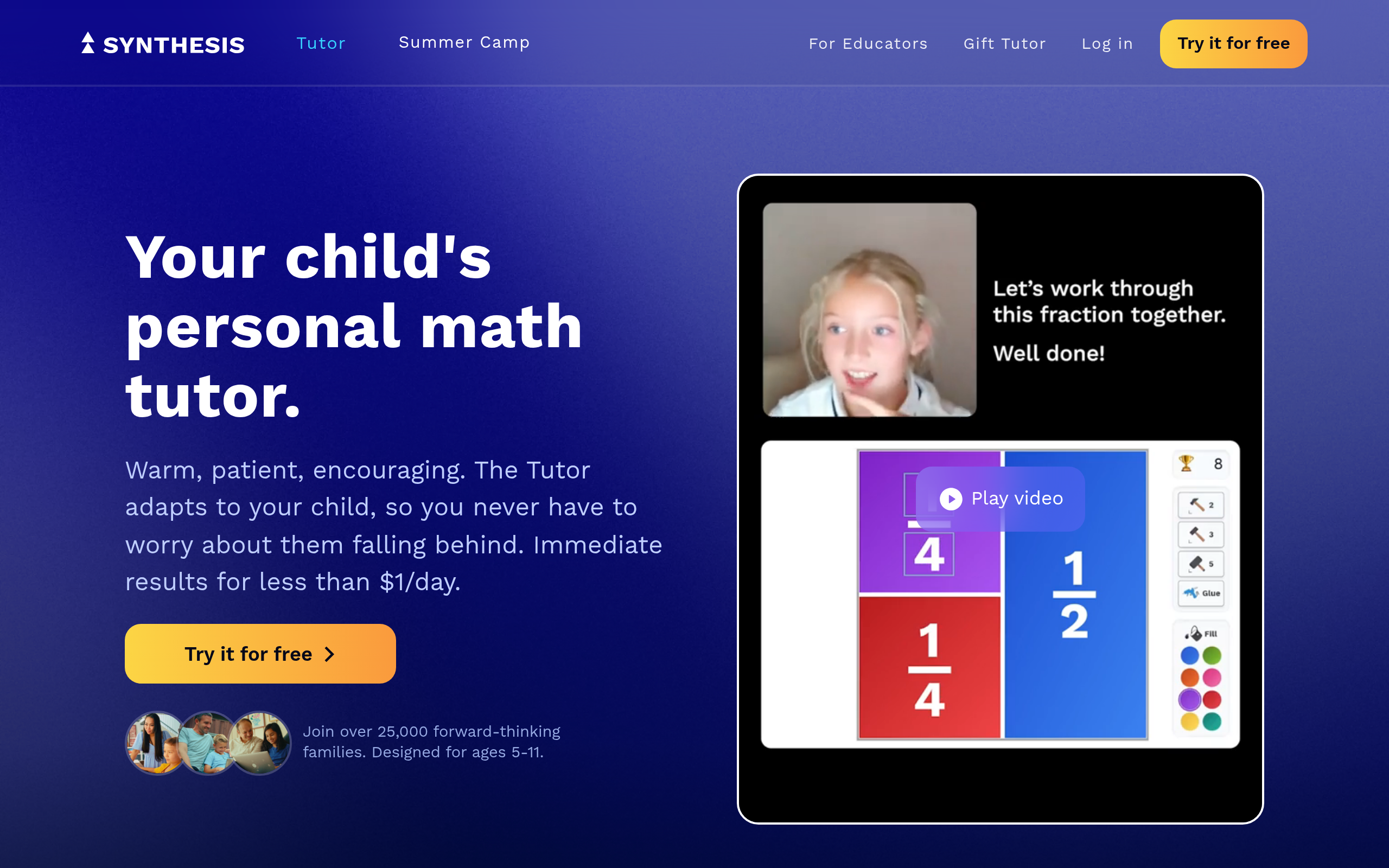
Synthesis Tutor stands out in the K-12 space with its collaborative, game-like approach. Students don't just answer questions — they work through multiplayer challenges where the AI adjusts problem difficulty in real time based on each student's performance. For parents and schools frustrated with passive video-watching, Synthesis Tutor creates active learning environments that are genuinely engaging. It's one of the few tools in this category where personalization means dynamically changing the problem itself — not just reordering static content modules.
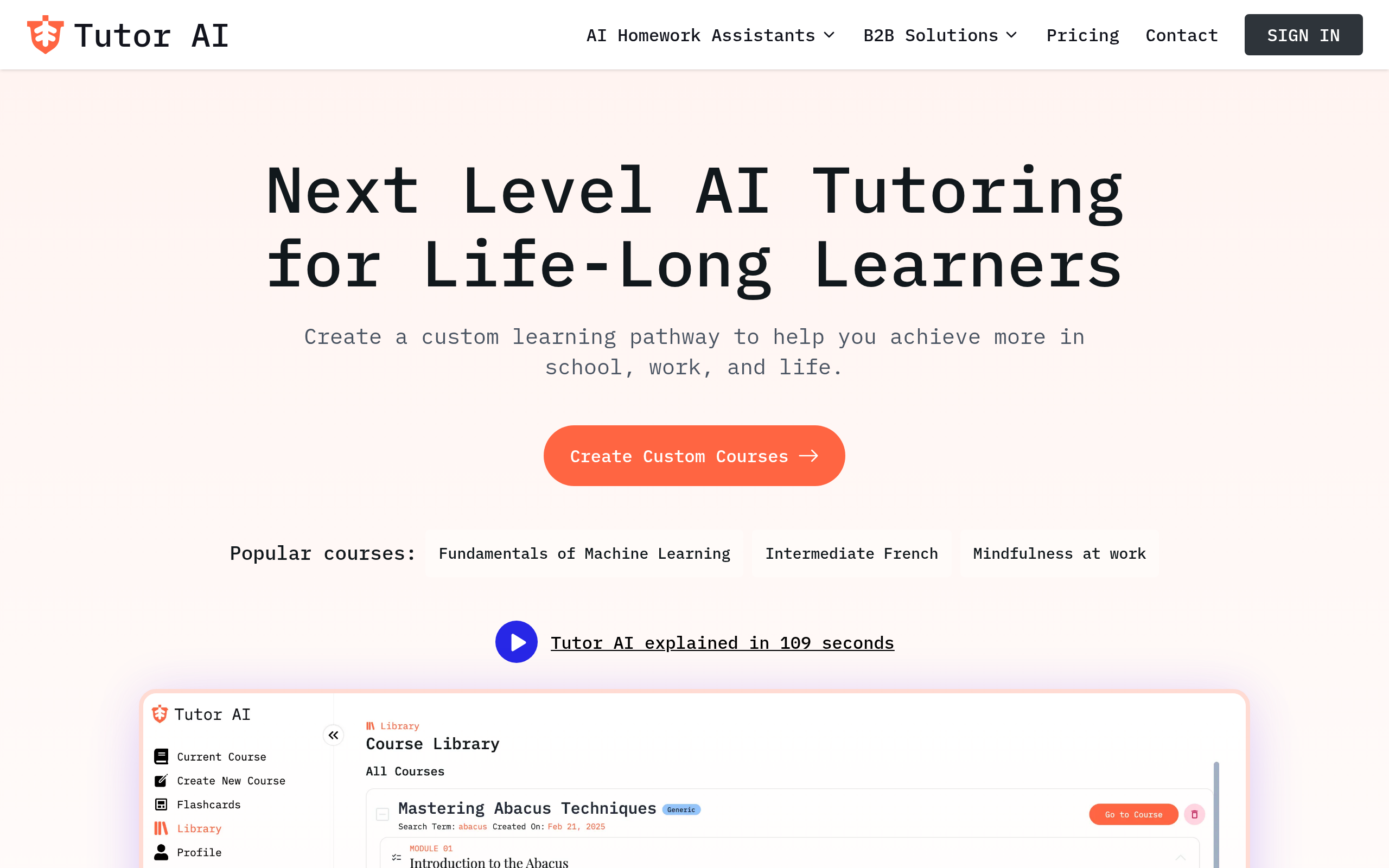
Tutor AI takes a conversational approach: learners type in a topic or subject area, and the AI acts as a one-on-one tutor — asking diagnostic questions, explaining concepts, assigning practice tasks, and adjusting based on the learner's responses. It's best for self-directed adult learners or students preparing for exams who want on-demand help rather than a structured course. There's no authoring workflow here — it's pure tutoring interaction with minimal setup required.
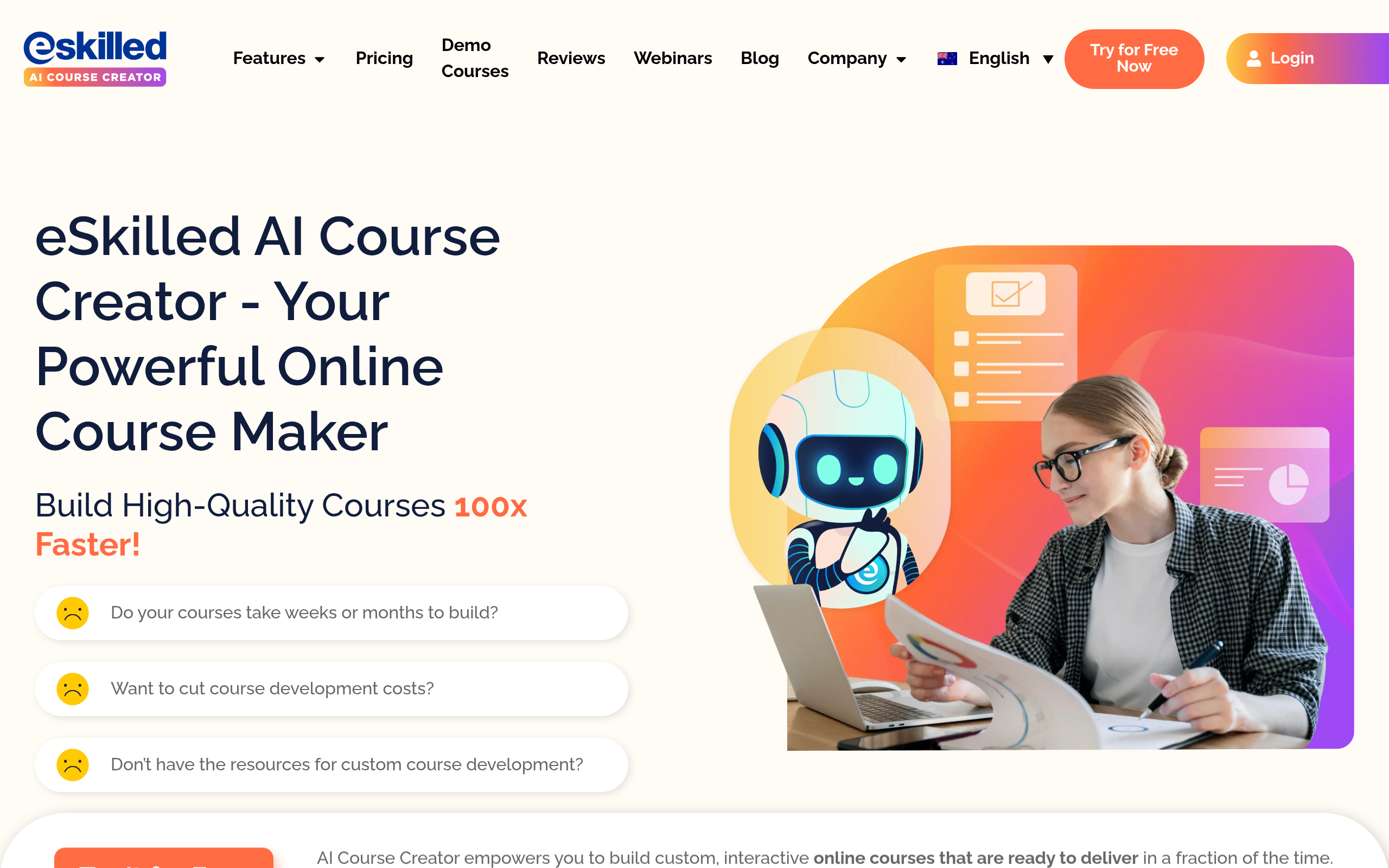
eSkilled AI Course Creator is squarely positioned for L&D teams and training managers inside organizations. The workflow takes raw input — documents, slides, existing training material — and generates fully formed eLearning courses with AI assistance. It supports SCORM output for enterprise LMS compatibility, which is a non-negotiable for many corporate environments where the LMS is already fixed infrastructure. The adaptive personalization is moderate: it's more about efficient course authoring than runtime adaptation, but it integrates well into existing HR and LMS ecosystems.
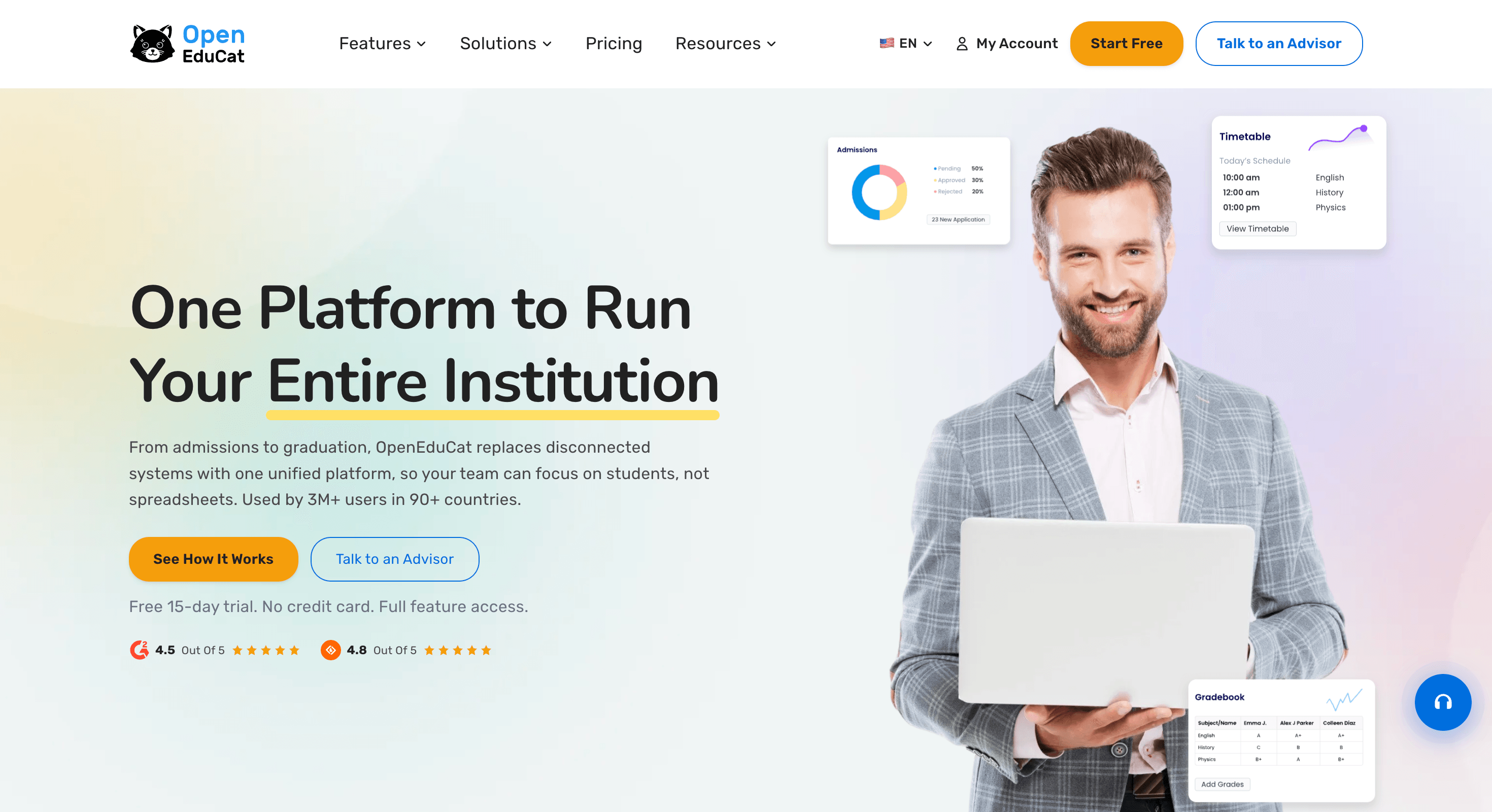
OpenEduCat is a full open-source LMS, which means it's free to deploy but requires technical resources to host and maintain. It covers the core LMS feature set — courses, students, grading, assessments — with the option to extend through custom modules. Adaptive personalization is possible through plugins and custom development, making it a good fit for universities or institutions that want full control over data and infrastructure. Not the right choice for teams who need to be up and running within a day; expect a meaningful implementation investment upfront.
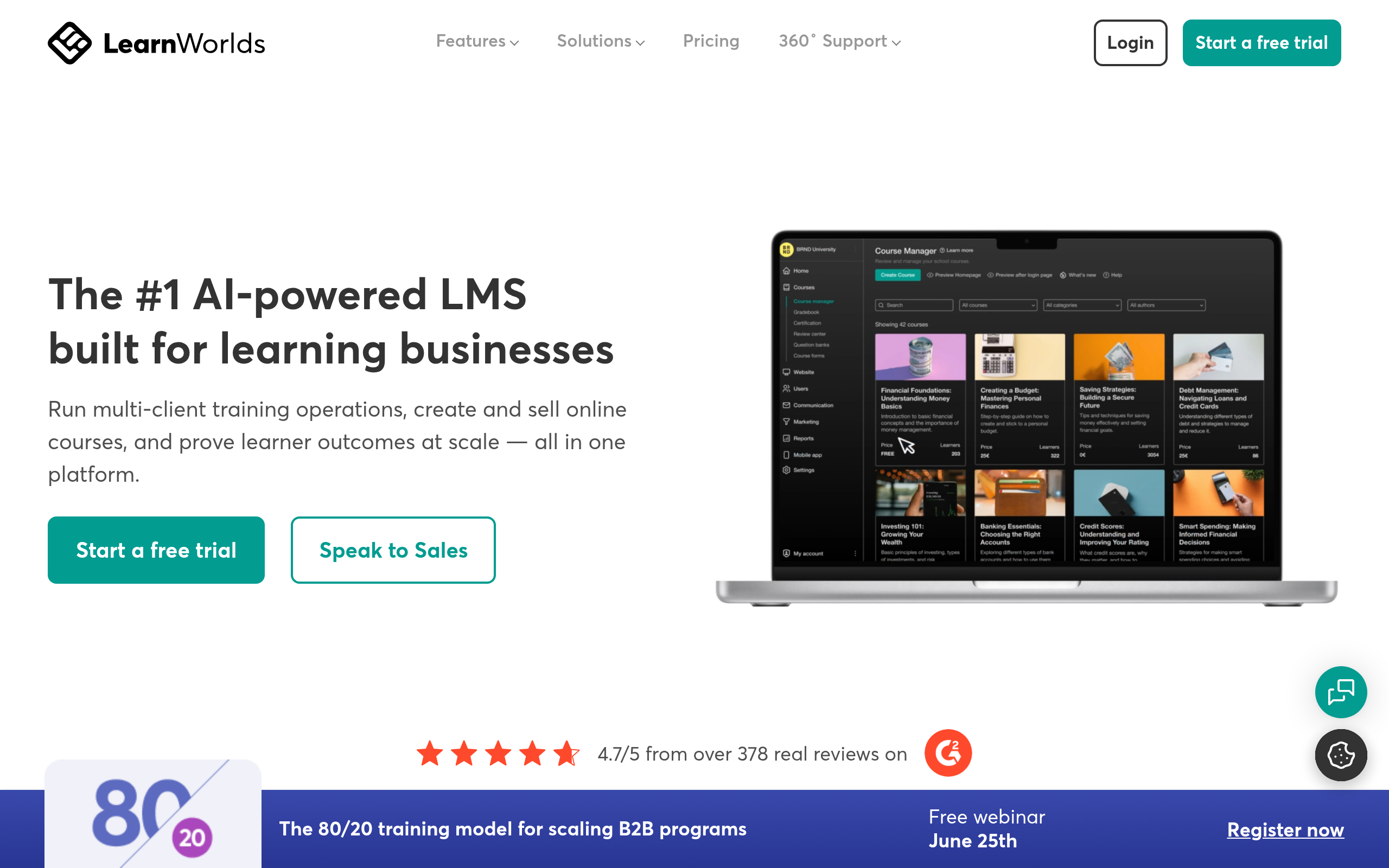
LearnWorlds is a full online school platform designed for course creators and academies that want to sell, market, and deliver learning under their own brand. The AI layer includes a course-creation assistant, adaptive assessments, and interactive video features. It's particularly strong for businesses building a branded learning academy with a polished learner-facing UX — it handles payments, certificates, and community features alongside the AI tools. Personalization happens through adaptive learning paths that unlock based on assessment performance and learner progress.
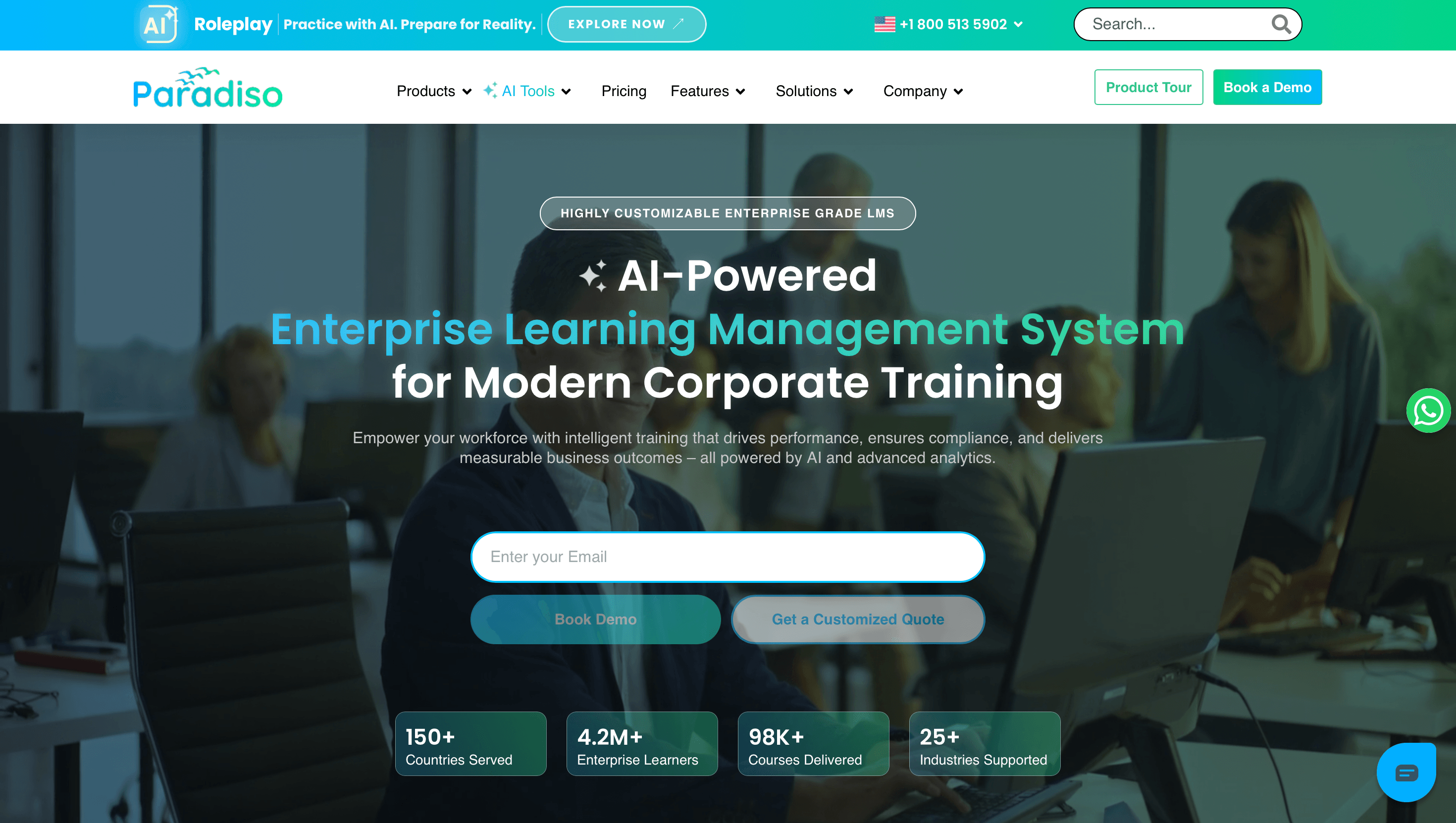
Paradiso LMS is an enterprise-grade LMS with AI-powered recommendation engines that suggest the next-best piece of content, identify at-risk learners before they drop off, and adapt learning paths based on role, performance history, and identified skills gaps. Gamification features — badges, leaderboards, points — add motivation layers that matter at scale. It's best suited for large organizations managing hundreds or thousands of learners across multiple training tracks, where the ROI on genuine personalization justifies the enterprise platform investment.
How Does Pricing Compare Across AI Learning Path Tools?
Specific pricing changes frequently — always verify directly with the vendor before purchasing. The table below reflects general pricing models and tier structures as of mid-2026:
| Tool | Pricing Model | Free Tier / Trial? | Best Budget Fit |
|---|---|---|---|
| LearningStudioAI | Subscription (tiered by seats/courses) | Free trial available | Small to mid-size L&D teams |
| CourseAI | Subscription (creator-focused tiers) | Free plan available | Solopreneurs, small creators |
| Synthesis Tutor | Subscription per student / family | Free trial | Families, small schools |
| Tutor AI | Freemium / subscription | Free tier with limits | Individual learners, students |
| eSkilled AI Course Creator | Subscription (per seat / usage) | Free trial | L&D teams, training departments |
| OpenEduCat | Open-source (free, self-hosted) | Fully free | Institutions with dev resources |
| LearnWorlds | Subscription (tiered by features) | 30-day trial | Course businesses, academies |
| Paradiso LMS | Enterprise (custom quote) | Demo available | Large organizations (500+ learners) |
Which AI Tool Is Right for Corporate L&D vs. Individual Learners?
The clearest dividing line in this category is organizational vs. individual use:
For corporate L&D and training departments: LearningStudioAI, eSkilled AI Course Creator, LearnWorlds, and Paradiso LMS are designed for teams that author, deploy, and track training at organizational scale. They handle multi-learner management, reporting, compliance tracking, and integrations with HR systems. If you're building mandatory onboarding programs or compliance training for hundreds of employees, these tools make the infrastructure manageable and measurable.
For individual learners and students: Tutor AI offers the most accessible entry point — open it, state a topic, and start learning immediately. Synthesis Tutor is the strongest option if the learner is a child who benefits from structured, game-like challenges rather than passive content consumption. CourseAI occupies a different middle ground: useful for educators building courses to share, not for learners seeking existing adaptive content.
For institutions with technical resources: OpenEduCat is the open-source LMS answer, offering full data control without licensing costs. Factor implementation and maintenance effort into the total cost of ownership calculation.
Comparee's Verdict: Which AI Learning Path Tool Should You Choose?
Direct recommendations by situation — not vague hedging, but concrete guidance:
- L&D manager who needs to ship AI-generated adaptive training fast: Start with LearningStudioAI. It gives the fastest path from raw content to deployed adaptive course, with analytics to track learner progress without a dedicated instructional designer on each project.
- Solopreneur or educator building a course product to sell: Use CourseAI to draft and structure the course, then host on LearnWorlds if you want a full branded school with payments and certificates built in.
- Parent or school with kids aged 6–14: Synthesis Tutor is the standout. The collaborative challenge model is more pedagogically sound than passive video plus multiple-choice — kids are actively engaged rather than passively consuming content.
- Adult self-learner who wants on-demand tutoring without a subscription commitment: Start with Tutor AI's free tier. It covers most single-topic learning needs before any spending is required.
- Large organization with complex multi-department training programs: Request a demo from Paradiso LMS. The AI recommendation engine and gamification at scale justify enterprise pricing for organizations managing 500+ learners across varied tracks.
- University or institution that needs full data control: OpenEduCat is the only open-source option in this list. Factor in developer time for setup and ongoing maintenance as part of the total investment.
- Team that needs SCORM output for an existing enterprise LMS: eSkilled AI Course Creator is purpose-built for this. It generates SCORM-compliant packages that drop into whatever LMS your organization already runs.
For a broader view of AI tools across the edtech spectrum, explore the Education & Learning category on Comparee.
Tools mentioned in this guide
Pricing, features and model availability can change over time. Always verify current details on each tool's official website before deciding.
Frequently Asked Questions
What is the best AI tool for personalized learning paths in 2026?
What is the best AI tool for personalized learning paths in 2026?
Can AI really personalize learning paths effectively, or is it just marketing?
Can AI really personalize learning paths effectively, or is it just marketing?
What is the difference between adaptive learning and personalized learning paths?
What is the difference between adaptive learning and personalized learning paths?
Which AI learning path tool is best for K-12 students?
Which AI learning path tool is best for K-12 students?
Are there free AI tools for building personalized learning paths?
Are there free AI tools for building personalized learning paths?
How do AI learning path tools integrate with existing LMS platforms?
How do AI learning path tools integrate with existing LMS platforms?
What should L&D managers look for when choosing an AI learning tool?
What should L&D managers look for when choosing an AI learning tool?
Is Synthesis Tutor worth it for homeschooling families?
Is Synthesis Tutor worth it for homeschooling families?
Don't just pick a tool — get the whole workflow
Tell Comparee your goal and get a complete step-by-step AI workflow with the right tool for every step.