What is Generative AI? A Complete Guide for 2026
What is generative AI? A 2026 guide to how it works, what it generates (text, image, audio, video), real use cases, and its limits — explained simply.
Key takeaways
- Generative AI is software that creates new content — text, images, audio, video and code — from a prompt, rather than just analysing existing data.
- It works by learning patterns from huge amounts of training data and predicting what comes next, one piece at a time.
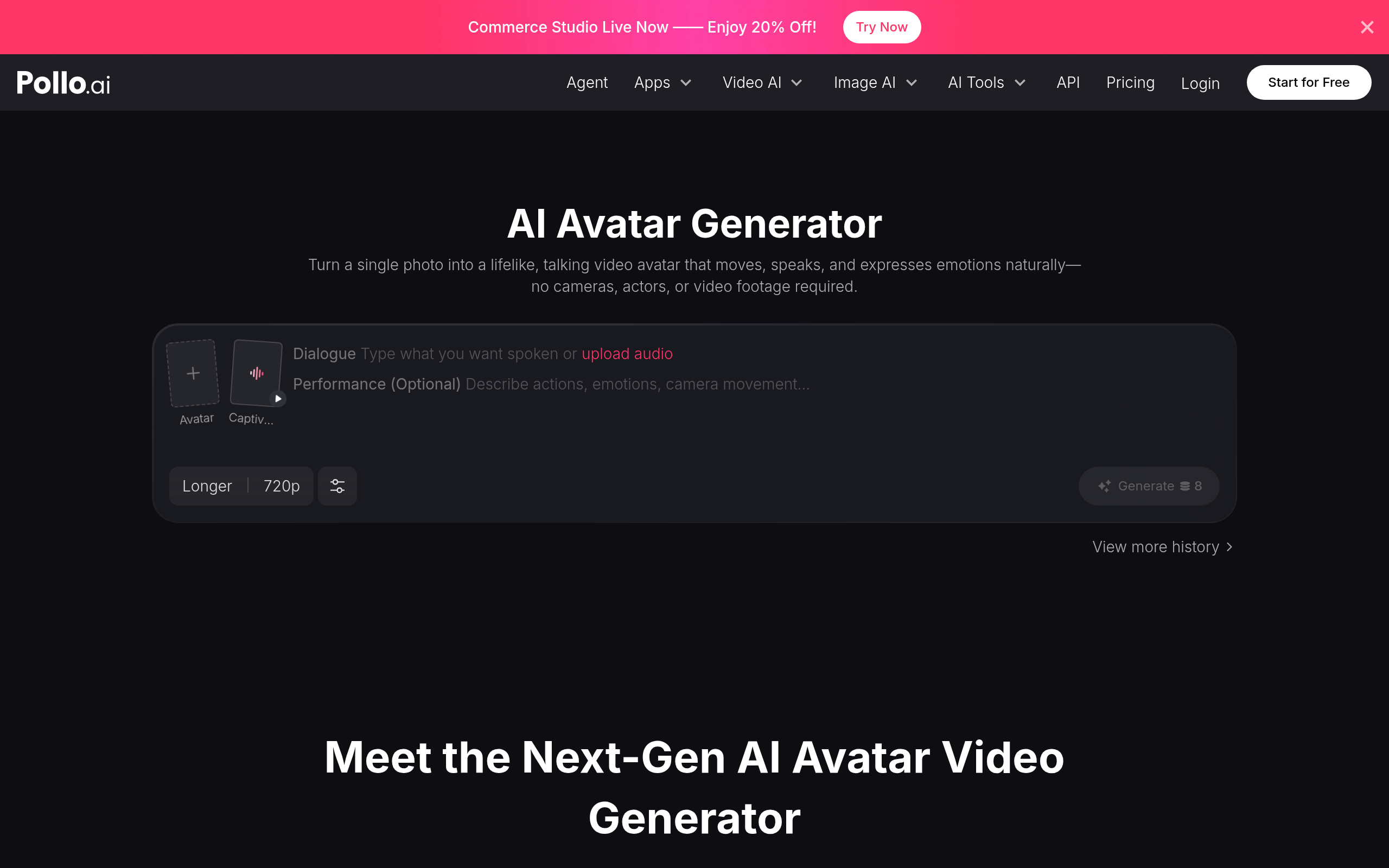
- It spans modalities: text writing with tools like Simplified AI Writer, images with getimg.ai, audio with Soundverse AI, and video with Pollo AI and Visla.
- Use it to draft, brainstorm, design, prototype and produce content far faster — as a capable assistant, not an infallible oracle.
- Know its limits: it can be confidently wrong, lacks true understanding, and its output needs human review.
Generative AI is software that creates brand-new content — text, images, audio, video and code — in response to a prompt, instead of merely analysing or classifying data that already exists. That distinction is the whole story: where earlier AI told you what something was (spam or not, cat or dog), generative AI produces something that did not exist a moment ago — an essay, an illustration, a song, a short film. Since the technology went mainstream, it has become one of the most consequential tools of the decade, useful to writers, designers, marketers, developers and almost everyone in between. This guide explains, in plain language, what generative AI is, how it actually works, what it can create across each modality, where it genuinely helps, and the limits you need to keep in mind.
What is generative AI?
Generative AI refers to a class of AI models that generate new content based on patterns learned from training data. The simplest way to grasp it is by contrast. Traditional, or "discriminative", AI answers questions about existing data — is this email spam, does this image contain a face, which category does this fit. Generative AI instead produces new data of the same kind it was trained on: trained on text, it writes text; trained on images, it makes images. You give it an instruction — a prompt — and it generates an original response. The word "generative" is literal: it generates. That single capability, applied across language, pictures, sound and video, is what has made the technology feel like such a leap, because creating content was long assumed to be uniquely human territory.
How does generative AI actually work?
You do not need a maths degree to understand the core idea. A generative model is trained on an enormous quantity of examples — billions of sentences, or millions of images — and during training it learns the statistical patterns in that data: which words tend to follow which, what a face or a sunset tends to look like. Once trained, it generates by prediction, usually one small piece at a time. A text model predicts the most likely next word given everything so far, then the next, building a response word by word. An image model starts from noise and refines it step by step into a picture that matches your prompt. There is no database of pre-written answers it copies from; it is producing each output fresh, guided by the patterns it absorbed. This is also why it can be creative and flexible — and why it can be confidently wrong, because it is predicting plausible content, not retrieving verified facts.
The modalities: what generative AI can create
Generative AI is not one thing but a family of capabilities, organised by what they produce. Text is the most familiar: writing articles, emails, summaries, code and answers to questions. Images come next: generating illustrations, photos, product shots and art from a written description. Audio covers music, voiceovers, sound effects and speech synthesis. Video is the newest and fastest-moving frontier, turning text or images into short clips. And code — really a specialised form of text — lets models write and debug software. Most real-world work now combines several: a marketer might generate the copy, the images and a short video for one campaign. Understanding generative AI as a set of modalities, each with its own leading tools, is the clearest way to map the landscape.
Generative AI across modalities (with example tools)
| Modality | What it generates | Example tool |
|---|---|---|
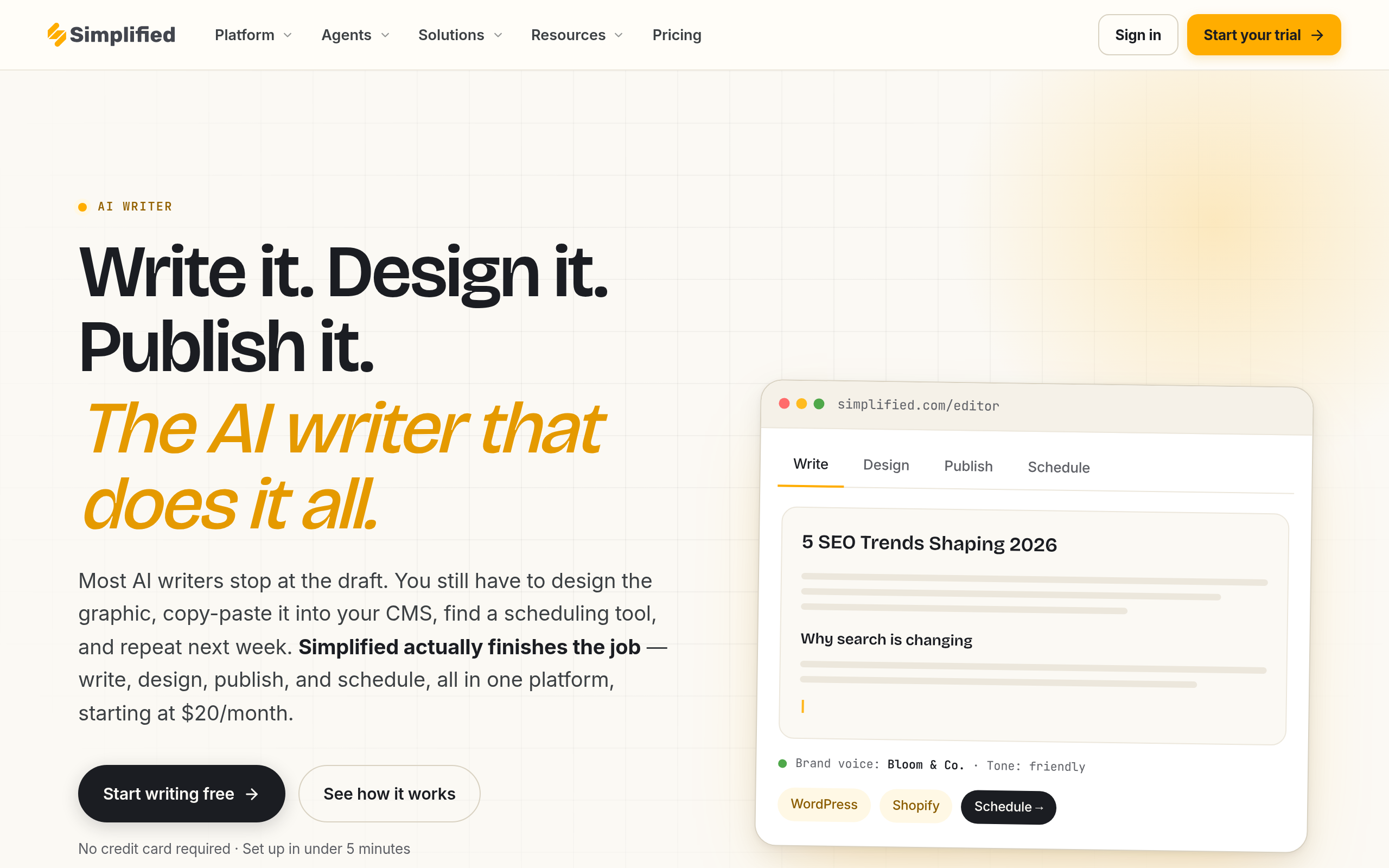
| Text | Articles, emails, summaries, answers, copy | Simplified AI Writer |
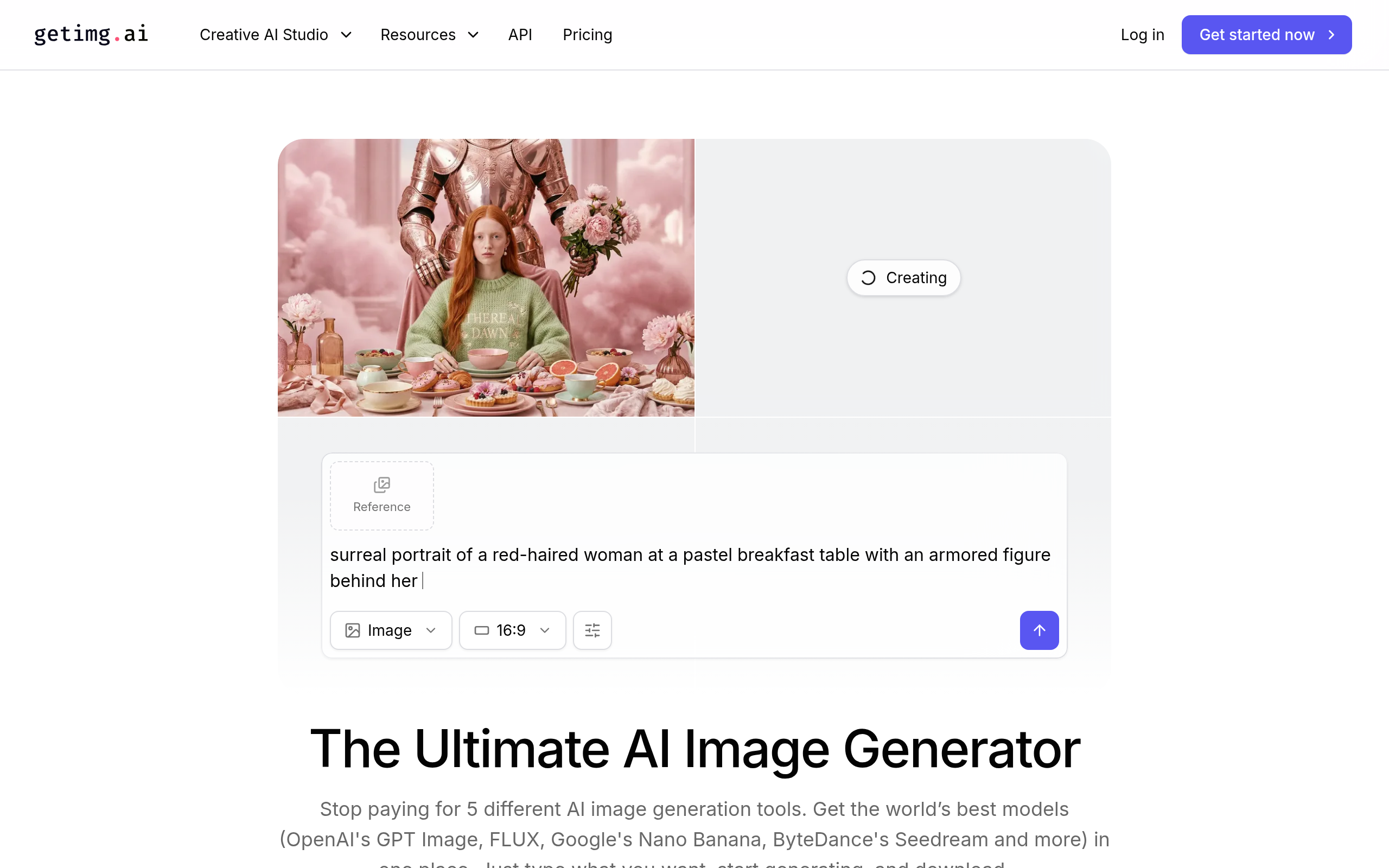
| Image | Illustrations, photos, art, product shots | getimg.ai |
| Audio | Music, voiceovers, sound, speech | Soundverse AI |
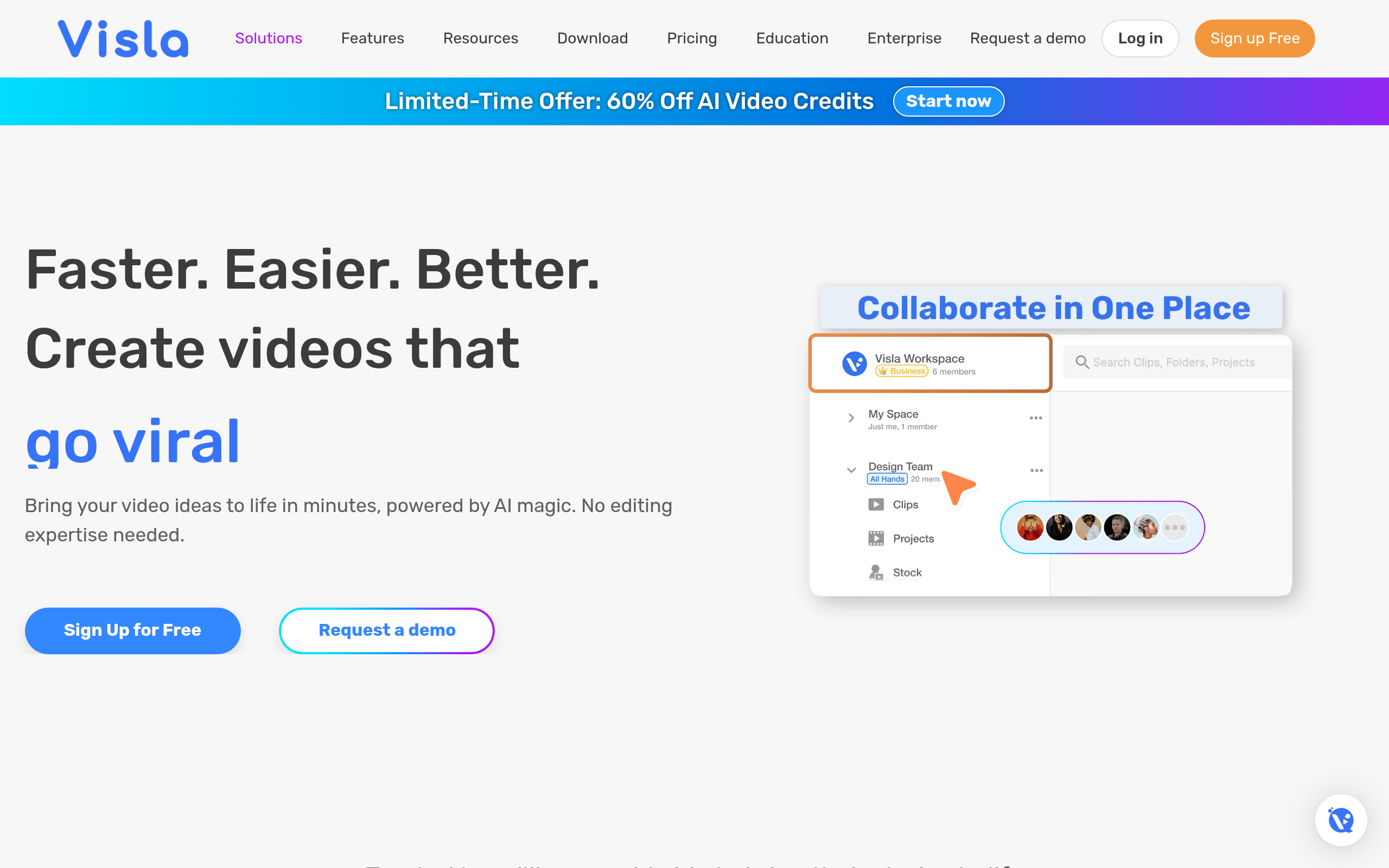
| Video | Short clips from text or images | Pollo AI, Visla |
Each modality has its own standout tools. For text, Simplified AI Writer drafts articles, marketing copy and more from a prompt. For images, getimg.ai generates and edits custom visuals. For audio, Soundverse AI creates music and sound. And for video, Pollo AI turns prompts and images into clips, while Visla combines AI video creation with editing. Because most projects span more than one modality, it helps to learn the leaders in each. To go deeper on two of the biggest, see our guides to AI image generation and AI agents.
How to start using generative AI (step by step)
- Decide what you want to create — text, an image, audio or video — so you pick the right kind of tool.
- Choose a tool for that modality — for example Simplified AI Writer for text or getimg.ai for images.
- Write a clear, specific prompt — describe what you want, the style, the tone and any constraints.
- Generate and iterate — refine your prompt based on the result; the second or third try is usually much better.
- Review the output critically — check facts, quality and accuracy before you use it.
- Edit and finish — add your own judgement and polish; treat the AI output as a strong first draft.
What generative AI is great for
The practical value of generative AI is enormous when you apply it to the right jobs. It excels at drafting — getting a first version of an article, email, design or video onto the page in seconds, which beats a blank canvas every time. It is superb for brainstorming and ideation, producing dozens of angles, headlines, concepts or variations to react to. It is a tireless assistant for repetitive content work — summarising, rewriting, reformatting, resizing — that used to eat hours. And it dramatically lowers the barrier to prototyping and exploration, letting one person mock up copy, visuals, audio and video that once required a whole team. The common thread is speed and volume: generative AI compresses the time from idea to first output, which is exactly where most creative and knowledge work gets stuck. Used as an accelerator for these tasks, it is a genuine force multiplier.
The limits you must keep in mind
For all its power, generative AI has real and important limitations, and using it well means respecting them. It does not truly understand anything — it predicts plausible content, which means it can be confidently wrong, inventing facts, citations or details that sound right but are not (often called hallucination). It reflects the biases present in its training data. It can produce generic output when prompted lazily, and it occasionally generates artefacts or errors, especially in images and video. It also raises real questions around copyright, originality and disclosure that are still being worked out. The takeaway is not to avoid it but to keep a human in the loop: treat generative AI as a capable, fast, occasionally unreliable assistant whose work you direct and verify, never as an infallible authority you trust blindly. That mindset is the difference between getting real value and getting embarrassed.
Why generative AI matters now
It is worth stepping back to see why this technology has landed with such force. For most of computing history, machines were tools for processing and retrieving information that humans created; the act of creation itself — writing, drawing, composing, filming — stayed firmly on the human side. Generative AI collapsed that boundary almost overnight, putting the ability to produce credible text, images, audio and video into the hands of anyone with a prompt and an idea. The consequence is not that creativity is automated away, but that the cost and time of producing a first version of almost any content has fallen close to zero, which reshapes how individuals and businesses work. A solo founder can now generate marketing assets that once needed an agency; a writer can draft in minutes and spend their time editing and thinking; a developer can scaffold code in seconds. The skill that increasingly matters is not producing the raw output but directing the AI well and judging its results — knowing what to ask for, and what is good. That is why understanding generative AI, rather than just using it, is becoming a baseline literacy for modern work.
The bottom line
Generative AI is software that creates new content — text, images, audio, video and code — from a prompt, by learning patterns from vast training data and predicting output piece by piece. It spans modalities, each with leading tools: Simplified AI Writer for text, getimg.ai for images, Soundverse AI for audio, and Pollo AI and Visla for video. It is a remarkable accelerator for drafting, brainstorming and producing content, but it predicts plausibility rather than truth, so it needs a human to direct and verify it. Understand both its power and its limits, and you can use generative AI as one of the most useful tools available in 2026.
Disclaimer: Generative AI predicts plausible content rather than retrieving verified facts, so it can be confidently wrong and reflect biases in its training data. Review and verify outputs, and check licensing and disclosure rules before publishing.
Tools mentioned in this guide
Pricing, features and model availability can change over time. Always verify current details on each tool's official website before deciding.
Frequently Asked Questions
What is generative AI?
What is generative AI?
How does generative AI work?
How does generative AI work?
What can generative AI create?
What can generative AI create?
What is generative AI good for?
What is generative AI good for?
What are the limits of generative AI?
What are the limits of generative AI?
Is generative AI the same as ChatGPT?
Is generative AI the same as ChatGPT?
Don't just pick a tool — get the whole workflow
Tell Comparee your goal and get a complete step-by-step AI workflow with the right tool for every step.