Best AI Tools for Competitive Intelligence in 2026
Compare the best AI tools for competitive intelligence in 2026 — ZoomInfo, Apollo.io, SpyFu, Datahawk, Seamless.AI, LeadIQ and more. Find the right fit for sale
- Best for enterprise B2B: ZoomInfo (deepest intent data + firmographics at scale). Best for mid-market: Apollo.io (prospecting + outreach in one platform). Best for SEO/PPC intel: SpyFu.
- Sales teams focused on contact accuracy should evaluate Seamless.AI, LeadIQ, and Prospeo — each takes a different approach to the B2B contact data problem.
- For marketplace competitive intelligence (Amazon, retail), Datahawk is purpose-built where general platforms are not.
- StartupHub.ai fills a unique gap: tracking the startup ecosystem before emerging competitors become visible threats.
- No single tool covers every intelligence layer — most serious competitive intelligence stacks combine 2–3 specialized tools.
The best AI tools for competitive intelligence in 2026 are ZoomInfo for enterprise B2B intent data, Apollo.io for mid-market sales intelligence, and SpyFu for SEO and paid search competitor research. The right choice depends on whether your competitive battle is fought in pipeline, search rankings, or market positioning — and no single platform wins every category.
Competitive intelligence has evolved from quarterly analyst reports to real-time, AI-powered signal monitoring. Growth marketers now track competitor ad spend while campaigns are running. Sales leaders see which accounts are actively in-market before a competitor's SDR makes first contact. Founders map the startup landscape before seed-stage rivals reach Series B. The tools in this guide make this possible — but only when matched to the right use case.
What Are AI Tools for Competitive Intelligence?
AI competitive intelligence tools automatically collect, process, and surface signals about competitors, market conditions, and buyer behavior that human analysts would take weeks to compile. They pull from multiple data layers:
- B2B firmographic and contact databases — company size, revenue band, tech stack, decision-maker contacts and direct dials
- Intent data — behavioral signals indicating a company is actively researching solutions in your category right now
- SEO and paid search data — competitor keywords, ad copy history, ranking trajectories over time
- Marketplace data — competitor product listings, pricing changes, review velocity on platforms like Amazon
- Startup and funding signals — new hires, funding rounds, product launches from emerging players
The AI layer handles deduplication, enrichment, scoring, and alert delivery — so teams act on insight rather than raw data. The difference between a good and a great tool usually comes down to signal quality and how fast that signal reaches the person who can act on it.
Quick Verdict: Best AI Competitive Intelligence Tool by Use Case
| Use Case | Best Tool | Why It Wins |
|---|---|---|
| Enterprise B2B sales intelligence | ZoomInfo | Deepest intent data + firmographics at scale |
| Mid-market prospecting + outreach | Apollo.io | Database + email sequencing in one platform |
| SEO and PPC competitor research | SpyFu | Years of competitor keyword and ad history |
| Amazon and marketplace intelligence | Datahawk | Purpose-built for marketplace competitive data |
| Real-time contact data accuracy | Seamless.AI | AI-verified contacts on demand, not a static DB |
| LinkedIn-centric prospecting workflow | LeadIQ | Frictionless capture + CRM sync from LinkedIn |
| Lean B2B email prospecting | Prospeo | Reliable email finder at startup-friendly pricing |
| Research and evidence synthesis | Consensus | AI-synthesized research for competitive claims validation |
| Startup ecosystem monitoring | StartupHub.ai | Early signals on emerging competitors before they scale |
Which AI Tool Is Best for B2B Sales and Account Intelligence?
For sales teams, the core intelligence need is knowing which accounts to target, who to contact, and when they're most likely to buy. Four tools compete directly in this space, each with a distinct positioning.
ZoomInfo is the category benchmark for enterprise sales intelligence. Its intent engine tracks which companies are consuming competitor-category content across a network of B2B publisher sites — surfacing in-market accounts before they've submitted a competitor's demo request. Firmographic and technographic filters are deep: you can target by tech stack, headcount growth trajectory, revenue range, and dozens of additional signals. The tradeoff is cost and complexity; ZoomInfo is built for organizations with dedicated Sales Ops or RevOps functions and enterprise contract budgets.
Apollo.io hits a different point on the price-capability curve. It combines a large B2B contact database with native email sequencing and calling, eliminating the need for a separate outreach tool at growth-stage budgets. Its intent and analytics capabilities have expanded considerably in recent cycles, making it a genuine ZoomInfo alternative for teams that don't need enterprise-scale data depth. The free tier is unusually useful for initial validation.
Seamless.AI takes a real-time verification approach: rather than querying a static database, it claims to surface and validate contact data on demand using AI. For high-volume outbound teams where email deliverability and phone connect rates directly affect pipeline, the accuracy improvement over legacy static databases is worth evaluating in a side-by-side test.
LeadIQ is built specifically around LinkedIn prospecting workflows. SDRs browsing LinkedIn Sales Navigator can capture, enrich, and sync leads to their CRM with minimal friction. It's less of a standalone intelligence platform and more of a B2B data pipeline accelerator — but for teams where LinkedIn is the primary prospecting surface, that focused design is the right tool for the job.
What Is the Best Tool for Tracking Competitor SEO and Ads?
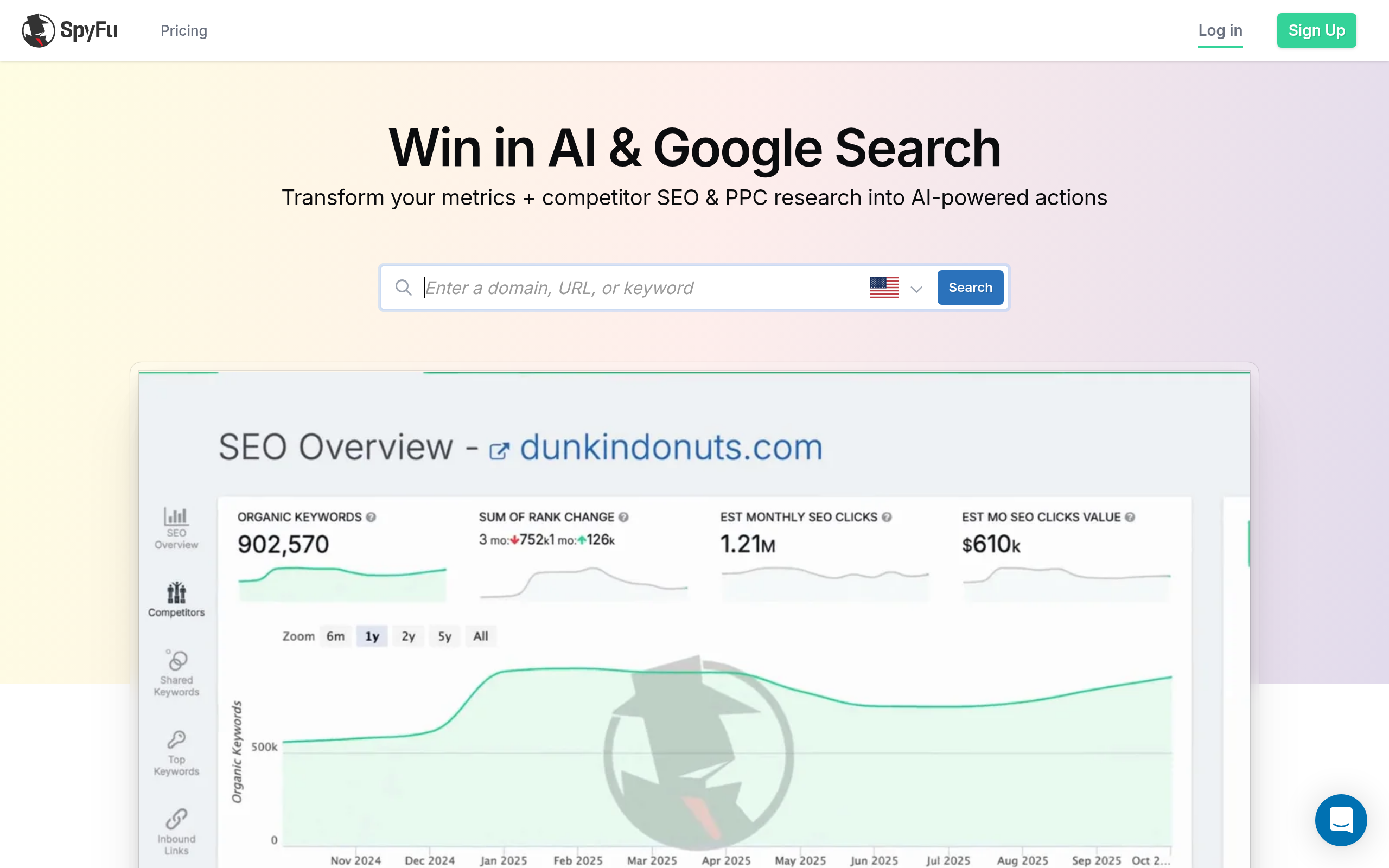
SpyFu is the specialist here. It was built specifically to expose competitor search strategy, and the depth shows:
- Organic keyword history — every keyword a domain has ranked for, with position over time going back years
- PPC competitor data — ad copy variations, estimated spend ranges, bidding patterns, and which search terms competitors are actively buying traffic for
- Keyword overlap analysis — direct head-to-head competition vs. untapped keyword gaps
SpyFu's key differentiator is historical depth. Seeing years of competitor search behavior reveals which content bets paid off, where they've retreated, and which keywords represent stable traffic drivers vs. experimental spend. For SEO teams doing competitor content gap analysis or PPC managers researching ad creative, SpyFu is faster and more focused than general-purpose SEO platforms that spread their feature set thin.
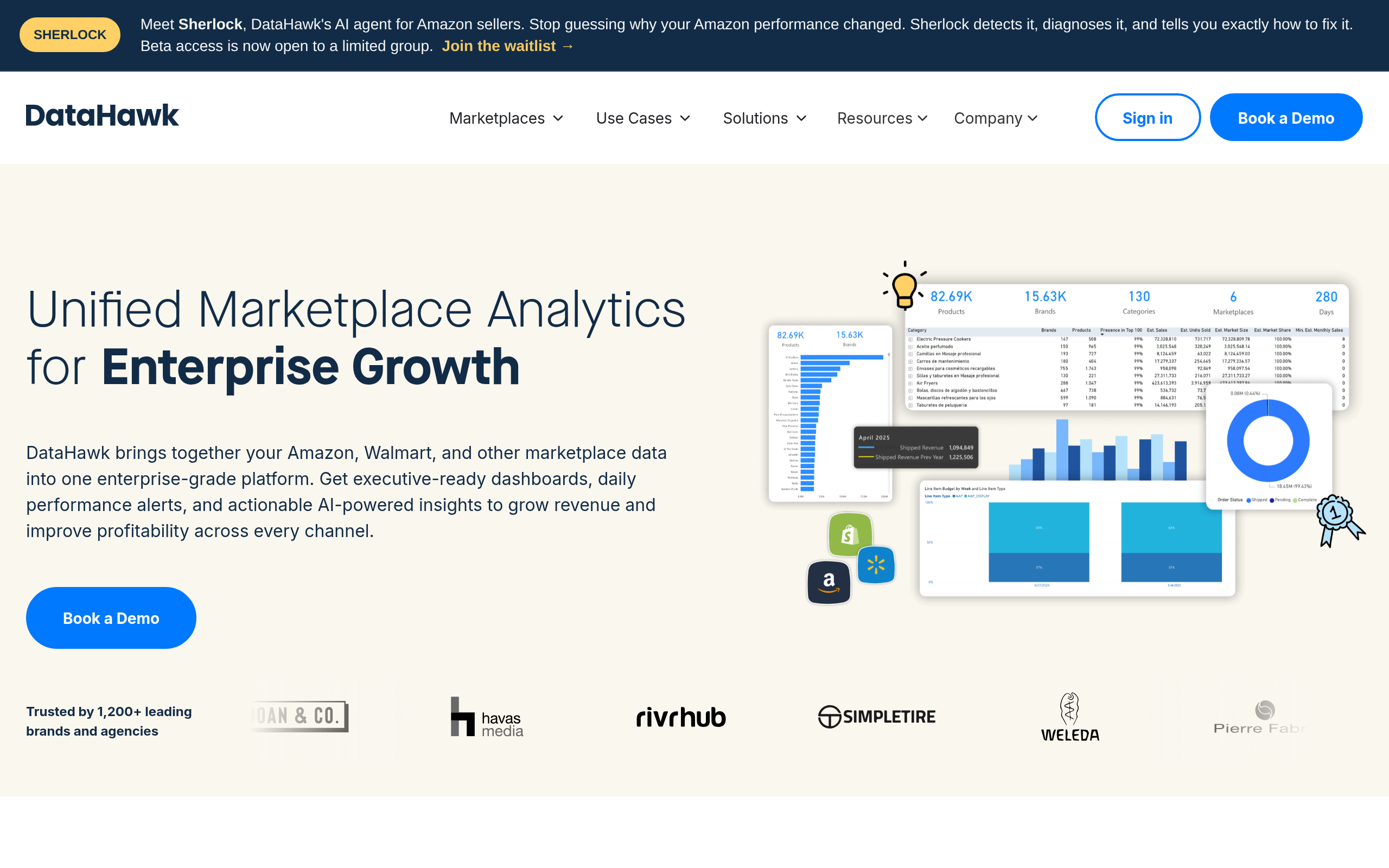
For teams competing on Amazon or other online marketplaces, Datahawk fills a completely different gap. It tracks competitor product listing changes, keyword ranking movements on Amazon, pricing shifts, and review velocity. If your competitive intelligence is marketplace-specific — understanding why a competitor is winning the buy box, or identifying a seasonal pricing strategy shift — Datahawk is purpose-built where generalist tools simply aren't.
How Do AI Competitive Intelligence Tools Actually Work?
Understanding the mechanics helps you evaluate quality claims and avoid buying the wrong tool for the right problem.
Data collection layer: Most tools combine web crawling, third-party data partnerships, user-contributed data from browser extensions and CRM integrations, and public sources like job postings, regulatory filings, and funding databases. The quality of raw data collection at this layer determines everything downstream — no amount of AI enrichment fixes fundamentally stale or inaccurate source data.
AI enrichment layer: Raw signals are processed — contacts de-duplicated and validated, companies classified and scored, intent signals aggregated across publisher networks. The AI handles entity resolution (matching signals to the right company and contact), signal interpretation (distinguishing noise from genuine buying intent), and prioritization scoring.
Delivery layer: Insights surface via dashboards, CRM integrations, Slack alerts, or direct API access. The best tools minimize time-to-action: intelligence is only valuable when it reaches the right person at the right moment with enough context to act without further research.
Consensus operates on a different intelligence layer entirely: it applies AI to synthesize scientific research and published evidence rather than market or competitor data. For product and strategy teams that need research-backed competitive claims — validating market assertions, benchmarking against published studies, building positioning arguments with citations — it's a useful complement to a competitive intelligence stack focused on real-time signals.
StartupHub.ai focuses on startup ecosystem intelligence: tracking funding rounds, team growth signals, product updates, and competitive positioning of emerging players. In fast-moving categories where a competitor can go from seed funding to Series B market threat in 18 months, early signal tracking before they appear on analyst radars is a genuine strategic advantage for both incumbents and rival startups.
ZoomInfo vs Apollo.io vs Seamless.AI: Feature and Pricing Model Comparison
| Feature | ZoomInfo | Apollo.io | Seamless.AI |
|---|---|---|---|
| Database approach | Large static + continuous refresh | Large static + expanding | Real-time generation on demand |
| Intent data | Yes — enterprise-grade coverage | Yes — growing coverage | Limited |
| Native outreach sequencing | Via partner integrations | Yes — email + calling built in | Via integrations |
| CRM integrations | Deep (Salesforce, HubSpot, etc.) | Good (Salesforce, HubSpot, Pipedrive) | Good |
| Free tier available | Demo/trial only | Yes — meaningful free limits | Free trial credits |
| Optimal team size | 50+ quota-carrying reps | 5–200 reps | 10–100 reps |
| Pricing model | Annual contract, per-seat | Usage credits + seat tiers | Usage-based credits |
| Best for | Enterprise RevOps | Growth-stage all-in-one | High-volume outbound accuracy |
Which Competitive Intelligence Tool Is Right for Startups vs Enterprises?
| Intelligence Need | Startup / SMB Pick | Enterprise Pick |
|---|---|---|
| B2B sales intelligence + outreach | Apollo.io (free tier available) | ZoomInfo |
| SEO and PPC competitor research | SpyFu | SpyFu + broader SEO suite |
| Contact finding on a tight budget | Prospeo | LeadIQ + ZoomInfo enrichment |
| Marketplace intelligence | Datahawk | Datahawk |
| Startup ecosystem monitoring | StartupHub.ai | StartupHub.ai + analyst platforms |
| Evidence-based competitive claims | Consensus | Consensus |
| LinkedIn prospecting workflow | LeadIQ | LeadIQ |
Startups should prioritize tools with meaningful free tiers, fast time-to-first-value, and usage-based pricing that scales with actual use. Enterprises need data depth, governance features, compliance certifications (SOC 2, GDPR documentation), and integration depth with existing CRM and sales tech stacks. For a broader view of how AI research tools compare, see the Research & Knowledge category on Comparee.
How to Choose the Right AI Competitive Intelligence Tool for Your Team
Five questions that cut through the feature-list noise and get to the decision:
- What is your primary intelligence need? SEO and PPC (SpyFu), B2B pipeline (Apollo.io or ZoomInfo), e-commerce marketplaces (Datahawk), startup ecosystem (StartupHub.ai), or contact enrichment (Seamless.AI, LeadIQ, Prospeo). Start here before evaluating anything else.
- What is your realistic budget tier? Enterprise with dedicated sales ops and significant contract budget: ZoomInfo. Growth-stage company with multiple hats per person: Apollo.io. Lean startup: SpyFu plus Prospeo as a starting stack.
- Do you need intent data? If timing matters — reaching accounts while they're actively in-market — you need intent signal coverage. That points to ZoomInfo or Apollo.io as your B2B data foundation.
- What does your existing tech stack look like? The best tool is the one your team actually uses. Integration friction with your CRM is a real adoption killer. Evaluate integration depth before features.
- How fast do you need first value? SpyFu and LeadIQ deliver day-one insights with minimal setup. ZoomInfo enterprise deployments can require weeks to configure, onboard, and integrate properly.
Comparee's Verdict: Exactly Who Should Use Which Tool
Most reviews hedge at the verdict. We won't.
ZoomInfo is for large enterprise sales organizations — 50+ reps, dedicated RevOps, and budget to match — that need the deepest B2B intent data at scale. If that describes your team, it's the benchmark and the right choice.
Apollo.io is the default recommendation for growth-stage B2B companies that haven't yet specialized their tech stack. Prospecting, sequencing, and basic intent in one platform at a price point that makes sense before you've fully scaled. Start here if you're evaluating for the first time.
SpyFu is for any team whose competitive battle is fought in search — SEO managers, SEM specialists, content strategists, agency teams, growth marketers. Its historical keyword and PPC ad data is the best available at its price point and beats more expensive general-purpose platforms on this specific use case.
Datahawk is for e-commerce brands and Amazon sellers. If your competitors live on Amazon and you need to understand their pricing, keyword strategy, and listing performance, this is purpose-built for exactly that.
Seamless.AI is for outbound-heavy sales teams where contact data accuracy is the primary bottleneck on connect rates and email deliverability. The real-time verification model addresses a specific pain point — don't use it as a general-purpose intelligence platform.
LeadIQ is for SDR and AE teams whose workflow already centers on LinkedIn Sales Navigator. Frictionless lead capture and CRM sync without disrupting the existing prospecting motion. It's not a platform replacement — it's workflow acceleration.
Prospeo is for lean B2B teams that need a reliable, cost-effective email finder for targeted outreach without committing to a full sales intelligence platform subscription. Strong value for early-stage companies building their first outbound motion.
Consensus is for product managers, strategists, and market researchers who need AI-synthesized evidence to validate competitive claims, assess published research, and build positioning backed by studies rather than marketing copy.
StartupHub.ai is for VCs, founders, and competitive strategy teams that need early signals on emerging competitors before they're in the press. Especially valuable in fast-moving AI-native markets where the competitive landscape can shift dramatically in a single quarter.
Tools mentioned in this guide
Pricing, features and model availability can change over time. Always verify current details on each tool's official website before deciding.
Frequently Asked Questions
What is the best free AI tool for competitive intelligence?
What is the best free AI tool for competitive intelligence?
How does ZoomInfo compare to Apollo.io for sales intelligence?
How does ZoomInfo compare to Apollo.io for sales intelligence?
Can SpyFu show me my competitor's Google Ads?
Can SpyFu show me my competitor's Google Ads?
What is intent data and why does it matter for competitive intelligence?
What is intent data and why does it matter for competitive intelligence?
Is there an AI tool that tracks competitor pricing in real time?
Is there an AI tool that tracks competitor pricing in real time?
How do I build a competitive intelligence system for a startup with a small budget?
How do I build a competitive intelligence system for a startup with a small budget?
What is the difference between sales intelligence and competitive intelligence?
What is the difference between sales intelligence and competitive intelligence?
Are AI competitive intelligence tools GDPR compliant?
Are AI competitive intelligence tools GDPR compliant?
Don't just pick a tool — get the whole workflow
Tell Comparee your goal and get a complete step-by-step AI workflow with the right tool for every step.