AI for Market Research: The Complete Guide for 2026
AI for market research in 2026 — gather data, analyse trends, understand customer feedback and synthesise insights, plus a verify-the-data caveat and the best t
Key takeaways
- AI for market research speeds up the whole research cycle — gathering data at scale, analysing trends, understanding customer feedback, and synthesising it into insight.
- AI accelerates the work but does not replace judgement — research conclusions still need human interpretation and verification.
- Best tools: Browse AI for gathering competitor and market data, Coupler.io for consolidating data sources, Holistics and Coefficient for analysing trends, Mopinion for customer feedback.
- Verify the data — AI can gather and summarise fast, but check sources, sample quality and accuracy before you act on conclusions.
- Use AI to research faster and at greater scale, but keep human interpretation, verification and judgement central to the conclusions.
AI for market research uses AI to accelerate the entire research cycle — gathering data from across the web and your systems at scale, analysing trends, understanding customer feedback, and synthesising it all into actionable insight — so research that once took weeks of manual work can be done far faster and across far more data. Market research has always been slow and labour-intensive: manually collecting competitor and market data, wrangling it into shape, reading through mountains of customer feedback, and piecing it into a coherent picture. AI compresses each of those steps. But it does so within an important limit — the data must be verified, because fast, scaled research built on bad or misread data leads to confident, costly mistakes. This guide covers what AI can do for market research, where it genuinely helps, the verify-the-data caveat, and the best tools in 2026.
What is AI for market research?
AI for market research is the use of AI and automation across the research process, from collecting raw data to producing insight. It addresses several distinct stages. Data gathering — automatically collecting competitor pricing, product information, market signals and other public data at a scale and speed no manual team could match. Data consolidation — bringing scattered data sources together into one place so they can be analysed as a whole. Trend analysis — turning that consolidated data into explorable reports and dashboards that reveal patterns over time. Customer feedback analysis — reading and categorising large volumes of survey responses, reviews and feedback to surface what customers actually think. And synthesis — pulling the threads together into insight. The point is to remove the heavy manual labour from each stage so researchers can study more of the market, more often, and spend their time interpreting findings rather than collecting and cleaning data — provided the underlying data is sound.
Where AI genuinely helps in market research
The value appears at every stage of the research cycle. Gathering data at scale — AI can collect competitor prices, product details and market signals automatically and continuously, replacing slow manual collection. Consolidating sources — pulling data from many systems and feeds into one workable dataset, ending the copy-paste assembly that consumes research time. Spotting trends — turning data into dashboards and reports that make patterns and shifts visible far faster than a manual analyst could. Understanding customers — processing thousands of survey responses, reviews and feedback comments to categorise sentiment and themes a person could never read through. And synthesising insight — summarising findings into a starting narrative a researcher can refine. The common thread is scale and speed: AI lets a small research function operate as if it were much larger, covering more of the market and more customer voices, while the human researcher focuses on what the findings mean.
Best AI market research tools in 2026
| Need | Best tool |
|---|---|
| Gathering competitor & market data | Browse AI |
| Consolidating data sources | Coupler.io |
| Analysing trends & dashboards | Holistics, Coefficient |
| Customer feedback analysis | Mopinion |
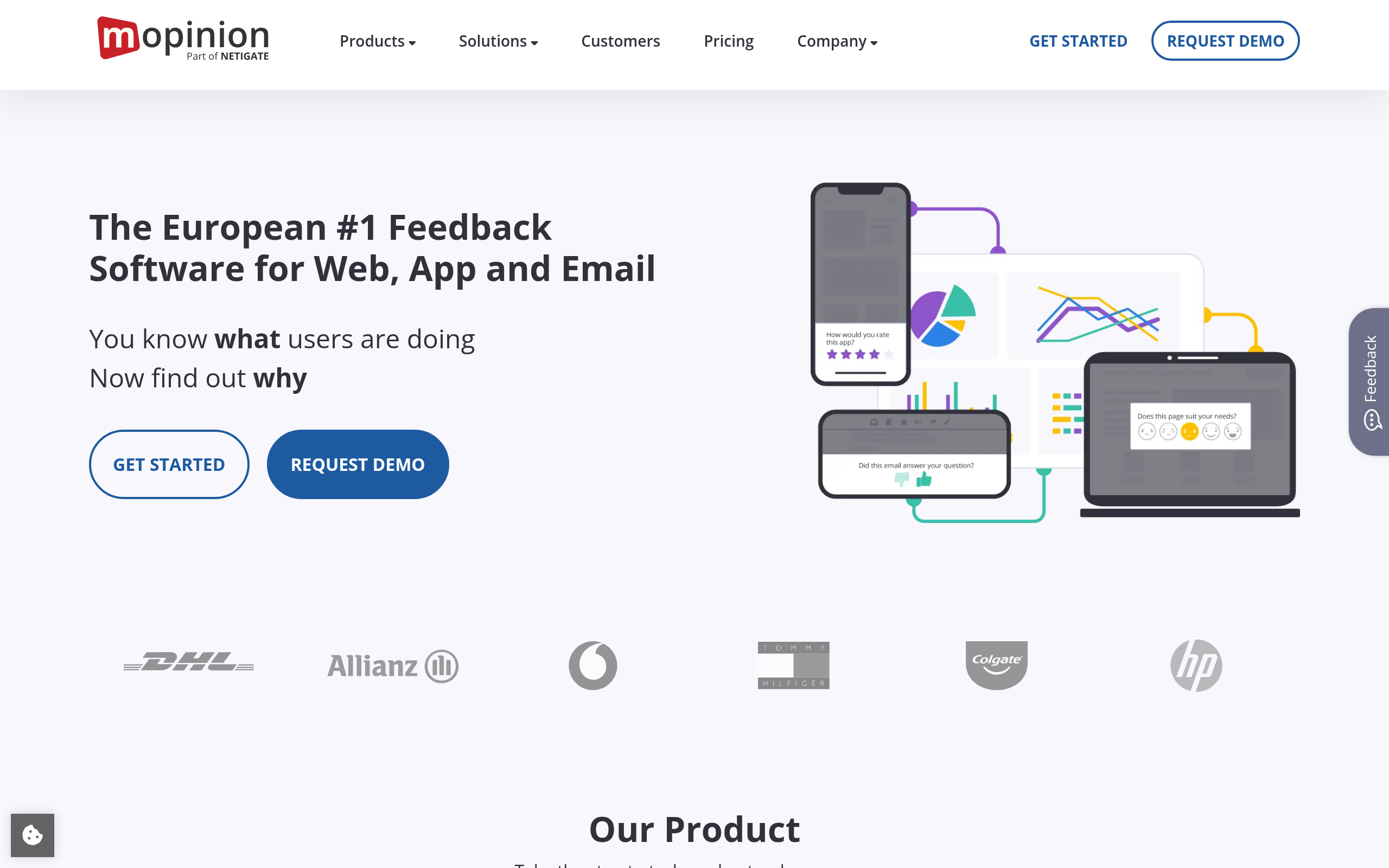
For gathering competitor and market data at scale, Browse AI automatically extracts data from websites — competitor pricing, product details, market signals — without manual collection. For consolidating data sources into one workable dataset, Coupler.io pulls scattered data together automatically. For analysing trends and building dashboards, Holistics turns your data into explorable reports and metrics, and Coefficient brings live data into spreadsheets for analysis. And for customer feedback analysis, Mopinion collects and analyses feedback so you understand what customers actually think. To go deeper, see our guides to AI data analysis and BI and AI web scraping and data extraction.
How to run AI-powered market research (step by step)
- Define the question — decide exactly what you need to learn before gathering any data, so the research stays focused.
- Gather data at scale with Browse AI for competitor and market data from across the web.
- Consolidate your sources with Coupler.io so all your data lives in one analysable place.
- Analyse trends with Holistics or Coefficient to turn data into dashboards and spot patterns.
- Understand customer feedback with Mopinion to surface sentiment and themes at scale.
- Verify before you conclude — check sources, sample quality and accuracy, then synthesise insight with human judgement.
The verify-the-data caveat (read this)
This is the part that matters most in market research. AI can gather, consolidate and summarise data at remarkable speed, but speed is dangerous if the data is wrong — and research conclusions drive real decisions about products, pricing and strategy that are expensive to get wrong. So the rule is firm: verify the data before you act on it. AI-gathered data can be incomplete, out of date, or scraped from unreliable sources; consolidated datasets can mix incompatible definitions; automated analysis can mislead if the underlying sample is biased or unrepresentative; and AI summaries of feedback can flatten nuance or overstate a pattern. None of this means the tools are not valuable — it means the output is a powerful starting point, not a verified conclusion. Check where the data came from and whether the sources are trustworthy. Confirm the sample is representative of the market or customers you care about. Sanity-check surprising findings against other evidence before you build a strategy on them. Treat AI-synthesised insight as a hypothesis to confirm, not a fact to act on blindly. The goal is to use AI for the scale and speed it uniquely provides, while keeping human interpretation, verification and judgement firmly in control of the conclusions — because a fast wrong answer is worse than a slow right one.
Turning data into genuine insight
The hardest and most valuable part of market research is not gathering data — AI has made that almost trivial — but turning data into insight that actually informs a decision. This is where the human researcher remains essential. AI can present you with dashboards full of trends, thousands of categorised feedback comments, and a tidy summary of what it found, but data is not the same as understanding. Insight comes from asking why a trend is happening, what it means for your specific situation, which findings are signal and which are noise, and what the business should actually do differently as a result. AI accelerates everything up to that point, dramatically — it gathers, consolidates, analyses and even drafts a first synthesis — but the leap from findings to a confident, contextualised recommendation requires human judgement, domain knowledge and an understanding of the business that AI does not have. The researchers who get the most from these tools treat AI as a tireless analyst that prepares the ground, then apply their own expertise to interpret what it surfaces. Used this way, the combination is far more powerful than either alone: AI provides the scale and speed, and the human provides the meaning. That division of labour is what turns faster research into better decisions.
Why AI is reshaping market research
Market research used to be constrained by sheer effort. Gathering competitor data meant someone manually visiting sites and logging prices; understanding customers meant reading through feedback by hand; consolidating sources meant hours of copy-pasting; and the cost of all that labour meant most organisations did research infrequently and on a narrow slice of the market. AI removes those constraints. Data can now be gathered continuously and at scale, customer feedback can be processed in bulk, sources can be consolidated automatically, and trends can be surfaced on demand. This changes what research can be: not an occasional, expensive project, but a continuous, broad capability that keeps a finger on the market's pulse. The researchers and businesses that benefit most are not the ones who let AI hand them conclusions, but the ones who use it to vastly expand what they can observe and then apply human judgement to interpret it and verify it. The labour constraint that limited research is gone; what remains, and matters more than ever, is the discipline to verify the data and the judgement to turn it into insight that drives the right decisions.
The bottom line
AI for market research accelerates the entire cycle — gathering data at scale, consolidating sources, analysing trends, understanding customer feedback, and synthesising insight — so a small research function can cover far more of the market, far more often. Use Browse AI to gather competitor and market data, Coupler.io to consolidate sources, Holistics and Coefficient to analyse trends, and Mopinion for customer feedback. Just verify the data: check sources, sample quality and accuracy, treat AI-synthesised insight as a hypothesis to confirm, and keep human interpretation and judgement in control of the conclusions. Done that way, AI makes research faster and broader without trading away the accuracy and judgement that good decisions depend on.
Disclaimer: AI market research tools gather and summarise data fast but are not infallible — data can be incomplete, outdated, unrepresentative or scraped from unreliable sources, and AI summaries can flatten nuance. Verify sources, sample quality and accuracy, and treat AI-synthesised insight as a hypothesis to confirm with human judgement before acting on it.
Tools mentioned in this guide
Pricing, features and model availability can change over time. Always verify current details on each tool's official website before deciding.
Frequently Asked Questions
What is AI for market research?
What is AI for market research?
What are the best AI tools for market research?
What are the best AI tools for market research?
Can AI gather market data automatically?
Can AI gather market data automatically?
Can I trust AI market research data?
Can I trust AI market research data?
Can AI analyse customer feedback?
Can AI analyse customer feedback?
Does AI replace market researchers?
Does AI replace market researchers?
Don't just pick a tool — get the whole workflow
Tell Comparee your goal and get a complete step-by-step AI workflow with the right tool for every step.