Best AI SEO Tools in 2026: Rank Higher and Get Cited
The best AI SEO tools in 2026 by use case — all-round SEO platforms, content optimization, backlinks and audits. Comparee's practical verdict.
Key takeaways
- SEO tools split by job — all-round platforms, content optimization, backlinks/research and quick audits.
- For an all-round platform, Semrush; for backlinks and research, Ahrefs; for content optimization, Surfer.
- For quick, affordable audits, Seobility.
- Match the tool to the job — and remember strong SEO now also means being citable by AI search.
SEO has expanded: ranking in Google still matters, but increasingly so does being the source AI answers cite. The good news is that the tools that help with one largely help with the other — strong, well-structured, authoritative content wins both. This guide compares the best AI SEO tools in 2026 by use case, so you pick the right tool for what you actually need rather than paying for an all-in-one when a specialist would do.
SEO tooling has matured into clear lanes, and knowing them saves money. There are broad platforms that try to do everything, specialists that do one thing exceptionally well, and lightweight tools for quick checks — and paying for an enterprise suite when you needed a content optimiser, or vice versa, is the most common waste. On top of that, the rise of AI search has added a new dimension: being cited in AI answers, not just ranking links. The reassuring part is that the fundamentals overlap — accurate, well-structured, authoritative content wins both. The comparison below sorts the tools by the job they do best, so you can assemble the few that match your real needs rather than over-buying.
The short answer
For an all-round SEO platform covering keywords, content, technical and tracking, Semrush is the most complete. For backlink analysis and deep research, Ahrefs. For optimising the content itself around search intent, Surfer. And for quick, affordable site audits, Seobility.
Best AI SEO tools by use case
| Use case | Best pick | Why |
|---|---|---|
| All-round platform | Semrush | Keywords, content, technical, tracking |
| Backlinks & research | Ahrefs | Strong backlink and keyword data |
| Content optimization | Surfer | Score and guide on-page content |
| Quick audits | Seobility | Affordable site checks |
Best all-round platform: Semrush
Semrush is the most complete SEO platform here — it covers keyword research, content tools, technical audits, competitor analysis and rank tracking in one place. For teams and serious site owners who want a single tool that does most of the SEO job, it's the capable default. The breadth means you're rarely missing a feature, and it scales from solo sites to agencies. If you want one platform to anchor your SEO, Semrush is the strong all-round pick.
Best for backlinks and research: Ahrefs
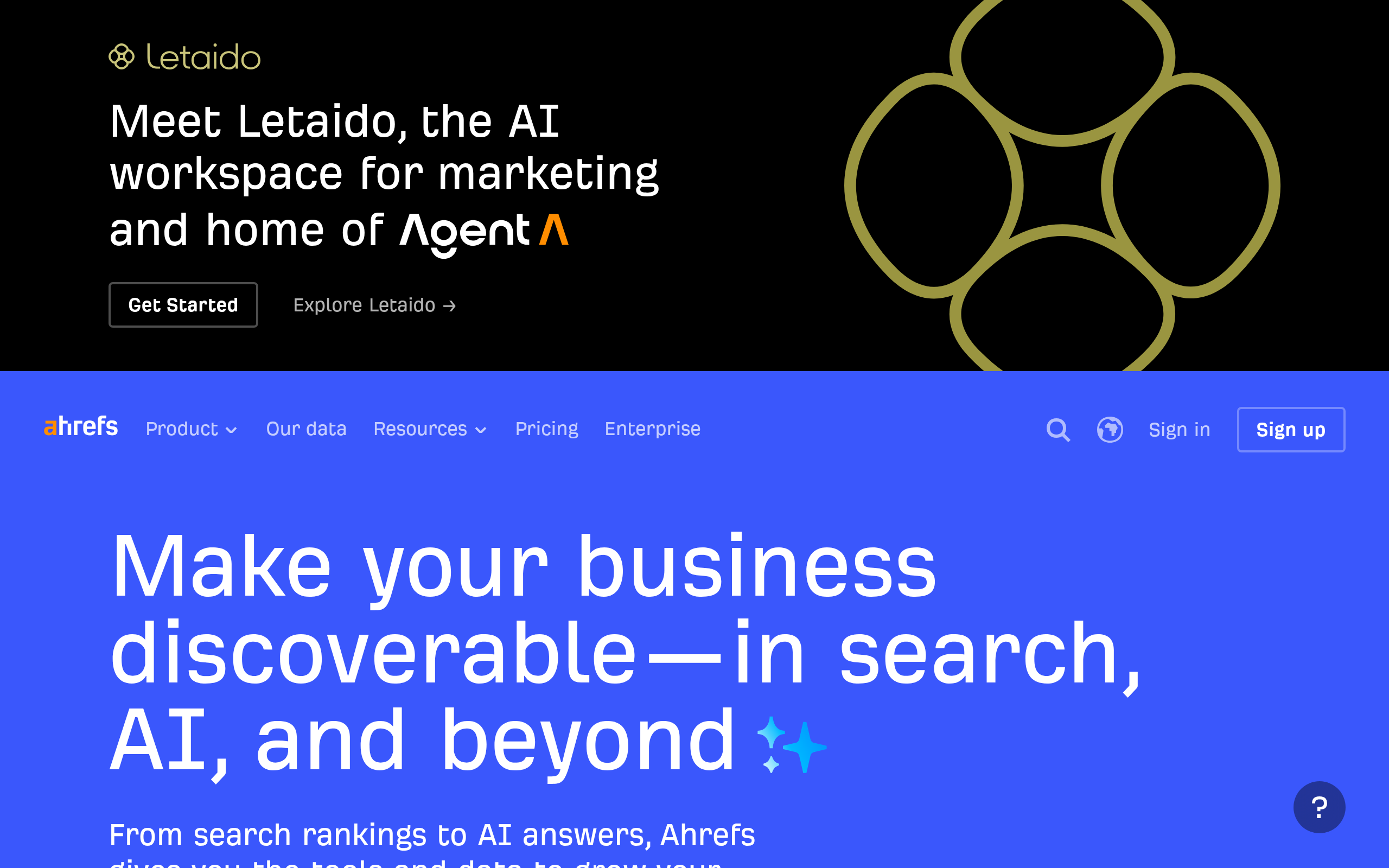
Ahrefs is renowned for its backlink data and research depth — understanding who links to you and your competitors, finding keyword opportunities, and auditing sites. Many SEOs choose it specifically for the quality of its link and keyword data. If link building and deep competitive research are central to your strategy, Ahrefs is often the preferred tool. It overlaps with Semrush as an all-rounder, so the choice between them often comes down to which interface and data you prefer — both are strong.
Best for content optimization: Surfer
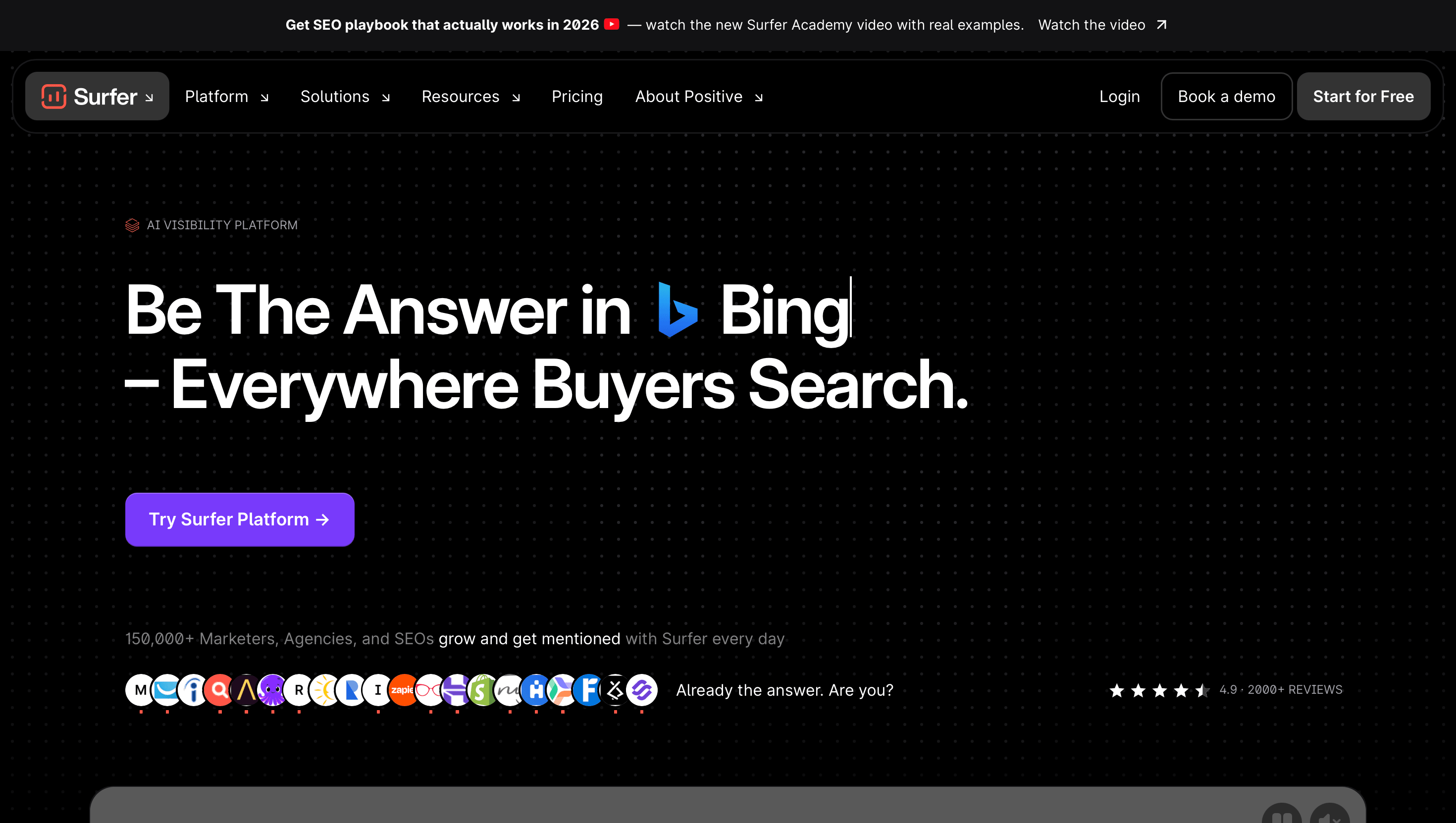
Ranking isn't just about keywords and links — the content itself has to match search intent and be well-structured. Surfer focuses on exactly that: it scores and guides your on-page content, helping you structure articles to rank (and, increasingly, to be citable by AI). For content teams who want concrete, data-driven guidance on what to write and how to structure it, Surfer is the specialist. It pairs naturally with an all-round platform — research with Semrush or Ahrefs, then optimise the content with Surfer.
Best for quick audits: Seobility
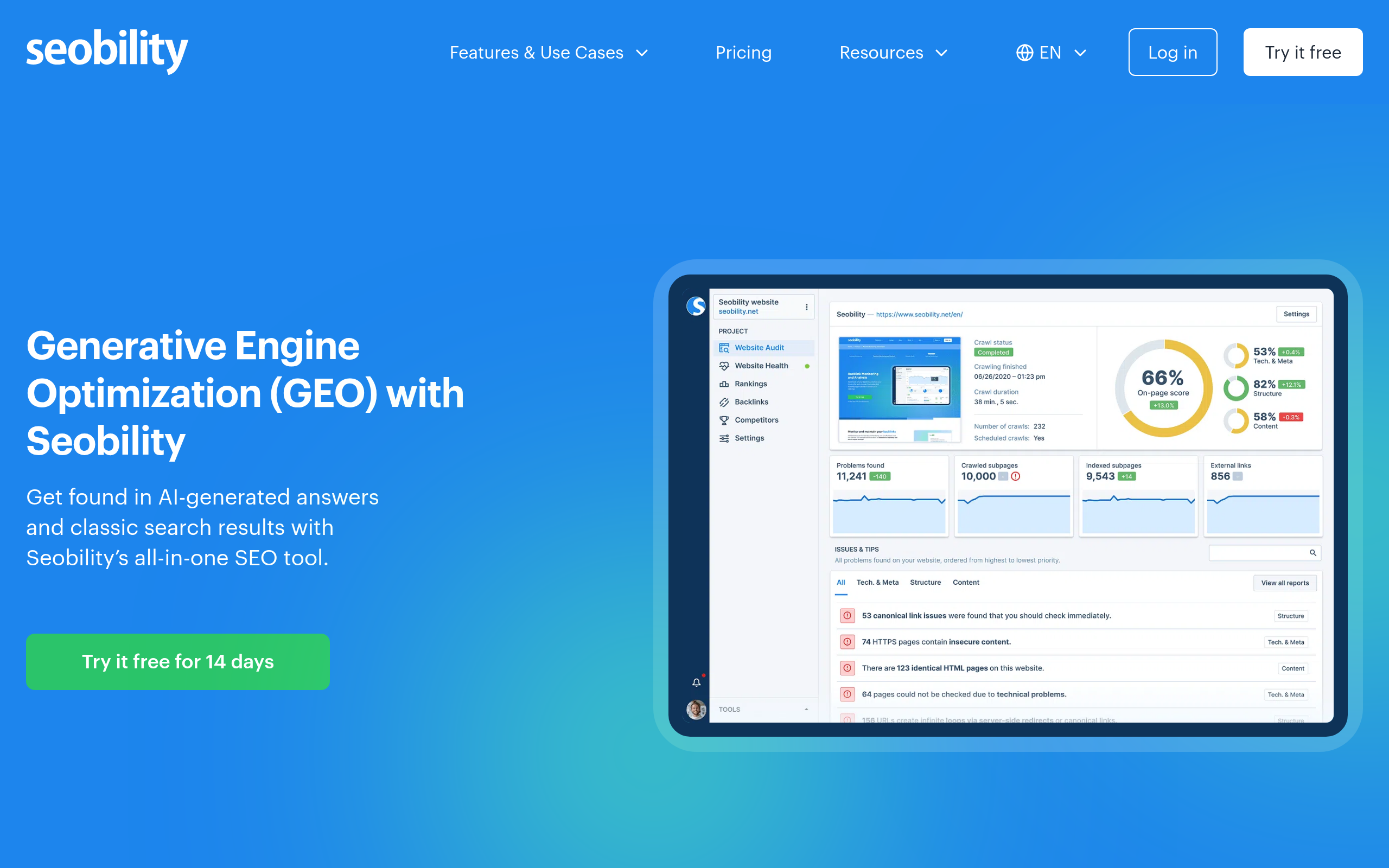
Not every SEO task needs an enterprise platform. Seobility offers affordable, accessible site audits and checks — a good fit for smaller sites and budgets that need to find and fix issues without a heavy tool. It's the practical choice when you want a clear health check rather than a full suite. For solo site owners and small businesses, it covers the essentials at a friendly price point.
SEO and AI search (GEO)
One shift worth understanding: people increasingly get answers from AI search (ChatGPT, Gemini, Google AI Overviews), not just blue links. Optimising to be cited by AI — sometimes called generative engine optimization — overlaps heavily with good SEO: accurate, well-structured, authoritative content helps both. The tools above support that foundation, and you can go deeper in our guide to generative engine optimization tools. The takeaway: don't treat AI search as separate from SEO — extend your SEO to cover it.
Comparee recommendation
- All-round platform? → Semrush.
- Backlinks & research? → Ahrefs.
- Content optimization? → Surfer.
- Quick audits on a budget? → Seobility.
Choose by the SEO job in front of you. Compare the options in the SEO & LLM visibility category and the top SEO tools on Comparee.
Common mistakes with SEO tools
The first mistake is buying a big all-in-one platform for a need a specialist would cover better, or vice versa — match the tool to the job. Semrush and Ahrefs are powerful all-rounders, but if your real gap is content quality, Surfer serves you better; if it's a quick health check, Seobility is enough. The second mistake is treating SEO tools as a substitute for good content: they guide and measure, but they don't write authoritative, genuinely useful pages for you. The third is chasing metrics over intent — a high "score" means little if the content doesn't actually answer what searchers (and AI) are looking for.
How to build an effective SEO stack
Start with the one job that drives your results. If it's research and competitive insight, anchor on Semrush or Ahrefs; if it's producing content that ranks, add Surfer to optimise it; if you just need to find and fix site issues affordably, Seobility covers that. Most teams pair a research platform with a content optimiser, and that combination handles the bulk of modern SEO. Crucially, extend your thinking to AI search: the same accurate, well-structured, authoritative content that ranks on Google is what gets cited in AI answers, so optimise for both at once rather than treating them as separate projects. Use free trials to test on your real site before committing.
Is an AI SEO tool worth it?
For anyone serious about organic traffic, yes — the right SEO tool turns guesswork into data, showing you what to target, how competitors rank, and where your site has issues. The honest caveat is that a tool guides and measures but doesn't replace the work: you still have to produce genuinely useful, well-structured content and earn authority over time. Treat Semrush, Ahrefs, Surfer or Seobility as instruments that make your effort more effective, not a shortcut around it. Start with a free trial, focus on your single biggest gap, and expand your stack only as specific needs appear.
The bottom line
The best AI SEO tool depends on the job: Semrush as an all-round platform, Ahrefs for backlinks and research, Surfer for content optimization, and Seobility for affordable audits. Most offer trials — test your top pick on your real site, and remember that strong, structured content now wins both Google rankings and AI citations.
Tools mentioned in this guide
Pricing, features and model availability can change over time. Always verify current details on each tool's official website before deciding.
Frequently Asked Questions
What are the best AI SEO tools in 2026?
What are the best AI SEO tools in 2026?
Semrush vs Ahrefs — which is better?
Semrush vs Ahrefs — which is better?
What is the best tool for content optimization?
What is the best tool for content optimization?
Is there an affordable SEO tool for small sites?
Is there an affordable SEO tool for small sites?
Do SEO tools help with AI search visibility?
Do SEO tools help with AI search visibility?
Don't just pick a tool — get the whole workflow
Tell Comparee your goal and get a complete step-by-step AI workflow with the right tool for every step.