How to Optimize Your Website with AI SEO Tools (2026)
A practical 2026 guide to using AI SEO tools for keyword research, content optimization, technical audits, and GEO/LLM visibility—with honest tool picks.
- AI SEO tools cover four distinct jobs: keyword research, content optimization, technical audits, and—new for 2026—GEO/LLM visibility (getting cited by ChatGPT, Perplexity, and Gemini).
- The best all-in-one pick for most site owners is SE Ranking or Ahrefs; for pure content optimization, Surfer and NEURONwriter lead the field.
- LLM visibility is now a real traffic channel: OmniSEO is one of the first platforms built specifically to audit and improve how AI systems surface your content.
- Factual, structured content—tables, clear FAQs, direct opening answers—beats fluffy long-form for both Google and AI citations.
- Budget-conscious teams should look at Mangools, Seobility, or Morningscore—strong value without enterprise pricing.
- Never rely on a single tool: a keyword tool + a content optimizer + a technical auditor covers 90% of real-world SEO needs.
The short answer: pick an AI SEO tool that matches your immediate bottleneck—keyword discovery, content scoring, site-health monitoring, or LLM visibility—then build a simple, repeatable workflow around it. You do not need to buy every platform on the market. Most serious site owners run two or three specialized tools rather than one bloated suite.
This guide walks through exactly how to do that, with concrete steps for each use case and an honest comparison of the tools worth your time in 2026.
What Does AI SEO Optimization Actually Mean in 2026?
"AI SEO tools" covers a wide range of software, and understanding the four distinct categories will prevent you from buying the wrong tool for the wrong job.
Content optimization tools analyze top-ranking pages for a target keyword and tell you which topics, entities, and semantic terms to include. They score your draft in real time as you write.
Keyword research tools use machine learning to surface search volume, competition levels, intent signals, and topic clusters you would not find manually—including long-tail and conversational queries that AI assistants frequently answer.
Technical SEO audit tools crawl your site, flag issues (broken links, slow pages, missing schema, crawl blocks, duplicate content), and increasingly suggest AI-generated fixes prioritized by impact.
GEO tools (Generative Engine Optimization) are the 2026 newcomers. They track whether AI chatbots cite your domain, analyze the types of content that earn citations, and flag gaps in your topical authority. This category did not meaningfully exist three years ago, and it is now an essential layer of any serious SEO strategy.
Most platforms blend categories. Ahrefs, for instance, covers keyword research, backlink analysis, content gap detection, and technical auditing in one dashboard. Surfer focuses almost exclusively on on-page content scoring. OmniSEO targets the GEO angle directly. Knowing which job matters most to you right now is the fastest way to make a good tool choice.
How Do I Choose the Right AI SEO Tool for My Site?
Before comparing features, answer three questions:
- What is your biggest bottleneck right now? If you rank for keywords but traffic is flat, technical issues or thin content are the likely cause. If you have no rankings at all, keyword research and content creation are the priority.
- How large is your site? Small sites (under 200 pages) do not need enterprise crawl quotas. Larger sites need crawlers that can handle tens of thousands of URLs without throttling.
- What is your realistic budget? There is a genuine spectrum—from freemium entry points to expensive agency-tier platforms—and the more expensive option is not always better for your situation.
| Tool | Best for | Standout strength | Budget tier |
|---|---|---|---|
| Ahrefs | Full-stack SEO teams | Backlink database + deep keyword explorer | Mid-to-high |
| Surfer | Content teams, bloggers | Real-time content score + SERP analysis | Mid |
| SE Ranking | Agencies & freelancers | All-in-one at genuinely fair pricing | Mid |
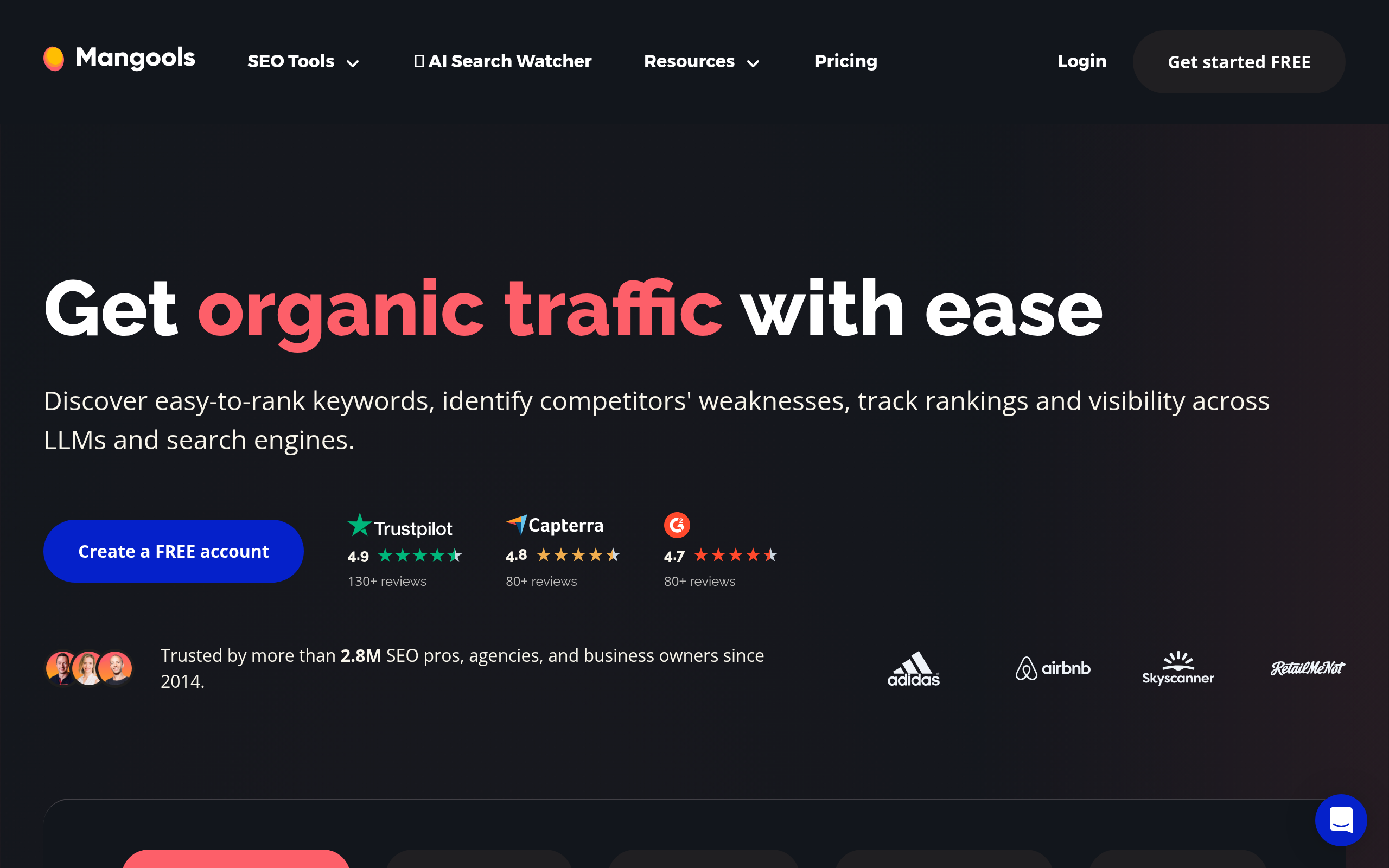
| Mangools | Small teams & solopreneurs | Intuitive UX, generous keyword data | Low-to-mid |
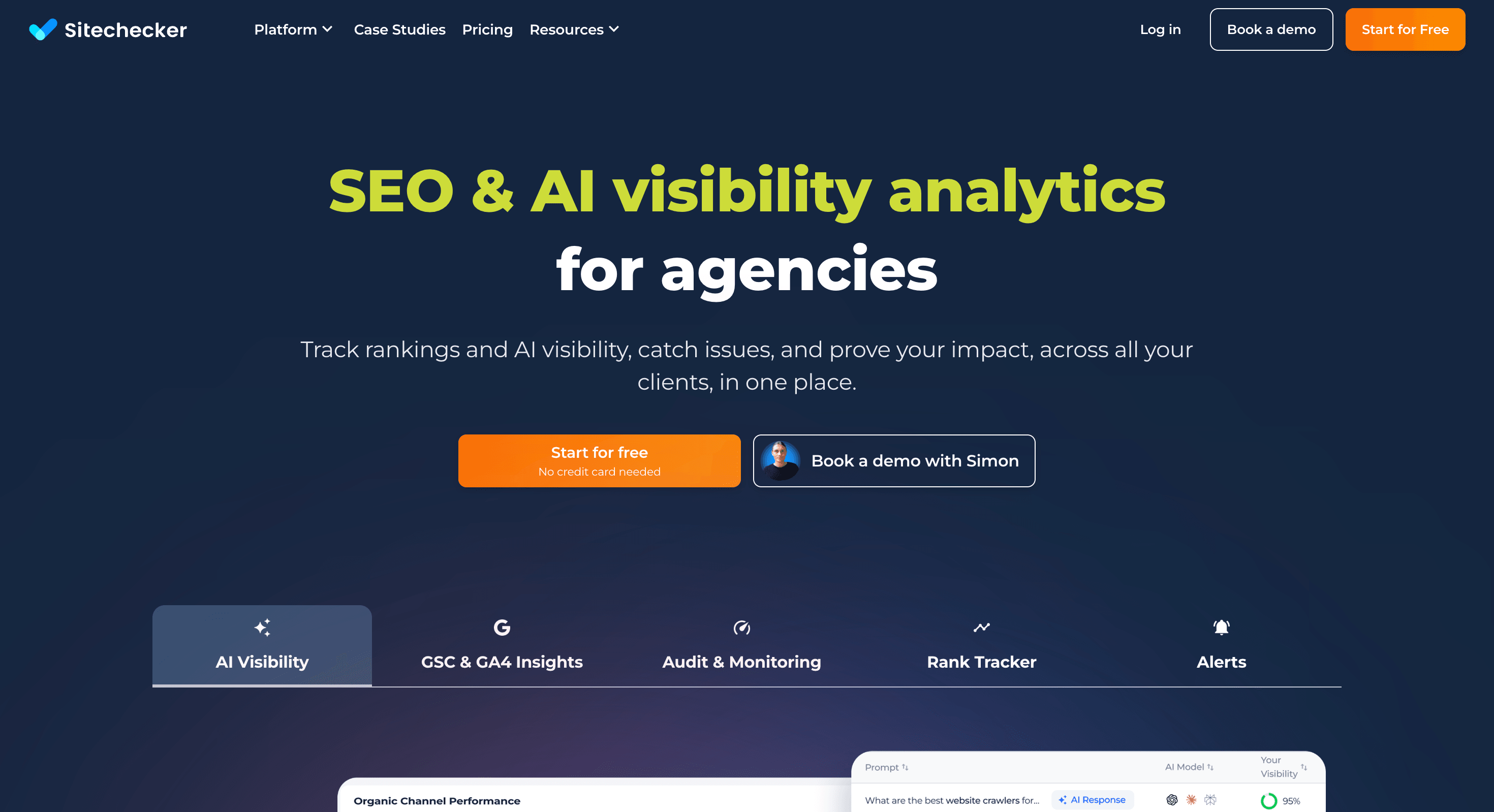
| Sitechecker | Technical SEO focus | Continuous site monitoring + real-time alerts | Low-to-mid |
| Morningscore | Small businesses, beginners | Gamified SEO health score, clean UI | Low |
| OmniSEO | LLM / GEO visibility | AI citation tracking & GEO audits | Mid |
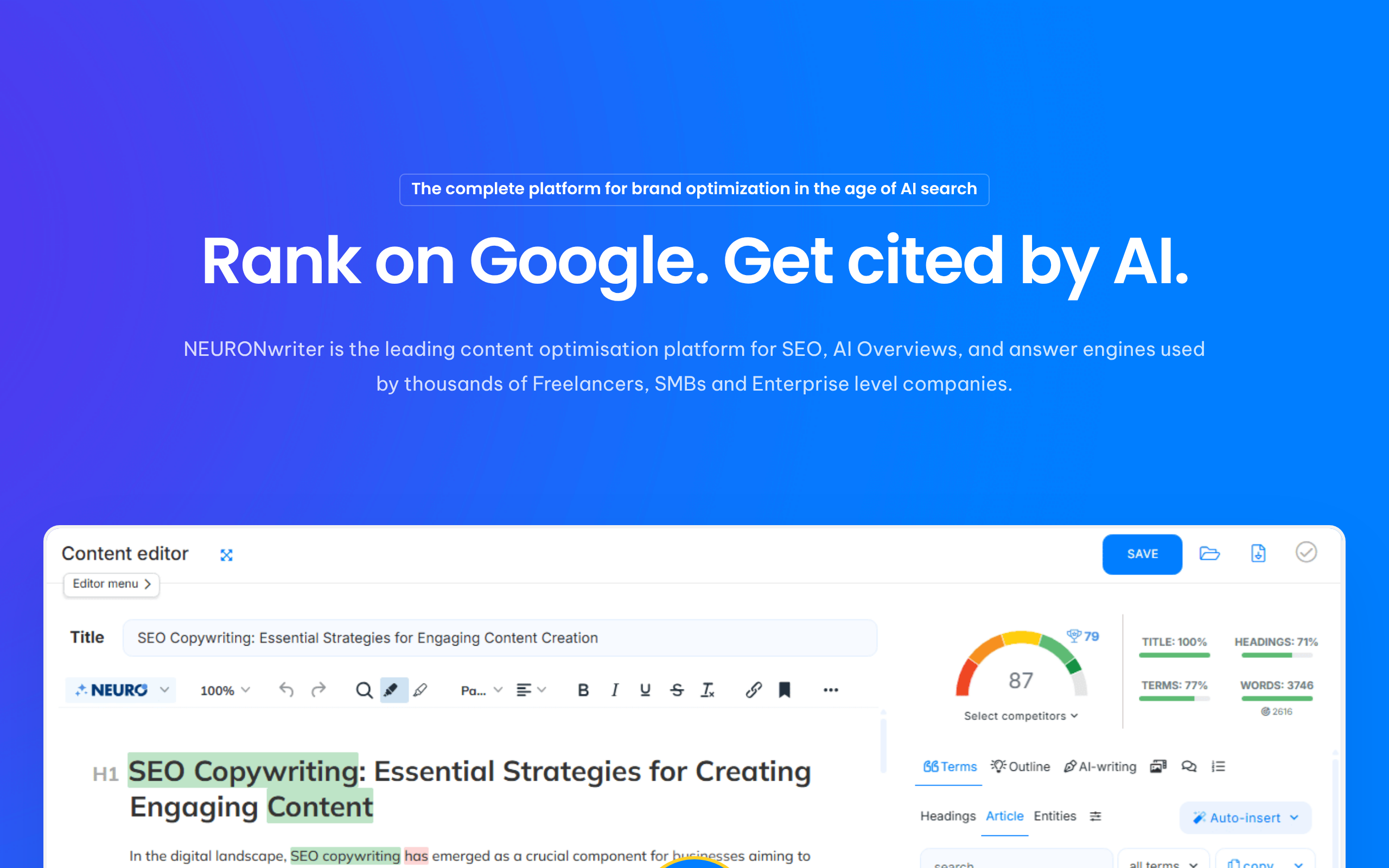
| NEURONwriter | NLP-driven content writers | Semantic NLP scoring + internal linking | Low-to-mid |
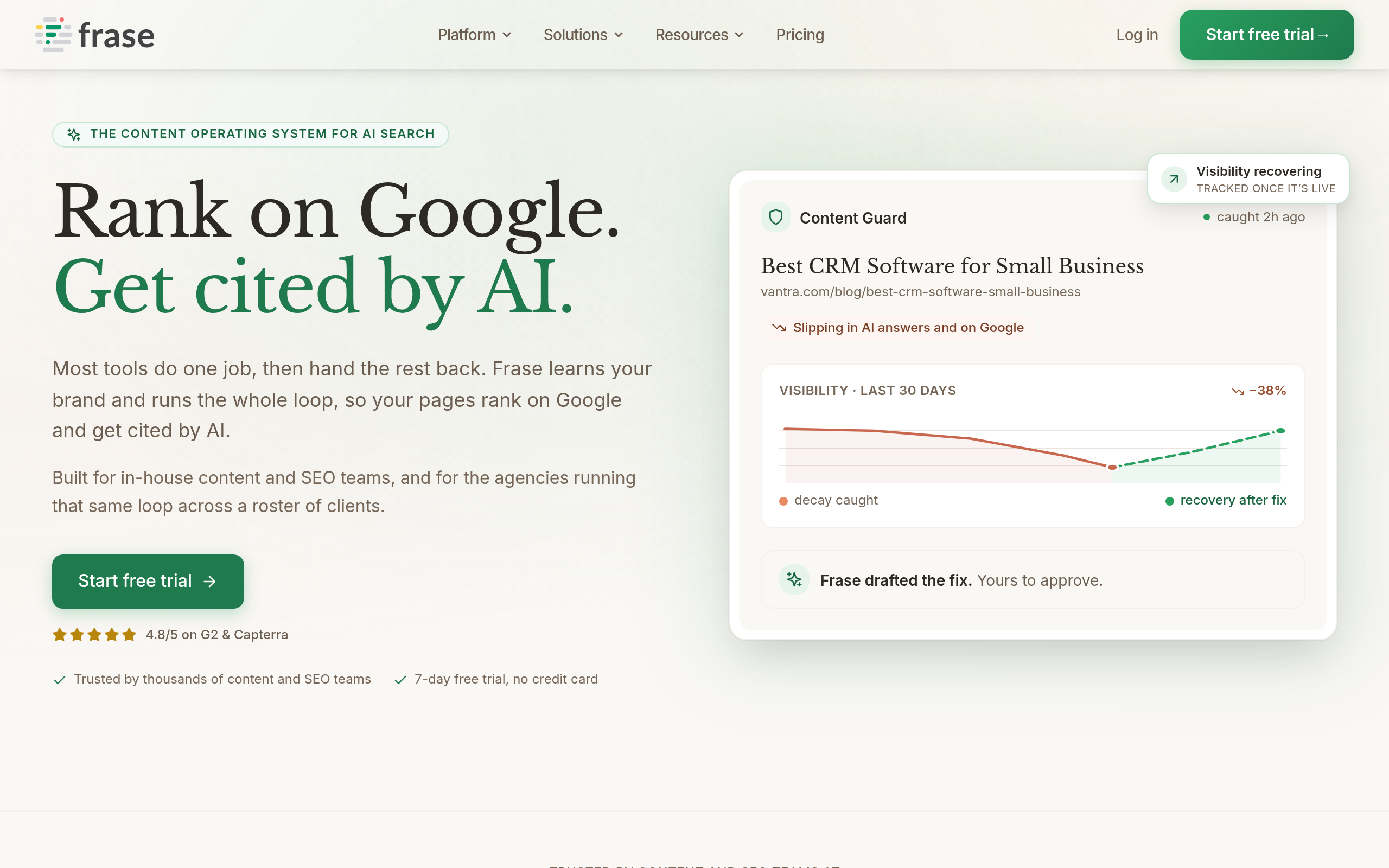
| Frase | Content brief creation | AI-generated briefs + answer-engine research | Low-to-mid |
How Do I Use AI Tools for Keyword Research That Actually Ranks?
Keyword research in 2026 is no longer just about monthly search volume. Modern AI tools surface intent clusters, topical authority gaps, and AI-cited queries—information that was invisible in older keyword tools.
Step 1: Start with a seed topic, not a single keyword
In Ahrefs, enter your seed topic into the Keyword Explorer and use the "Questions" filter. This surfaces informational queries in natural language—the exact phrasing that AI assistants use when answering user questions. Prioritize keywords with a clear question format (how, what, which, why) because they map directly to FAQ and GEO content opportunities.
In Mangools' KWFinder, use the SERP overlay to check whether top results are strong authority sites or weaker pages that you could realistically compete with. Small teams waste less time targeting keywords that are effectively locked by major publishers.
Step 2: Cluster by intent, not just by keyword
SE Ranking's Keyword Grouper and Mangools' clustering features let you group semantically related terms. Build one comprehensive piece of content per intent cluster rather than one page per keyword. This is how you build topical authority—the signal that both Google and AI citation systems reward most heavily.
Step 3: Find competitor gaps
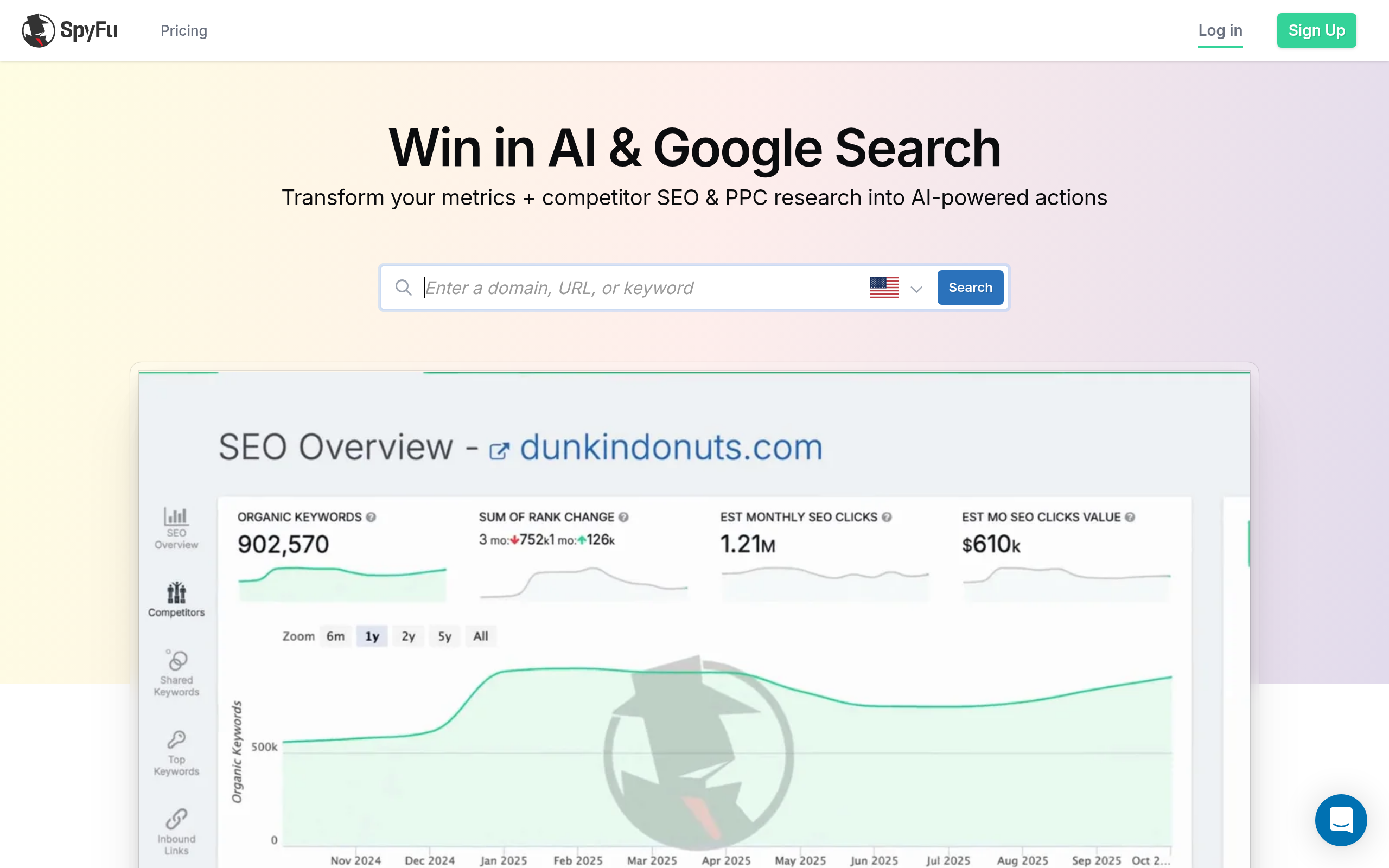
Ahrefs' Content Gap tool and SpyFu's competitor keyword overlap reports show you terms your competitors rank for that you do not. These represent your fastest wins—you already know there is search demand and a content format that works.
Step 4: Validate with SERP structure before writing
Check what type of content currently ranks for your target keyword—list posts, how-to guides, comparison tables, or product pages. Your format should match the proven intent. A how-to guide targeting a keyword dominated by comparison tables will underperform regardless of content quality.
What Is the Best Way to Optimize On-Page Content with AI?
This is where tools like Surfer, NEURONwriter, Frase, and Scalenut shine. Each works by analyzing top-ranking pages for your target keyword and reverse-engineering common signals: topic coverage, term frequency, heading structure, word count, and semantic entity density.
| Feature | Surfer | NEURONwriter | Frase | Scalenut |
|---|---|---|---|---|
| Real-time content score | Yes | Yes | Partial | Yes |
| NLP / semantic analysis | Yes | Strong (NLP focus) | Yes | Yes |
| AI writing assist | Yes (Surfer AI) | Yes | Yes | Yes |
| Content brief generator | Yes | Partial | Yes (primary feature) | Yes |
| Internal linking suggestions | Yes | Yes (strongest here) | Partial | Partial |
| SERP analysis depth | Detailed | Yes | Yes | Yes |
The practical workflow:
- Enter your target keyword into your chosen optimization tool.
- Review the suggested topic coverage: terms to include, headings to address, questions to answer.
- Write your draft inside the tool's editor or paste it in to get a live score.
- Aim for a score in the recommended range—but do not stuff terms robotically. Readable prose at 75/100 beats awkward keyword-stuffed content at 95/100.
- Run the internal linking check (NEURONwriter is particularly strong here) to connect the new piece to your existing topic cluster.
Important caution: Content scoring tools give you a correlation signal, not a ranking guarantee. The score reflects what currently ranks, not a direct Google algorithm factor. Use it as a structural guide, not the sole optimization target.
How Do I Run a Technical SEO Audit with AI Tools?
Technical SEO is the foundation everything else sits on. You can write the best-optimized content in your niche and still fail to rank if Google cannot crawl and index your pages efficiently—or if your Core Web Vitals are poor enough to trigger ranking suppression.
Sitechecker is built specifically for ongoing technical monitoring. It runs continuous crawls and sends alerts when issues appear—broken links, redirect chains, missing meta tags, page speed drops—so you catch problems before they accumulate. This is particularly valuable for sites that publish frequently.
SE Ranking's audit module scores your entire site's health, categorizes issues by severity (critical, warning, notice), and provides actionable fix recommendations. It covers the same territory as standalone audit tools but is integrated with rank tracking and content tools, making it easy to correlate technical changes with ranking shifts.
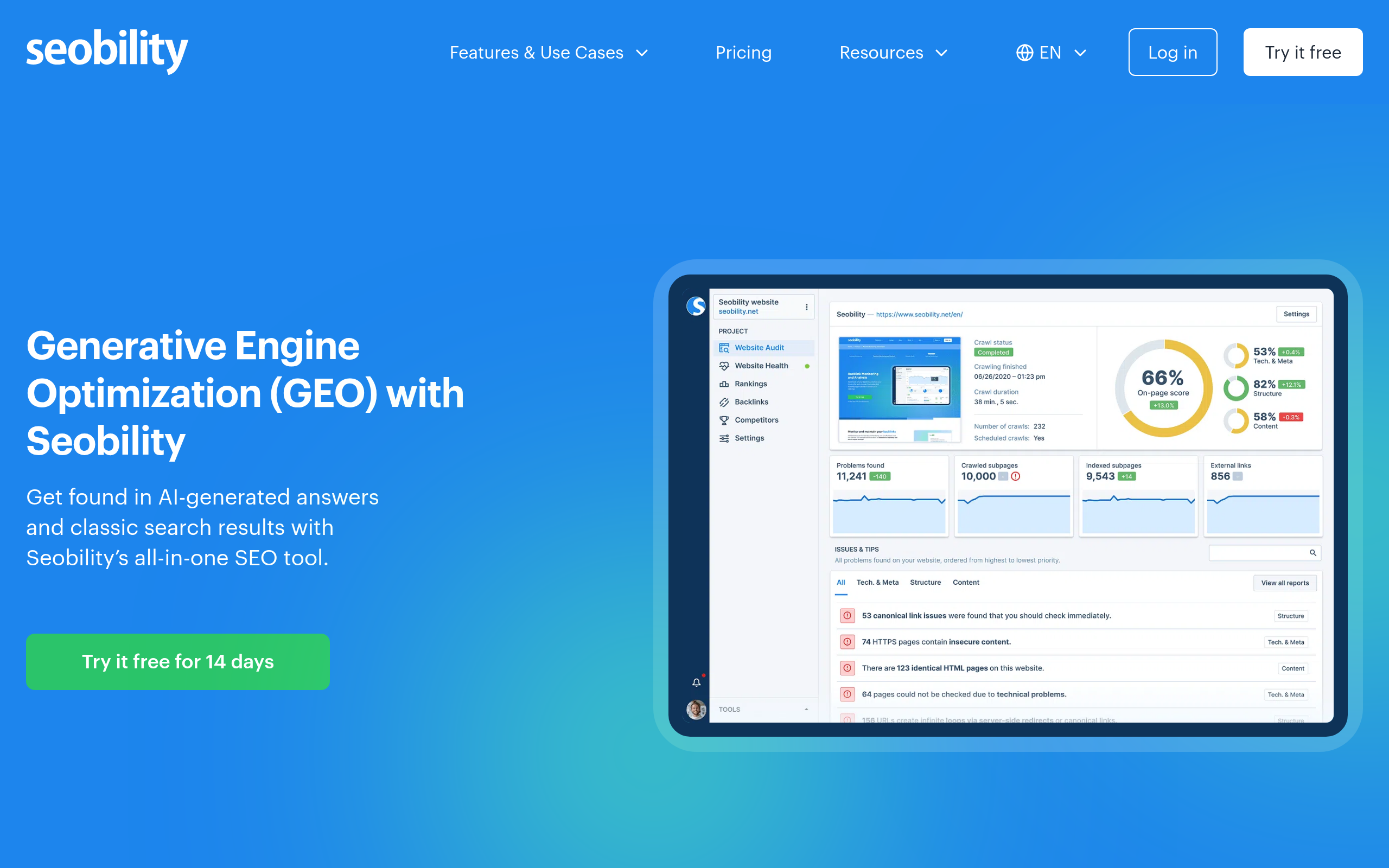
Seobility offers a freemium tier that covers the essentials—crawl errors, meta issues, page speed flags—making it a solid starting point for smaller sites that cannot justify a paid technical tool yet.
Ahrefs' Site Audit is among the most comprehensive for established sites, with detailed crawl reports, structured data validation, and the ability to schedule recurring crawls with trend tracking over time.
| Technical feature | Sitechecker | SE Ranking | Seobility | Ahrefs |
|---|---|---|---|---|
| Continuous monitoring | Yes (core feature) | Scheduled crawls | Weekly (free tier) | Scheduled crawls |
| Core Web Vitals tracking | Yes | Yes | Partial | Yes |
| Schema / structured data check | Yes | Yes | Yes | Yes |
| Redirect chain detection | Yes | Yes | Yes | Yes |
| Free tier available | Limited | Trial only | Yes | No |
| Best for | Ongoing alerts | Full-stack audit | Budget sites | Large / complex sites |
Technical priority order (highest impact first):
- Crawlability and indexation—ensure Google can actually reach your key pages
- Core Web Vitals, especially Largest Contentful Paint and Cumulative Layout Shift
- Broken internal links and orphaned pages with no internal links pointing to them
- Missing, duplicate, or truncated meta titles and descriptions
- FAQ, HowTo, and Article schema markup on relevant content types
What Is GEO and How Do I Get My Site Cited by ChatGPT and Perplexity?
GEO (Generative Engine Optimization) is the practice of optimizing your content to be surfaced and cited by AI-powered answer interfaces—ChatGPT Search, Perplexity, Google AI Overviews, and similar systems. For many publishers, this is now a measurable, growing traffic source that runs parallel to traditional organic search.
The mechanics differ from classic SEO. AI systems do not rank pages in a list—they cite sources they judge to be authoritative, well-structured, and factually reliable for the specific question at hand. Key signals include:
- Clear, direct answers near the top of the page—not buried in the middle of a long article
- Structured FAQ schema—AI systems frequently pull Q&A pairs from structured data
- Tables and comparative data—easier for AI to extract and attribute than flowing prose
- Entity clarity—your brand, products, and topic focus clearly identified in title, headings, and opening paragraph
- Consistent topical authority—a site that covers a topic comprehensively is cited far more often than a generalist site with one article on the subject
OmniSEO is one of the first platforms built explicitly for this use case. It tracks which AI engines are citing your domain, what queries trigger citations, where you appear versus competitors, and where gaps exist. Think of it as rank tracking—but for AI answer systems rather than the traditional Google SERP. You can explore more tools covering this angle in the SEO & LLM Visibility category on Comparee.
Practical GEO workflow:
- Identify your 10 highest-value queries—the questions customers ask that you most want to own.
- Write a definitive answer article for each: clear short answer in the opening paragraph, tables for comparisons, comprehensive FAQ section with schema markup.
- Add FAQ schema to these pages via your CMS or a schema plugin.
- Use OmniSEO or manual spot-checks via ChatGPT Search and Perplexity to baseline your citation performance.
- Update articles when AI-cited competitors publish newer data, more current tool reviews, or clearer structured answers.
What Does a Sustainable AI SEO Workflow Look Like for a Real Site Owner?
Here is a repeatable four-week workflow for a site owner publishing two to four articles per month—realistic for a one- or two-person team without a full-time SEO resource.
Week 1 — Research and planning
- Use Ahrefs or SE Ranking for keyword and topic research
- Identify four to eight target keywords with clear intent signals
- Run a competitor content gap analysis to find fast-win opportunities
- Prioritize topics that overlap with AI-cited query patterns (question-format, comparison, definition)
Week 2 — Content production
- Create detailed content briefs using Frase or Surfer's brief generator
- Write drafts and score them in Surfer or NEURONwriter before publishing
- Add FAQ schema to every article; use structured comparison tables where the topic supports it
- Run internal link suggestions via NEURONwriter to connect new content to existing cluster pages
Week 3 — Technical health check
- Review the latest crawl report in Sitechecker or SE Ranking
- Address any critical or high-severity issues before publishing new content
- Check Core Web Vitals for pages published in the last 30 days
Week 4 — GEO audit and update cycle
- Review rank movements in your keyword tracker
- Run an OmniSEO check on AI citation performance for your priority pages
- Update one existing article based on GEO gaps, fresher data, or competitor improvements
Comparee's Verdict — Which AI SEO Tool Should You Actually Use?
Here is where we skip the "it depends" and give you a direct answer based on your situation.
Solo blogger or small business owner just getting started: Begin with Mangools for keyword research and Seobility's free tier for technical audits. Both have beginner-friendly interfaces that explain what to do, not just what the problem is. Add Morningscore if you want an engaging health score to track momentum over time.
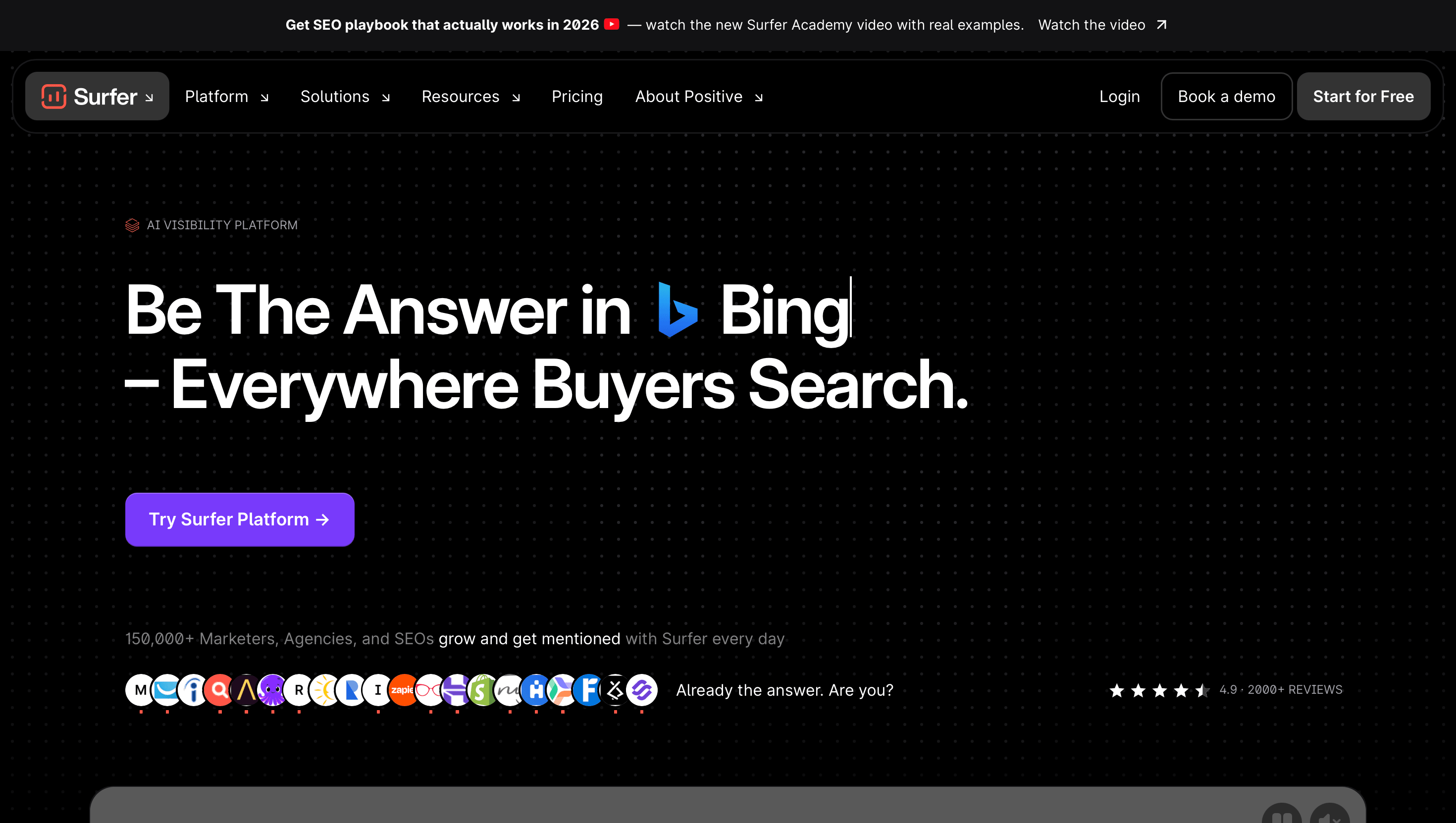
Content team publishing two or more articles per week: Surfer is the standard for a reason—real-time content scoring integrated into your writing workflow genuinely improves output quality at scale. Pair it with Frase for brief creation if you work with external writers who need structured guidance.
Small to mid-size business wanting all-in-one coverage without enterprise pricing: SE Ranking is the best value-for-money pick on this entire list. Keyword research, rank tracking, content optimization, and site audit in a single interface at a price that does not require justifying to a CFO.
SEO professional or agency managing multiple client sites: Ahrefs is the industry benchmark for backlink data and keyword research depth. It costs more, but the data quality and breadth justify the investment at scale. The fresh index and historical data are particularly valuable for competitive niches.
Publisher or brand where GEO and LLM visibility are a strategic priority: OmniSEO is the dedicated tool for this job. No other tool on this list was built specifically to track and improve AI citation performance. Use it alongside a traditional SEO platform rather than as a replacement.
Budget-constrained teams with technical SEO issues: Sitechecker for ongoing monitoring and alerts; Seobility for a free baseline audit. Both deliver real value at a price point accessible to early-stage projects.
NEURONwriter is the right choice for teams that take internal linking and semantic topic clusters seriously—it surfaces internal link opportunities more proactively than most competitors and is particularly strong for NLP-based content scoring. SurgeGraph is worth evaluating for teams focused on long-form content automation at scale. SpyFu adds competitive intelligence depth that pure SEO tools often miss, particularly for PPC-adjacent strategies.
Tools mentioned in this guide

Pricing, features and model availability can change over time. Always verify current details on each tool's official website before deciding.
Frequently Asked Questions
What is the best AI SEO tool for beginners?
What is the best AI SEO tool for beginners?
Can AI SEO tools replace SEO professionals?
Can AI SEO tools replace SEO professionals?
How do I get my website cited by ChatGPT and Perplexity?
How do I get my website cited by ChatGPT and Perplexity?
Is Surfer SEO worth it in 2026?
Is Surfer SEO worth it in 2026?
What is the difference between SE Ranking and Ahrefs?
What is the difference between SE Ranking and Ahrefs?
How often should I run a technical SEO audit?
How often should I run a technical SEO audit?
What is NEURONwriter best for?
What is NEURONwriter best for?
Do AI SEO tools work for e-commerce sites?
Do AI SEO tools work for e-commerce sites?
Don't just pick a tool — get the whole workflow
Tell Comparee your goal and get a complete step-by-step AI workflow with the right tool for every step.