Best AI Tools for Sentiment Analysis in 2026
Compare the best AI tools for sentiment analysis in 2026. Mopinion, IrisAgent, Sprout Social, Agorapulse, ThoughtSpot, PandasAI — find the right tool for your c
- Mopinion is the top pick for teams collecting open-text feedback on websites and mobile apps — analysis is built in, no separate NLP stack needed.
- IrisAgent stands out for support desk teams: it auto-classifies tickets by sentiment, urgency, and topic before a human agent reads them.
- Sprout Social leads for social media sentiment at scale; Agorapulse is the budget-friendly alternative for agencies and SMBs.
- ThoughtSpot and PandasAI serve analytics teams that already have sentiment scores and need accessible querying on top of their data.
- The right tool depends on where your feedback lives — no single platform dominates every channel equally well.
The best AI tool for sentiment analysis in 2026 depends on where your feedback lives. For website and in-app surveys, Mopinion is the strongest all-in-one choice. For support ticket intelligence, IrisAgent is purpose-built for the job. Social media teams should look at Sprout Social for enterprise-grade listening or Agorapulse for more accessible pricing. Data and analytics teams working with structured datasets will find ThoughtSpot and PandasAI the most flexible companions. This guide compares each tool honestly so you can make the right call for your team and channel.
What Is AI Sentiment Analysis — and Why Does It Matter in 2026?
Sentiment analysis (also called opinion mining) is the automated process of detecting whether text expresses positive, negative, or neutral feeling — and increasingly, more granular emotions like frustration, urgency, satisfaction, or confusion. Modern AI-powered tools go well beyond simple keyword lists. They use natural language processing (NLP) and machine learning to understand context, handle negation, catch domain-specific language, and flag mixed or ambiguous sentiment across thousands of data points simultaneously.
In 2026, the use cases have expanded well beyond their social-media monitoring origins. Product teams analyze open-text NPS and CSAT responses at scale without manual tagging. Support desks use sentiment to triage tickets and surface at-risk customers before an agent reads the message. Marketing teams track brand perception across social networks and review platforms in near real-time. Customer experience leaders aggregate sentiment signals across every touchpoint — website, app, email, and support — to build a continuous picture of how customers truly feel.
The core challenge is that different data channels require different tools. A social listening platform built for monitoring Twitter and Reddit will be a poor fit for analyzing structured in-app survey responses, and vice versa. Matching the tool to your primary feedback channel is the single most important decision in this buying process — and it’s the lens this guide uses throughout.
What Are the Best AI Tools for Sentiment Analysis in 2026?
Mopinion — Best for Website and In-App Feedback Analysis
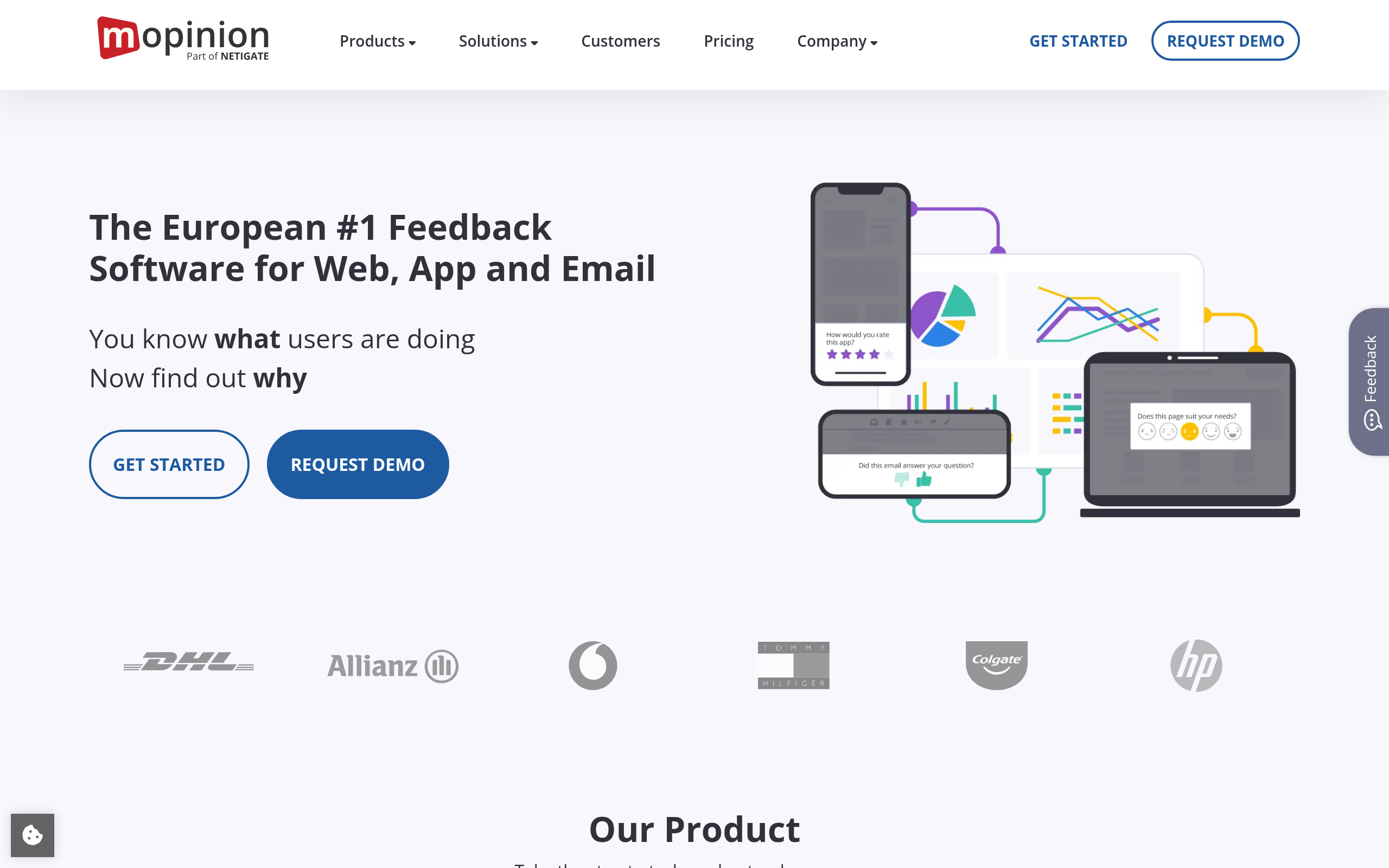
Mopinion is a customer feedback platform built specifically for digital teams — product managers, UX researchers, and CX professionals who collect feedback through embedded surveys, passive feedback buttons, and intercept overlays on websites and mobile apps. Its AI layer processes open-text responses automatically, tagging each submission with a sentiment score and grouping similar responses into themes without manual categorization.
What makes Mopinion particularly strong is the tight integration between feedback collection and AI analysis in a single platform. You do not need to export data to a third-party NLP tool or maintain a separate analytics pipeline. The smart labeling and clustering capabilities surface the top themes and their associated sentiment, allowing CX teams to spot what is frustrating users (and what is delighting them) across hundreds or thousands of open-text responses simultaneously. For teams running continuous feedback programs on digital products, this all-in-one approach removes significant operational overhead.
Best for: Digital product teams, CX managers, and UX researchers who need to analyze open-text feedback from websites or mobile apps without building a separate NLP stack.
IrisAgent — Best for Support Ticket Sentiment and Triage
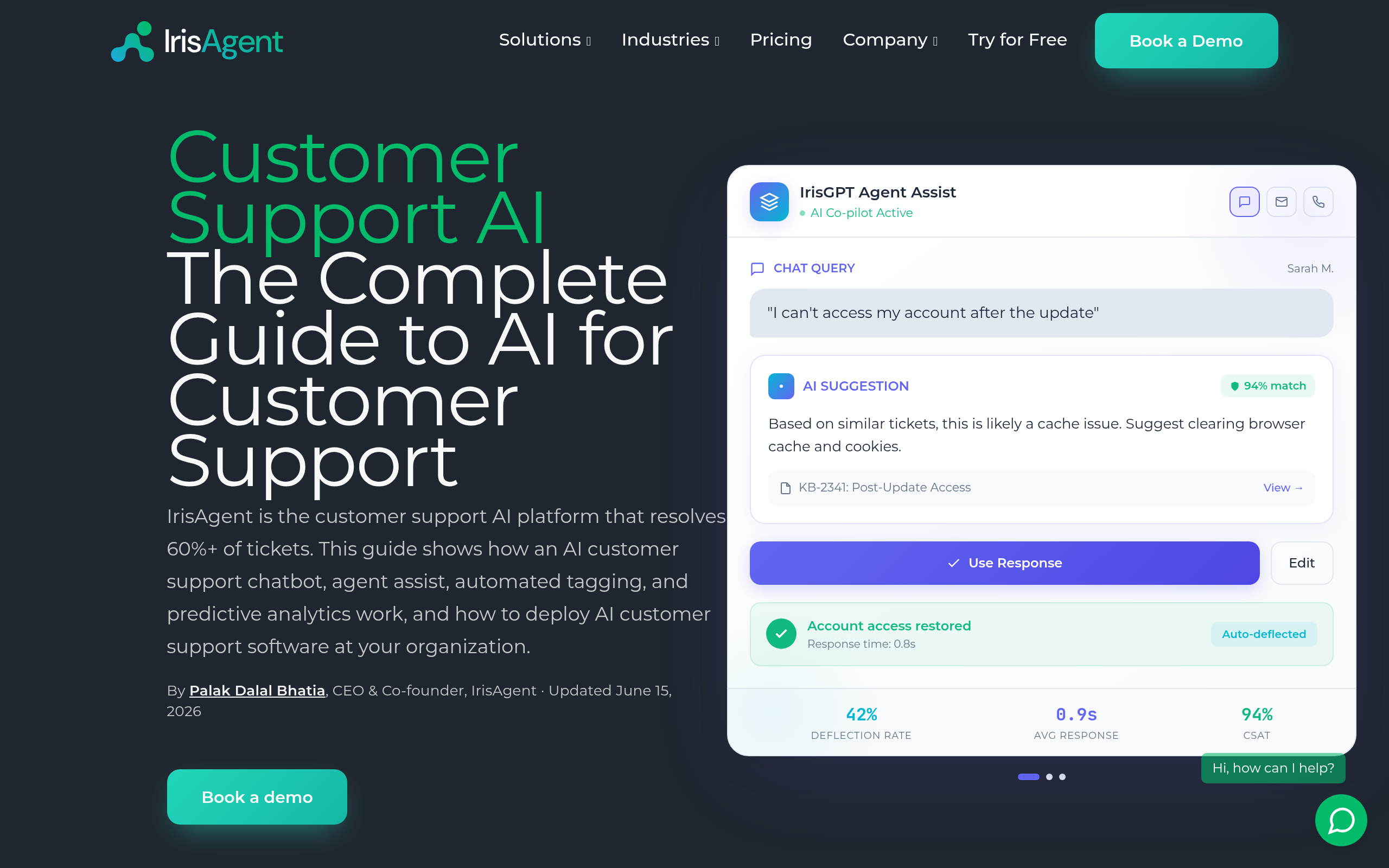
IrisAgent applies AI directly to the customer support workflow. It connects to major helpdesks — Zendesk, Salesforce Service Cloud, Freshdesk, and others — and automatically classifies every incoming ticket by topic, product area, urgency, and customer sentiment before a human agent picks it up. Support managers can see at a glance which customers are frustrated, which tickets are likely to escalate, and which product areas are generating the most emotional signals, all without reading each message individually.
Beyond real-time triage, IrisAgent correlates support ticket sentiment with product telemetry and deployment history. This gives SaaS teams the ability to detect when a new release is generating frustration in the support queue before it registers in CSAT scores or executive dashboards. For organizations that want proactive, data-driven support operations rather than reactive ticket management, this kind of early-warning capability is a meaningful advantage over generic sentiment tools that only report on historical data.
Best for: SaaS customer support teams, CX operations leaders, and product teams that want to connect support sentiment signals to product events and release cycles.
Sprout Social — Best for Social Media Sentiment at Scale
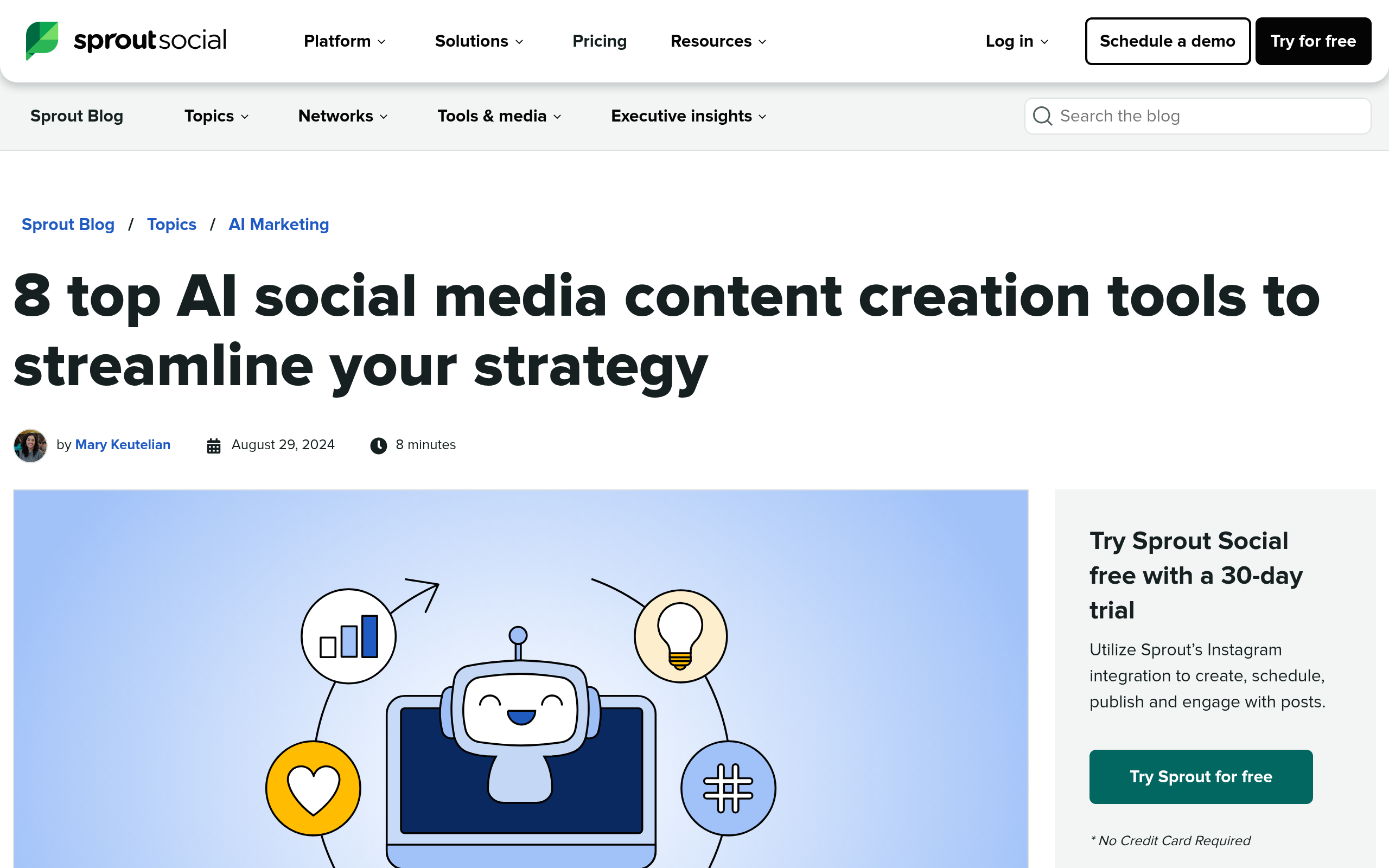
Sprout Social is one of the most comprehensive social media management platforms available, with social listening and sentiment analysis built into its core feature set. Its listening module ingests mentions across Twitter/X, Facebook, Instagram, Reddit, news sources, and review sites, then applies NLP-based sentiment scoring in near real-time. Brand managers can configure alerts that trigger automatically when negative sentiment spikes around specific keywords, campaigns, or competitor names.
Reporting is a particular strength of the platform. Sentiment dashboards in Sprout Social are polished, exportable, and designed to go straight into executive presentations — not just analyst workbooks. The breadth of source coverage and depth of listening customization make it the go-to choice for enterprise marketing teams managing brand reputation at volume. The trade-off is price: Sprout Social sits at the higher end of the market and may be oversized for small or single-channel teams who do not need the full feature set.
Best for: Mid-market and enterprise marketing teams, PR managers, and brand intelligence analysts who need comprehensive social sentiment monitoring across multiple channels and media sources.
Agorapulse — Best Affordable Social Media Sentiment Monitoring
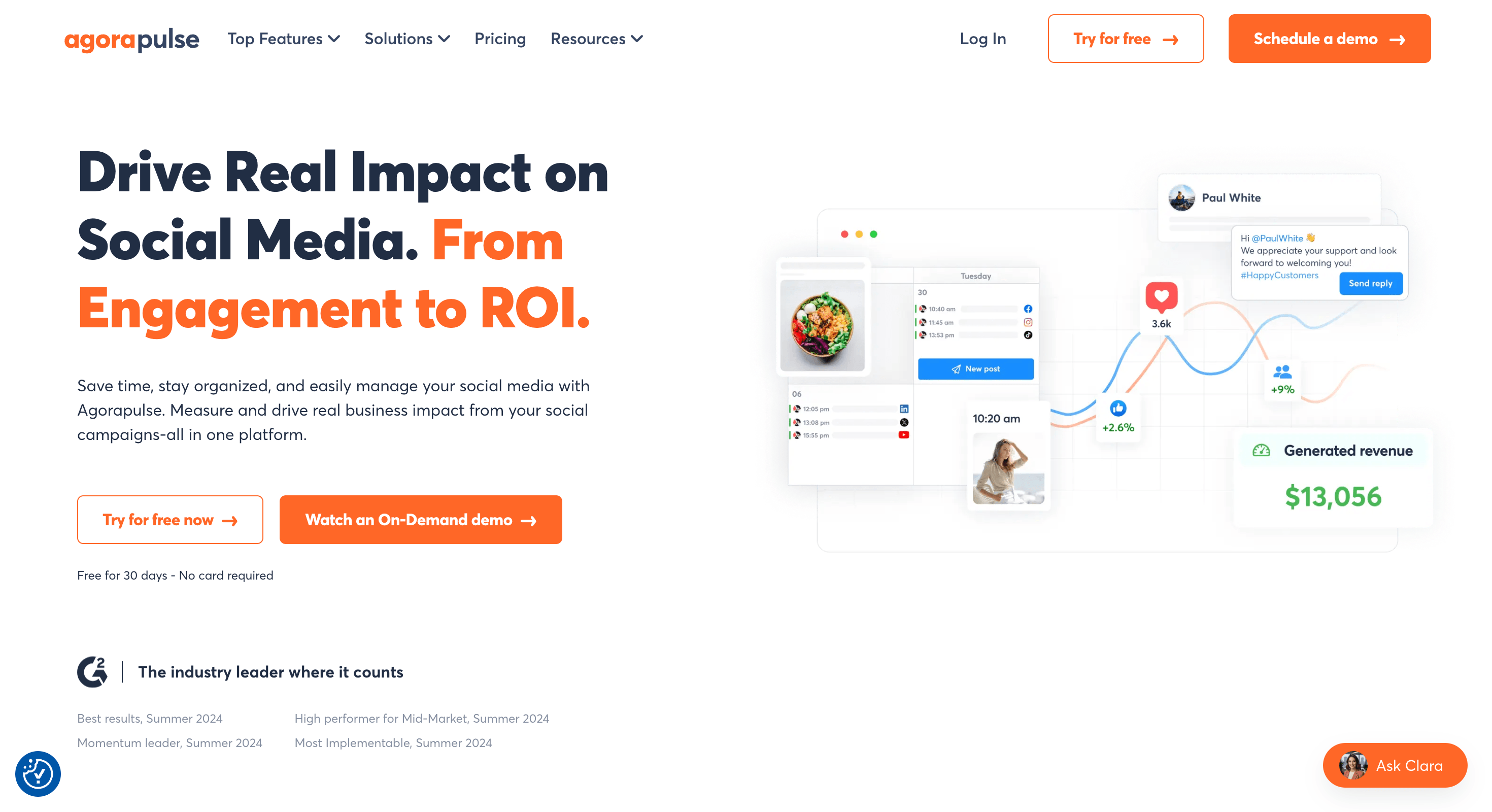
Agorapulse is a well-established social media management tool that includes a unified social inbox and basic sentiment monitoring. Positioned primarily at agencies and SMBs, it covers major social networks and surfaces sentiment signals at the individual message level, helping community managers prioritize which conversations need an immediate response. Managing multiple client or brand accounts simultaneously is a core strength — agencies in particular find the value-to-cost ratio compelling compared to enterprise-tier alternatives.
Agorapulse is not a deep sentiment intelligence platform. Its listening capabilities are solid and practical rather than analytically deep. But for teams that primarily want to know when customers are expressing negative sentiment on social channels and respond quickly, it delivers reliable value at a lower price point than its largest competitors. When weighing Agorapulse against Sprout Social, the decision typically comes down to budget and how much analytical depth — competitor benchmarking, trend forecasting, cross-channel attribution — you actually need.
Best for: Agencies, SMBs, and social media managers who need reliable, multi-channel social monitoring with sentiment signals at an accessible price point.
ThoughtSpot — Best for Self-Service Analysis of Sentiment Data in Your Data Warehouse
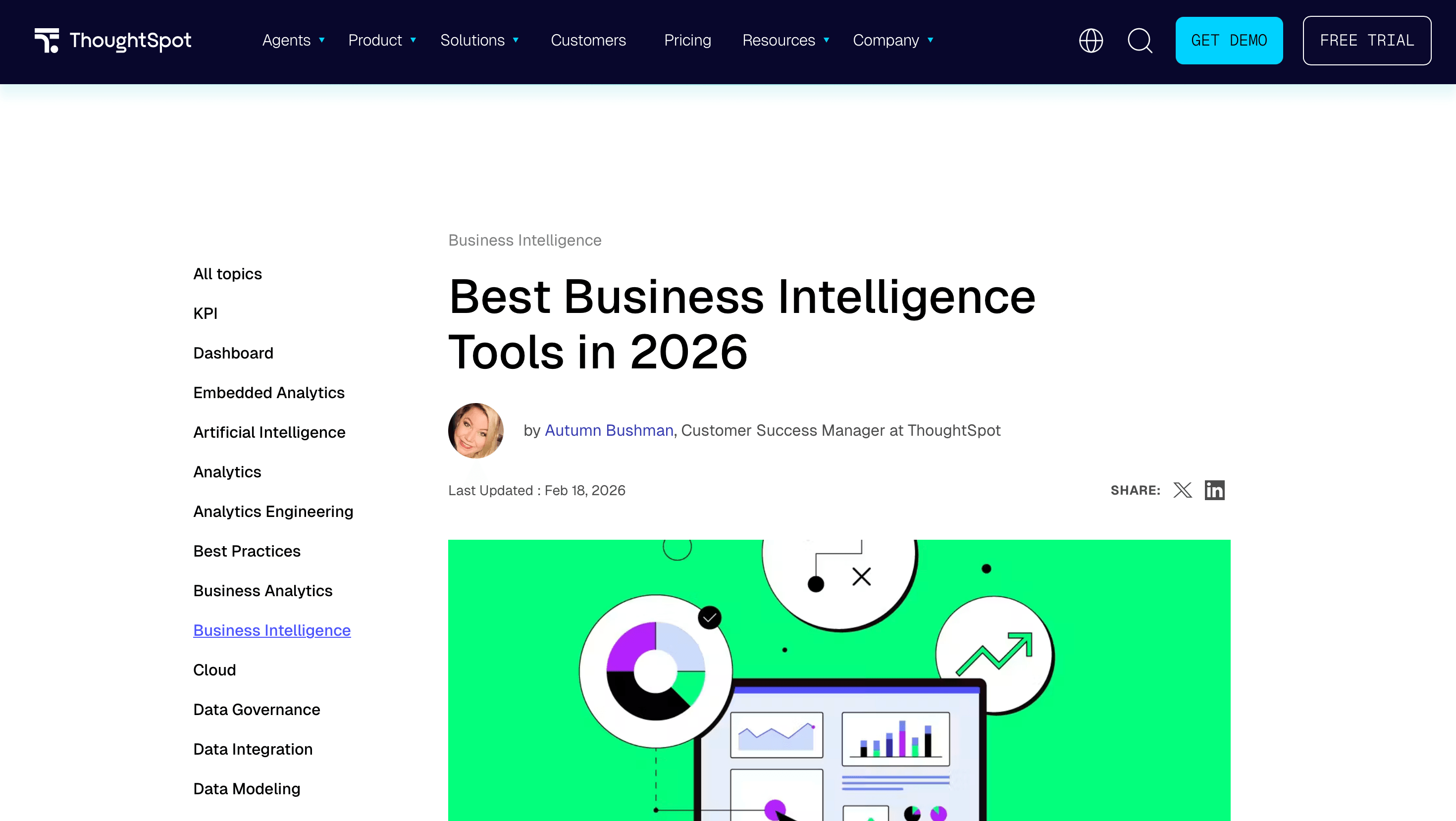
ThoughtSpot is a search-driven business intelligence platform that lets business users ask natural-language questions of their data warehouses and receive instant visual answers without writing SQL. It is not a sentiment detection tool — it does not process raw text or run NLP models. But analytics teams increasingly use it to explore and visualize sentiment scores that have been pre-processed by NLP pipelines and stored in cloud data warehouses like Snowflake, BigQuery, or Databricks.
If your data engineering team already outputs sentiment scores into a structured table, ThoughtSpot makes that data accessible to product managers, marketers, or CX leads through plain-English queries: “Show me average sentiment score by product line for the last quarter” or “Which customer segment had the sharpest sentiment decline last month?” This self-service layer removes the analyst bottleneck from sentiment reporting without exposing raw SQL to non-technical stakeholders. It is best understood as an analytics democratization layer on top of sentiment data you already generate.
Best for: Analytics-mature mid-to-large organizations where data teams process sentiment data into a data warehouse and want to give business users self-service access to those insights without SQL.
PandasAI — Best for Data Scientists Exploring Sentiment in Python DataFrames
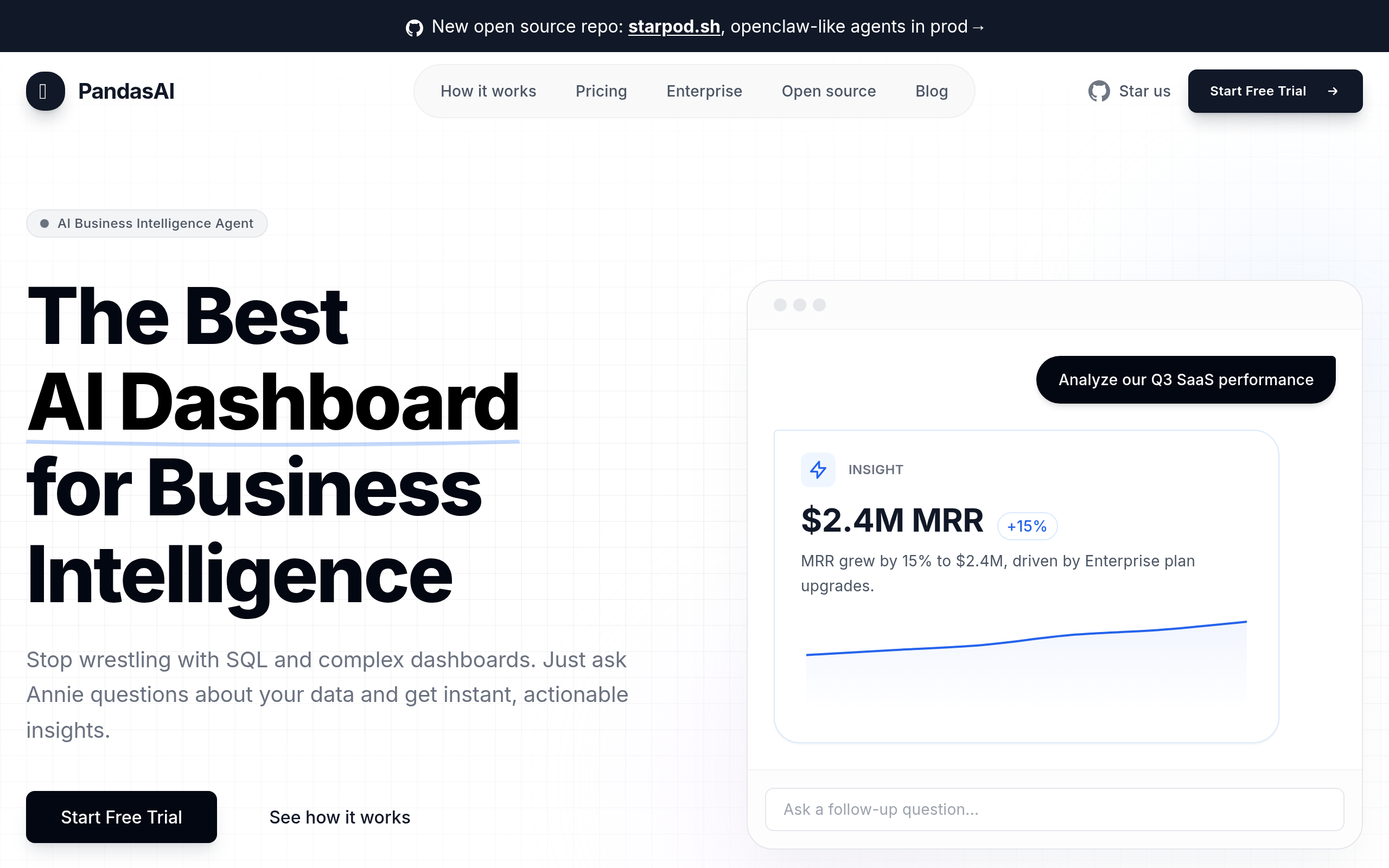
PandasAI extends the standard Python pandas library with a conversational AI interface. Instead of writing Python code to filter, aggregate, and visualize a DataFrame, data practitioners can prompt the tool in plain English: “What is the distribution of sentiment scores across product categories?” or “Plot the monthly trend of negative reviews for the mobile app.” The AI generates the underlying code, executes it, and returns the answer or chart directly.
For sentiment analysis workflows, PandasAI is most useful during the exploratory analysis phase — when a data scientist is working through a dataset of customer reviews, app store feedback, or survey responses before building a production pipeline. The open-source core is free to use, and a cloud product is available for teams. Some technical foundation is required: you need a Python environment, a DataFrame already containing sentiment data, and an LLM API key configured. It is not a no-code tool, but it significantly reduces the amount of manual pandas code a data practitioner needs to write when exploring feedback datasets.
Best for: Data scientists, ML engineers, and analysts who work in Python and want to accelerate exploratory analysis of feedback or review datasets before committing to a full pipeline build.
How Do the Best AI Sentiment Analysis Tools Compare on Features?
| Tool | Primary Data Channel | Sentiment Detection | Alerting | Key Integrations | No-Code Friendly |
|---|---|---|---|---|---|
| Mopinion | Website / Mobile app feedback | Built-in NLP on open text | Yes | Web SDK, mobile SDK, email | Yes |
| IrisAgent | Support tickets | Topic + sentiment + urgency classification | Yes — escalation triggers | Zendesk, Salesforce, Freshdesk | Yes |
| Sprout Social | Social media + review sites + news | Real-time NLP scoring | Yes — spike alerts | Twitter/X, Facebook, Instagram, Reddit, news feeds | Yes |
| Agorapulse | Social media | Message-level sentiment flags | Basic | Twitter/X, Facebook, Instagram, LinkedIn | Yes |
| ThoughtSpot | Data warehouse / BI layer | Queries pre-processed sentiment scores | Via monitor alerts | Snowflake, BigQuery, Databricks | Mostly (natural language queries) |
| PandasAI | Python DataFrames / CSV | AI-assisted queries on sentiment data | No native alerts | Python ecosystem, LLM APIs | No (Python required) |
Which AI Sentiment Analysis Tool Fits Your Team Size and Budget?
| Tool | Best Team Size | Pricing Model | Free Option | Primary Buyer |
|---|---|---|---|---|
| Mopinion | SMB to Enterprise | Subscription tiers | Demo / trial available | CX / UX / Product |
| IrisAgent | SMB to Mid-market | Subscription (per seat / usage) | Trial available | Customer Support / CX Ops |
| Sprout Social | Mid-market to Enterprise | Subscription (per seat) | Free trial | Marketing / Brand |
| Agorapulse | SMB / Agency | Subscription (per user / profile) | Free trial | Social Media Manager |
| ThoughtSpot | Mid-market to Enterprise | Usage-based / Enterprise licensing | Free trial + freemium tier | Data / Analytics Team |
| PandasAI | Individual to small team | Open-source (free) + Cloud paid plan | Yes — open-source core is free | Data Scientist / Analyst |
Quick Verdict — Best AI Sentiment Analysis Tool by Use Case
| Your primary need | Best pick | Runner-up |
|---|---|---|
| Analyze website or in-app survey open text | Mopinion | — |
| Triage support tickets by customer mood and urgency | IrisAgent | — |
| Monitor brand sentiment on social media at enterprise scale | Sprout Social | Agorapulse |
| Affordable social sentiment for agencies or SMBs | Agorapulse | — |
| Self-service BI queries on sentiment data stored in a warehouse | ThoughtSpot | — |
| Python-based exploration of review or survey sentiment datasets | PandasAI | — |
| All-in-one social + review sentiment at enterprise scale | Sprout Social | Mopinion |
What Is Comparee’s Verdict on AI Sentiment Analysis Tools?
After evaluating these tools across real-world requirements from product, marketing, support, and analytics teams, here is the Comparee editorial team’s honest verdict:
- Choose Mopinion if your core challenge is making sense of open-text responses collected on your website or mobile app. The built-in NLP removes the need for a separate analytics stack, and the theme clustering is genuinely useful for teams without a dedicated data scientist on hand to run custom models.
- Choose IrisAgent if you run a SaaS support operation and want to identify frustrated or at-risk customers before an agent reads the ticket. The helpdesk integrations are mature, the urgency classification adds real operational value beyond a raw sentiment score, and the ability to correlate ticket sentiment with product deployments is a capability generic NLP tools do not offer.
- Choose Sprout Social if you manage brand reputation across social channels at any meaningful volume. The listening feature set is among the deepest in the market, the sentiment reporting is presentation-ready for leadership, and the breadth of source coverage — social, news, review sites — is difficult to match at this level of polish.
- Choose Agorapulse when Sprout Social’s pricing is not justified by your volume or budget. Agencies handling multiple client accounts and SMBs that want reliable social monitoring without enterprise overhead will find the value proposition strong and the onboarding straightforward.
- Choose ThoughtSpot if your analytics team already produces sentiment scores from an NLP pipeline and the bottleneck is getting non-technical stakeholders to access and query that data without writing SQL. ThoughtSpot does not generate sentiment — it democratizes access to sentiment data you already have, which is a different and specific need.
- Choose PandasAI if you are a data scientist or analyst exploring feedback datasets in Python. It accelerates the exploratory phase of any sentiment project and requires no prompt engineering expertise — plain English questions return results faster than writing pandas code from scratch, which matters during research and iteration.
The single most common mistake when buying sentiment analysis tools: choosing a platform based on feature breadth rather than channel fit. A social listening tool will not meaningfully analyze your NPS survey responses, regardless of how impressive its dashboard looks. Match the tool to your data source first, then evaluate features within that category.
Explore the full Data Analysis & BI category on Comparee to compare additional analytics platforms. If your sentiment needs are closely tied to campaign performance and brand, the Marketing & Growth tools section includes related options worth reviewing.
Frequently Asked Questions About AI Sentiment Analysis Tools
What is the best AI tool for sentiment analysis in 2026?
The best tool depends on your primary data channel. Mopinion leads for website and in-app feedback, IrisAgent for support tickets, Sprout Social for social media monitoring at scale, Agorapulse for affordable social monitoring, and PandasAI or ThoughtSpot for data and analytics teams working with structured sentiment datasets. There is no single winner across all channels.
Can I do sentiment analysis without coding?
Yes. Mopinion, IrisAgent, Sprout Social, and Agorapulse all offer no-code sentiment analysis — connect your data source and the platform handles the NLP automatically. ThoughtSpot is also largely no-code for the analysis layer if your data team has already prepared the sentiment data. PandasAI requires a Python environment, though it reduces the amount of code needed once configured.
What is the difference between sentiment analysis and social listening?
Social listening is the process of monitoring brand and keyword mentions across social networks and online sources. Sentiment analysis is the analytical technique applied to those mentions to determine whether they express positive, negative, or neutral emotion. Social listening is the data collection layer; sentiment analysis is the intelligence layer on top of it. Most social listening platforms — including Sprout Social and Agorapulse — include built-in sentiment analysis.
How accurate is AI sentiment analysis?
Accuracy varies by use case, language, and domain. Modern NLP models perform well on clear positive/negative classification but can struggle with sarcasm, industry jargon, or complex negation. Purpose-built tools trained on domain-specific data typically outperform generic models within their target domain. Evaluating a tool on a sample of your own data during a trial is the most reliable accuracy test.
Which sentiment analysis tool works best for customer support tickets?
IrisAgent is the strongest purpose-built option for support ticket sentiment. It integrates directly with Zendesk, Salesforce Service Cloud, and Freshdesk, classifies tickets automatically at intake, and layers urgency and topic classification on top of raw sentiment scoring — making it operationally more useful in a support workflow than a standalone NLP model.
Is there a free AI sentiment analysis tool?
PandasAI has a fully open-source core you can run locally for free (you supply your own LLM API key). Most commercial platforms offer free trials ranging from two weeks to a month. ThoughtSpot also has a freemium tier for smaller data volumes. For fully free developer options, open-source Python libraries like VADER, TextBlob, or Hugging Face Transformers are available but require technical setup.
What is aspect-based sentiment analysis and do these tools support it?
Aspect-based sentiment analysis (ABSA) identifies sentiment toward specific product or service attributes within a single text — for example, detecting that a review is positive about delivery speed but negative about packaging quality. Mopinion supports theme-level clustering that approximates this for structured feedback. Truly granular ABSA typically requires custom NLP models rather than out-of-the-box commercial platforms.
How do I analyze sentiment from customer reviews at scale?
The right approach depends on where your reviews live. For reviews collected through your own website or surveys, Mopinion handles both collection and analysis in one platform. For third-party platforms like Google Reviews, Trustpilot, or Reddit, social listening tools like Sprout Social can monitor and aggregate them. For large historical review datasets, data teams often export records and use PandasAI for exploratory analysis before building a production pipeline.
Can AI sentiment analysis detect sarcasm?
Sarcasm detection remains one of the harder problems in NLP. Modern large language models handle common sarcasm patterns better than older rule-based approaches, but accuracy still drops compared to straightforward text. Most commercial sentiment platforms analyze individual messages or documents, which limits cross-turn context. In practice, sarcasm-driven misclassifications are typically a small percentage of overall volume and rarely distort aggregate sentiment trends at scale.
Which AI sentiment analysis tool is best for a small business?
Agorapulse is typically the most accessible starting point for small businesses that need social media sentiment monitoring, with competitive pricing and a low learning curve. For small businesses collecting website feedback, Mopinion has plans suited to smaller volumes and requires no technical setup. PandasAI’s open-source option is free but requires Python skills and is not suited to non-technical users.
Tools mentioned in this guide
Pricing, features and model availability can change over time. Always verify current details on each tool's official website before deciding.
Frequently Asked Questions
What is the best AI tool for sentiment analysis in 2026?
What is the best AI tool for sentiment analysis in 2026?
Can I do sentiment analysis without coding?
Can I do sentiment analysis without coding?
What is the difference between sentiment analysis and social listening?
What is the difference between sentiment analysis and social listening?
How accurate is AI sentiment analysis?
How accurate is AI sentiment analysis?
Which sentiment analysis tool works best for customer support tickets?
Which sentiment analysis tool works best for customer support tickets?
Is there a free AI sentiment analysis tool?
Is there a free AI sentiment analysis tool?
What is aspect-based sentiment analysis and do these tools support it?
What is aspect-based sentiment analysis and do these tools support it?
How do I analyze sentiment from customer reviews at scale?
How do I analyze sentiment from customer reviews at scale?
Don't just pick a tool — get the whole workflow
Tell Comparee your goal and get a complete step-by-step AI workflow with the right tool for every step.