Best AI Tools for Email Personalization in 2026
Compare the best AI tools for email personalization in 2026 — subject-line generation, predictive send-time, behavioral segmentation, and product recommendation
- AI email personalization spans five distinct capabilities: subject-line generation, predictive send-time, behavioral segmentation, dynamic content, and product recommendations — most platforms only do two or three of these well.
- ActiveCampaign and GetResponse offer the strongest end-to-end AI automation for SMBs and mid-market teams that need email, CRM, and automation in one place.
- For individual sales reps and cold outreach, Mailbutler and GMass are far more practical than full marketing platforms.
- Ecommerce brands should evaluate Moosend, Omnisend AI Product Description Generator, or Mailmodo for product-driven and interactive email experiences.
- Enterprise teams managing millions of contacts and cross-channel orchestration belong on Optimove or CustomersAI.
- No single tool dominates all five personalization dimensions — the right pick comes from knowing which gap you actually need to close.
The best AI tools for email personalization in 2026 are ActiveCampaign for automation depth, GetResponse for all-in-one campaigns, Mailchimp for ease of use, and Optimove for enterprise-grade behavioral intelligence. But “AI personalization” is not a single feature — it’s a spectrum covering subject-line optimization, predictive send-time, dynamic content blocks, behavioral segmentation, and ecommerce product recommendations. Your best fit depends on company size, technical capability, and whether your primary use case is B2B cold outreach, newsletter growth, or B2C lifecycle marketing.
This guide cuts through the marketing jargon and explains what each platform’s AI actually does — and doesn’t do — so you can choose based on your real workflow rather than a feature checkbox. See all tools in this space on Comparee’s Marketing & Growth category.
What Does “AI Personalization” Actually Mean in Email Marketing?
Most email platforms stick “AI” on any feature that saves a click. In practice, meaningful personalization breaks down into five distinct capabilities, and it matters which ones a platform genuinely delivers versus which it claims:
- Subject-line generation — AI suggests or rewrites subject lines based on your list’s historical open data and learned copy patterns. The better implementations let you A/B test AI-suggested variants automatically and feed results back into future recommendations.
- Predictive send-time optimization — instead of blasting to the full list at 10am Tuesday, the platform learns when each individual subscriber is most likely to open. This is one of the highest-ROI AI features because once it’s set up it requires zero extra creative effort.
- Dynamic content blocks — sections of your email (hero image, headline, body copy, CTA) swap out based on who is reading: their segment, location, past purchases, or lifecycle stage. A returning customer and a new subscriber receive different content even though they were sent the same campaign.
- Behavioral segmentation — AI clusters your list by engagement patterns, purchase behavior, or predicted churn risk, automatically, without manual rule-building. The strongest platforms update these segments continuously rather than on a fixed daily schedule.
- Product recommendations — for ecommerce brands, AI surfaces relevant SKUs inside the email body based on browse and purchase history, similar to an on-site recommendation engine. This feature almost always requires a direct integration with your ecommerce platform to work well.
The majority of platforms advertise all five but only deliver two or three at a production-ready level. Knowing which capability you actually need most cuts evaluation time dramatically.
Quick Verdict — Which AI Email Tool Is Best for Your Use Case?
| Use case | Best pick | Runner-up | Why |
|---|---|---|---|
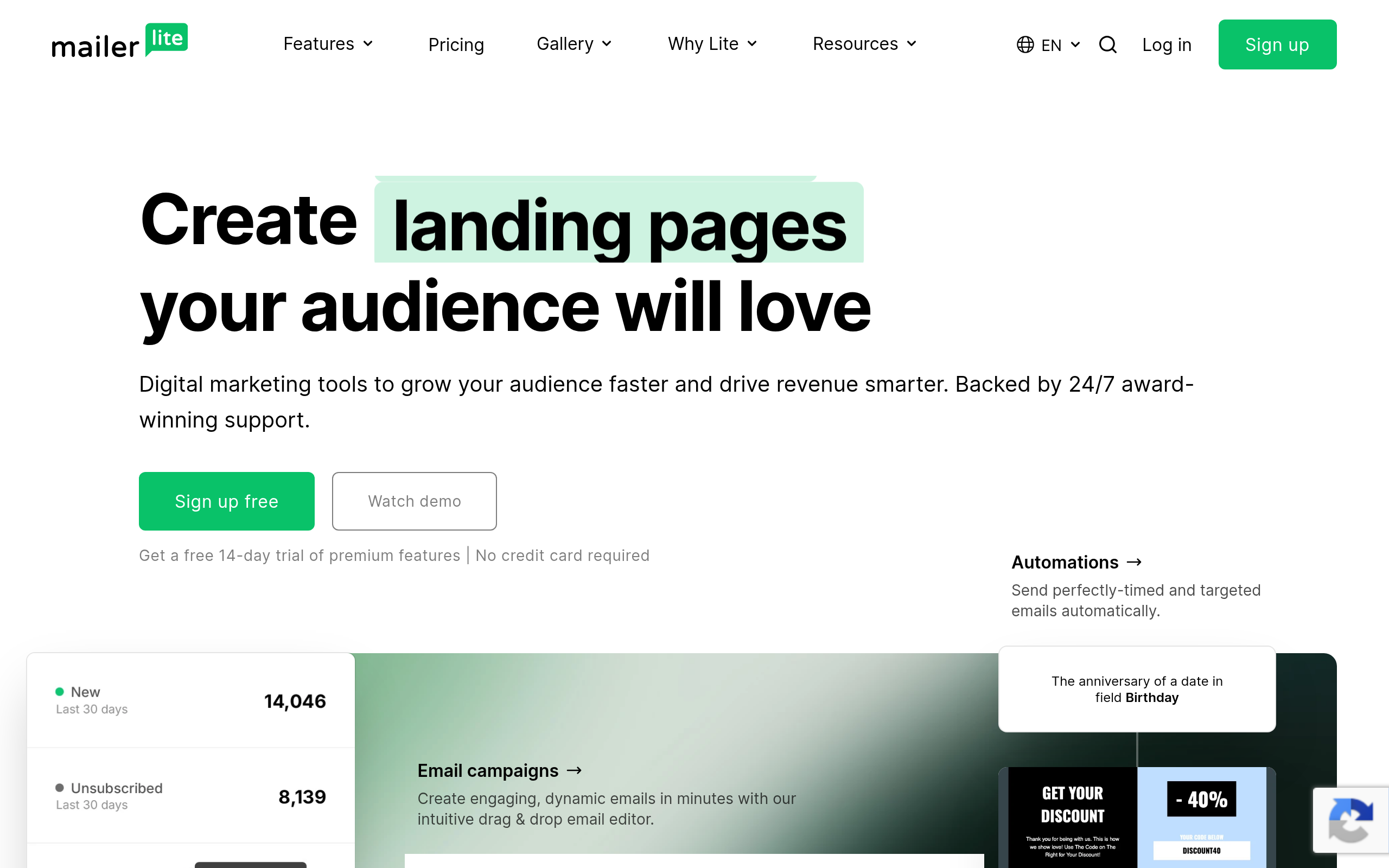
| Solo marketer or freelancer | MailerLite | Mailchimp | Simple UI, free tier, AI subject-line help without enterprise complexity |
| SMB with sales and marketing overlap | ActiveCampaign | GetResponse | CRM + email + automation + predictive sending in one platform |
| Newsletter creator or course seller | GetResponse | MailerLite | Landing pages, AI writer, forms, and email under one roof at a fair price |
| B2B cold email at scale | GMass | Mailbutler | Gmail-native field-merge personalization; fast setup, strong tracking |
| DTC ecommerce brand | Moosend | Mailmodo | Product-block templates, behavioral triggers, AMP interactivity (Mailmodo) |
| Ecommerce product content at scale | Omnisend AI Product Description Generator | Moosend | AI-written product descriptions inside email flows with tight Shopify integration |
| Enterprise omnichannel CDP | Optimove | CustomersAI | Predictive cohort modeling, cross-channel orchestration, high-volume data pipelines |
How Do the Top AI Email Personalization Tools Compare on Core Features?
| Tool | Subject-line AI | Send-time optimization | Behavioral segmentation | Dynamic content | Product recommendations |
|---|---|---|---|---|---|
| ActiveCampaign | Yes | Yes (predictive ML) | Yes (ML-based) | Yes | Partial (via integrations) |
| GetResponse | Yes (AI writer) | Yes | Yes | Yes | Partial |
| Mailchimp | Yes | Yes | Yes | Yes | Yes (ecommerce) |
| MailerLite | Yes (basic) | Yes | Limited | Yes | No |
| GMass | No (manual merge) | No | No | Yes (spreadsheet fields) | No |
| Mailbutler | Yes (AI writer) | No | No | No | No |
| Mailmodo | Yes | Yes | Yes | Yes (AMP blocks) | Partial |
| Moosend | Yes | Yes | Yes | Yes | Yes |
| Optimove | Yes | Yes | Yes (CDP-grade) | Yes | Yes (advanced) |
| CustomersAI | Partial | No | Yes (CDP) | Partial | Yes |
| Omnisend AI Product Description Generator | No (product copy focus) | Yes | Yes | Yes | Yes |
The Best AI Email Personalization Tools, Reviewed
ActiveCampaign — Best for SMB Marketing Automation and CRM
ActiveCampaign is the benchmark for mid-market teams that need email, CRM, and automation tightly integrated. Its AI-powered predictive sending analyzes individual contact behavior to determine the optimal send time per subscriber rather than per list. The platform’s machine-learning segmentation builds dynamic audience groups based on engagement history, lead scoring, and pipeline stage automatically — without manual rule configuration. Conditional content blocks allow a single campaign to show different copy, images, and CTAs depending on deal stage, location, or behavioral history.
Where ActiveCampaign earns its position: the AI features feel native to the workflow rather than bolted on after the fact. The visual automation builder is genuinely powerful, and the CRM integration means sales and marketing teams can work from the same contact record. No free tier, but paid plans scale from small lists upward, and the ROI from automation usually justifies the cost quickly for teams generating leads.
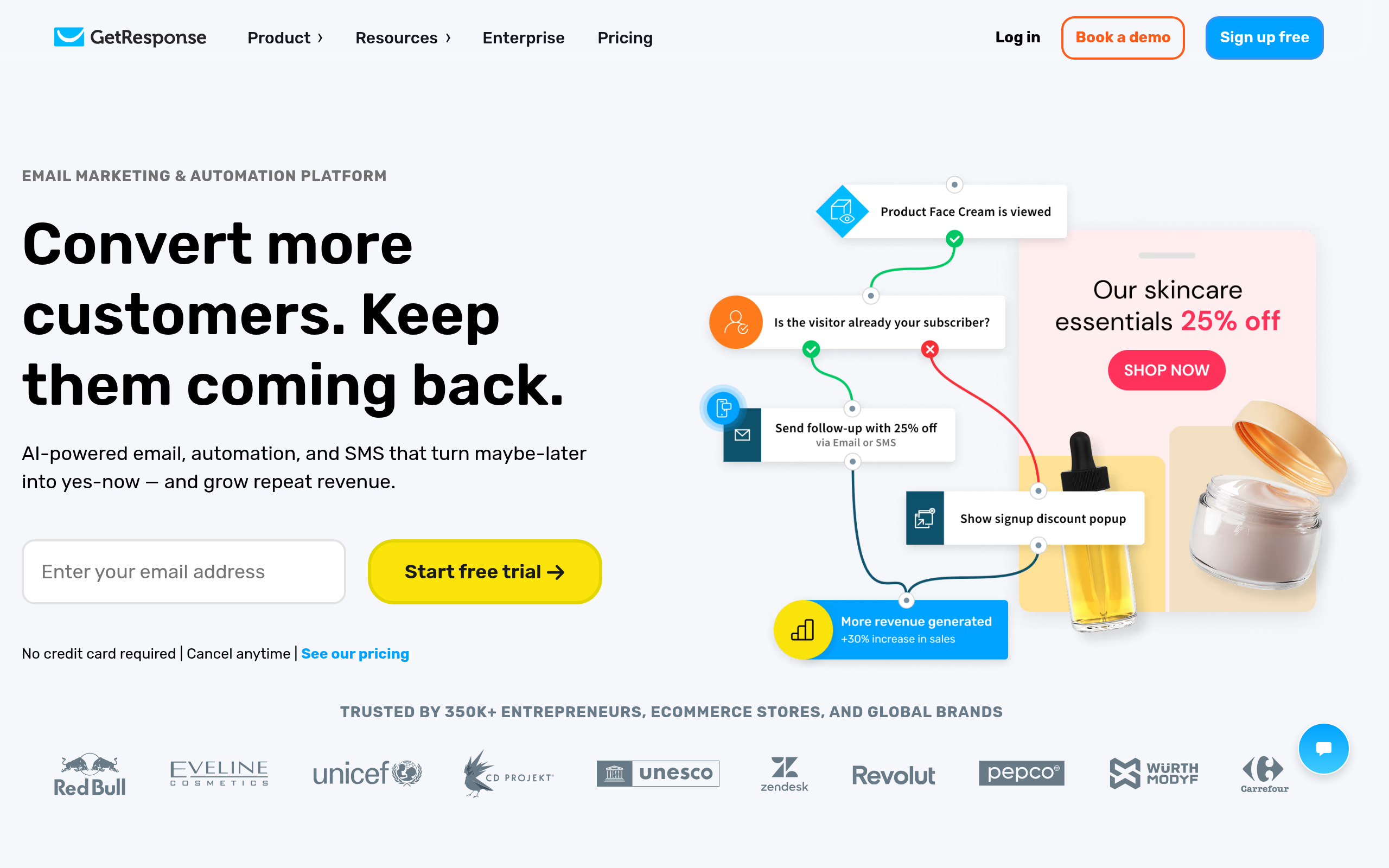
GetResponse — Best All-in-One for Growing Teams
GetResponse combines email marketing, landing pages, webinars, popups, and marketing automation under one roof. Its AI email generator can draft campaign copy and subject-line variants, while the automation builder manages behavioral triggers including cart abandonment, page visits, and post-purchase sequences. GetResponse’s send-time optimization distributes sends based on each contact’s individual open history rather than applying a single blast window to the whole list.
What makes GetResponse particularly valuable for growing teams is the combination of breadth and reasonable pricing. A functional free tier covers smaller lists, and paid tiers unlock the full automation and AI writing features. For a content creator or SMB running newsletter campaigns, lead-gen funnels, and webinars simultaneously, the all-in-one structure genuinely reduces tool sprawl and the data fragmentation that comes with connecting multiple platforms.
Mailchimp — Best for Ease of Use with Mature AI Features
Mailchimp was among the first email platforms to ship AI-assisted subject-line recommendations and send-time optimization, and the implementation has matured over several years. Its generative content tools can draft email body copy and suggest creative directions. The customer journey builder supports behavioral triggers and dynamic content blocks. For ecommerce stores, Mailchimp’s integrations with Shopify and WooCommerce power product recommendation blocks inside campaigns based on purchase history.
The practical trade-off: Mailchimp’s automation depth does not match ActiveCampaign’s, and contact-based pricing climbs quickly as lists grow. It is genuinely the best entry point for solo marketers or teams new to personalization, but more advanced automation teams frequently outgrow it.
MailerLite — Best Budget Option for Smaller Lists
MailerLite keeps the experience lean: a clean editor, solid deliverability, an AI writing assistant for subject lines and body copy, and automated send-time optimization. Behavioral segmentation is more limited than ActiveCampaign or GetResponse, but for a solo operator or small team sending newsletters and simple drip sequences, it covers the essentials without unnecessary complexity. Free tier available for smaller lists, making it a low-risk starting point.
GMass — Best for Gmail-Based Cold Outreach Personalization
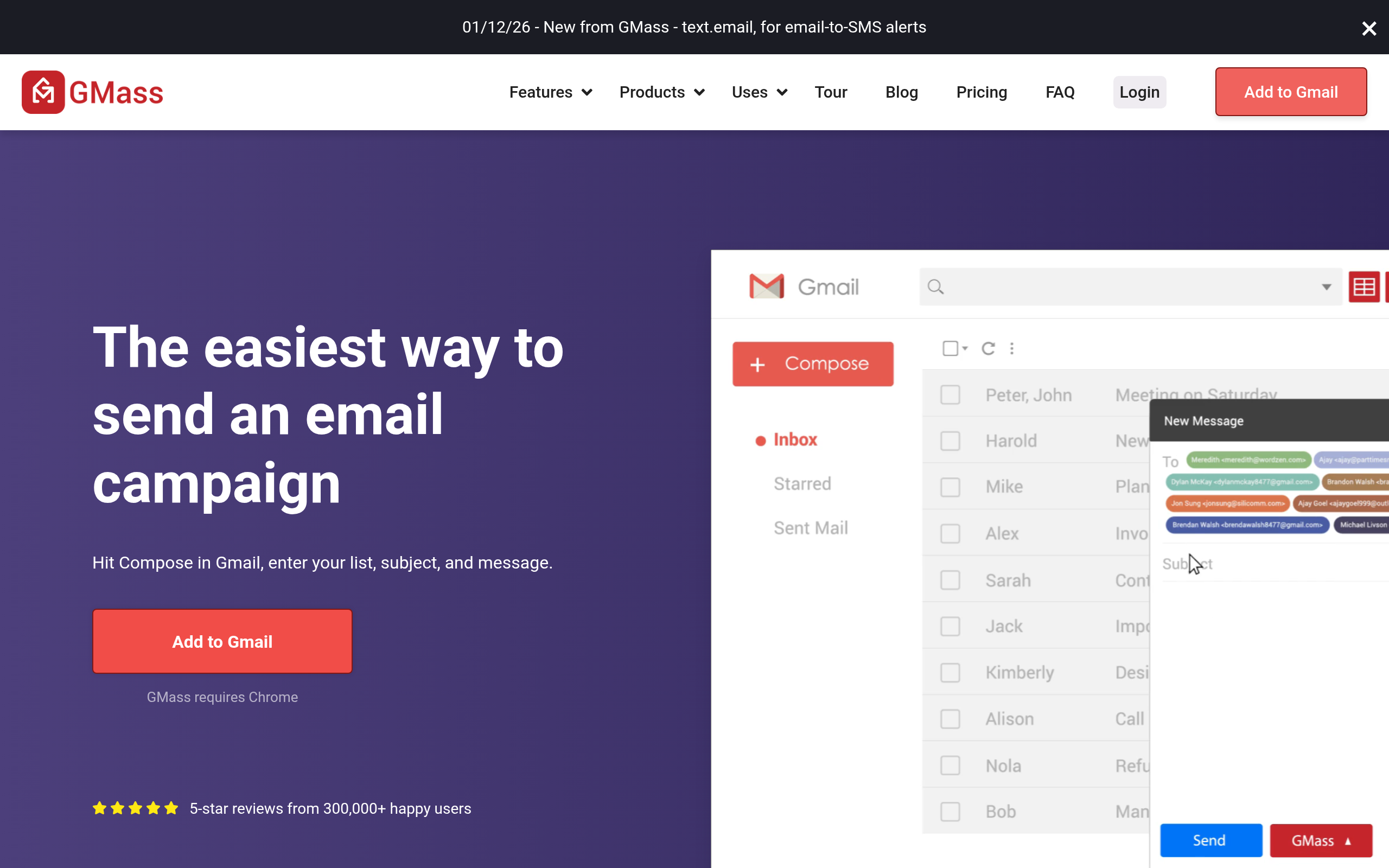
GMass lives inside Gmail and turns it into a personalized outreach machine at scale. You connect a Google Sheet with columns for first name, company, role, custom fields — and GMass merges them into individual emails that look and feel one-to-one, not mass-sent. There is no machine-learning behavioral AI here; personalization is field-merge logic. But for a sales team doing cold outreach at volume from Gmail accounts, that is exactly what is needed and easy to maintain. Strong open and click tracking is built in, and the Gmail-native approach means deliverability stays healthy.
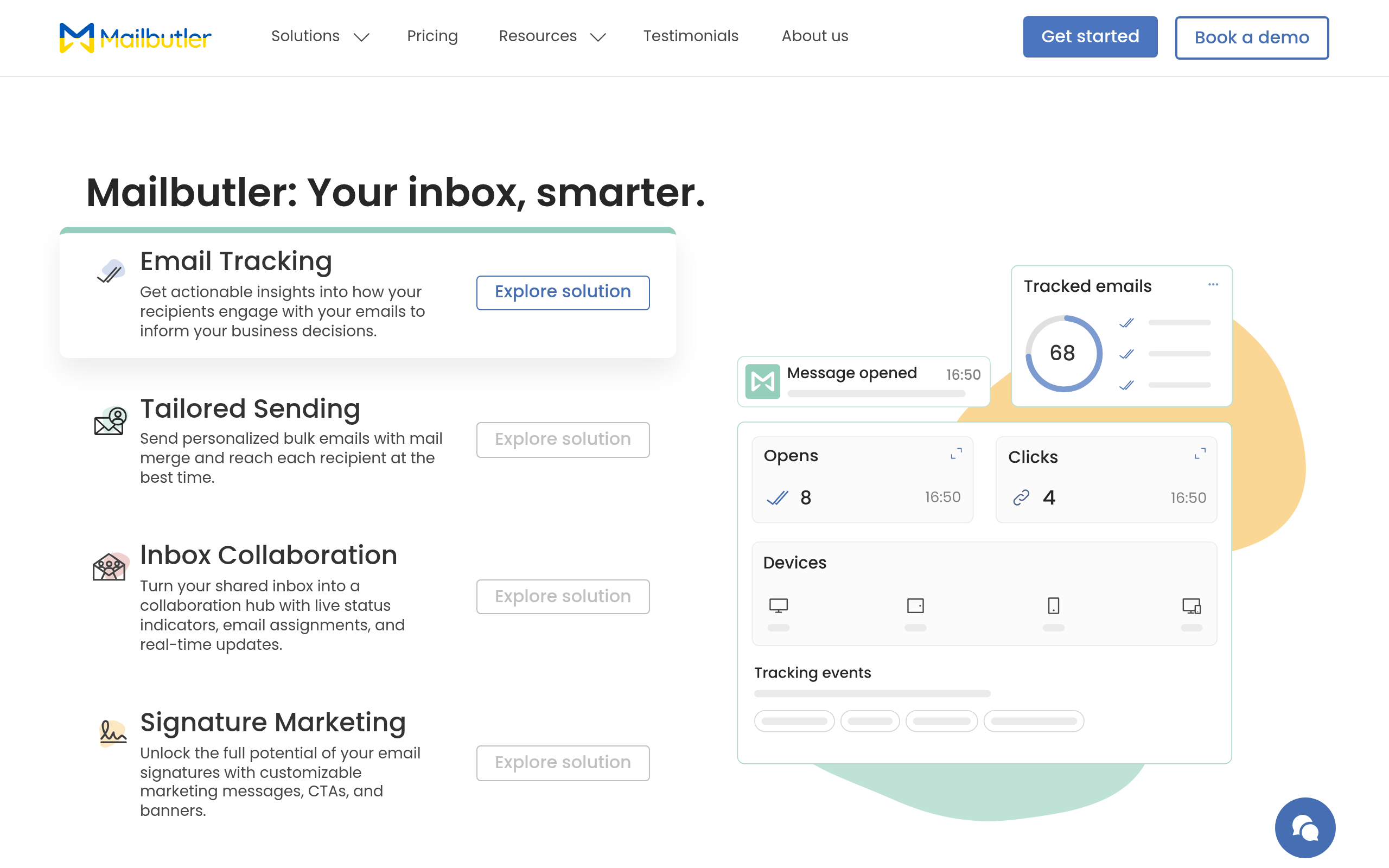
Mailbutler — Best for Individual Sales Reps and Founders
Mailbutler is a Gmail and Apple Mail extension built for individuals rather than marketing teams. It adds an AI writing assistant that can draft replies and compose emails from a prompt, plus email scheduling, follow-up reminders, and basic per-contact open tracking directly inside your existing inbox. For a founder or account executive who wants AI-suggested subject lines and composition assistance without migrating to a new platform, Mailbutler is the most friction-free option available. It is not a broadcast email platform — it is a personal productivity layer for individual high-value outreach.
Mailmodo — Best for Interactive AMP Emails
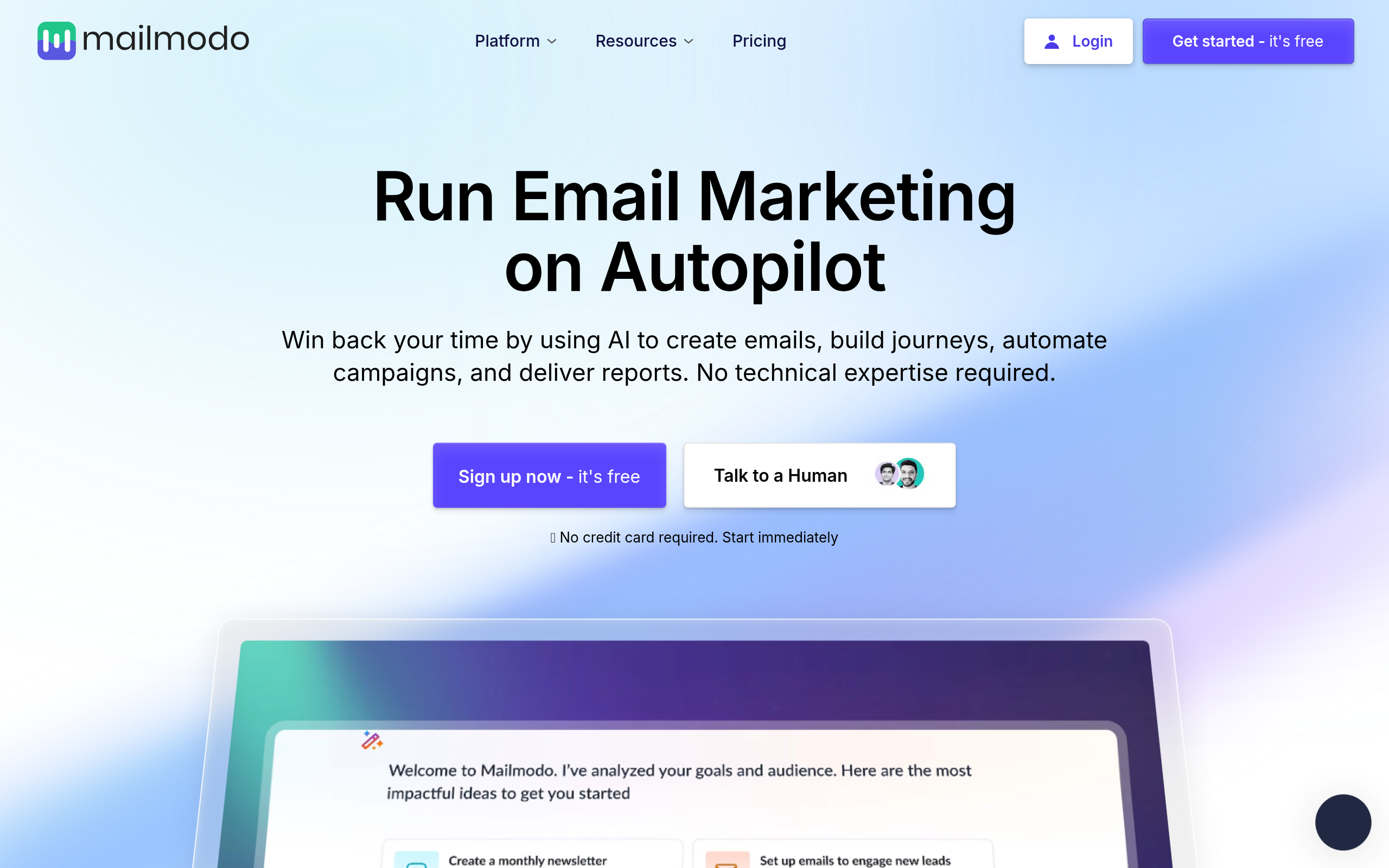
Mailmodo takes a fundamentally different approach: it specializes in AMP for Email, which allows recipients to fill in forms, browse product carousels, take surveys, and complete actions directly inside the email without clicking through to a landing page. This format produces measurably higher engagement for forms and surveys because the friction of the click-through is removed. Mailmodo includes AI subject-line tools, send-time optimization, and behavioral segmentation as well, but the core differentiation is the interactive email format itself — something no other platform on this list delivers as fully.
Moosend — Best Affordable Platform for Ecommerce Email
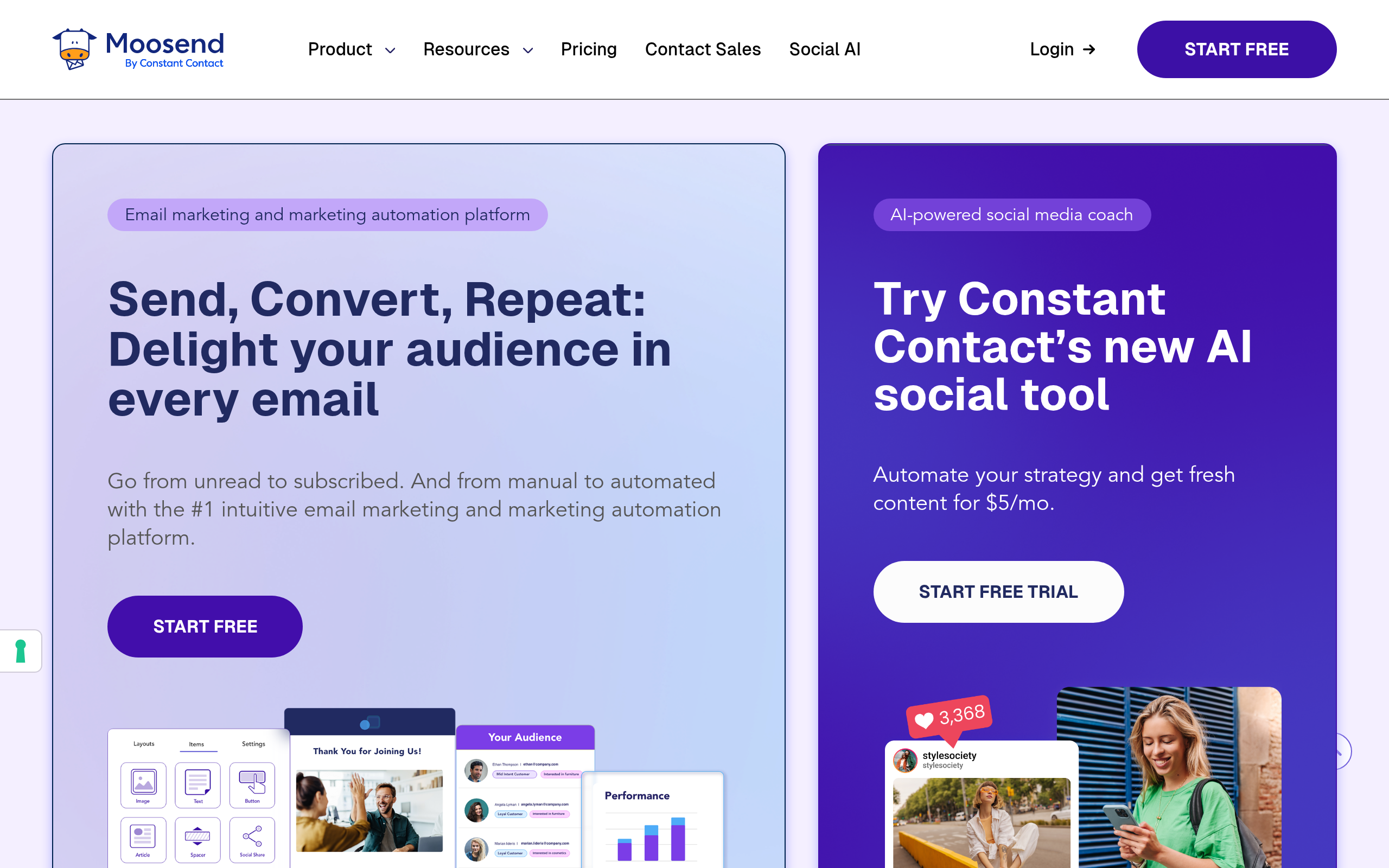
Moosend offers product recommendation blocks, weather-based content personalization, behavioral automation triggers, and AI subject-line suggestions at a price point well below enterprise-tier platforms. It integrates directly with ecommerce platforms and handles cart abandonment, browse abandonment, back-in-stock, and post-purchase sequences. For a direct-to-consumer brand that needs solid personalization without investing in a complex enterprise setup, Moosend is one of the most cost-effective options available with a feature set that punches above its price.
Optimove — Best for Enterprise CDP-Level Personalization
Optimove is a customer data platform with marketing execution built on top, not a traditional email service provider. It is a behavioral intelligence layer that orchestrates campaigns across email, push notifications, SMS, and in-app channels simultaneously. Its AI builds predictive cohorts — for example, subscribers likely to churn within 14 days, or high-value customers approaching a natural repurchase window — and recommends which campaign each segment should receive next. For gaming companies, enterprise retail, and regulated industries managing millions of active contacts, Optimove operates at a scale and sophistication that standard ESPs cannot reach. Enterprise contract pricing — typically not appropriate for teams under 50,000 active contacts.
CustomersAI — Best for Building a First-Party Data Foundation
CustomersAI (previously MobileMonkey) focuses on identifying anonymous website visitors, enriching customer profiles with behavioral and firmographic data, and activating that enriched data in email and remarketing sequences. The AI surfaces intent signals to trigger personalized outreach automatically. It is particularly useful for teams whose email personalization is blocked not by ESP limitations but by poor underlying data quality — the platform helps build the first-party data foundation that makes every downstream personalization effort more effective.
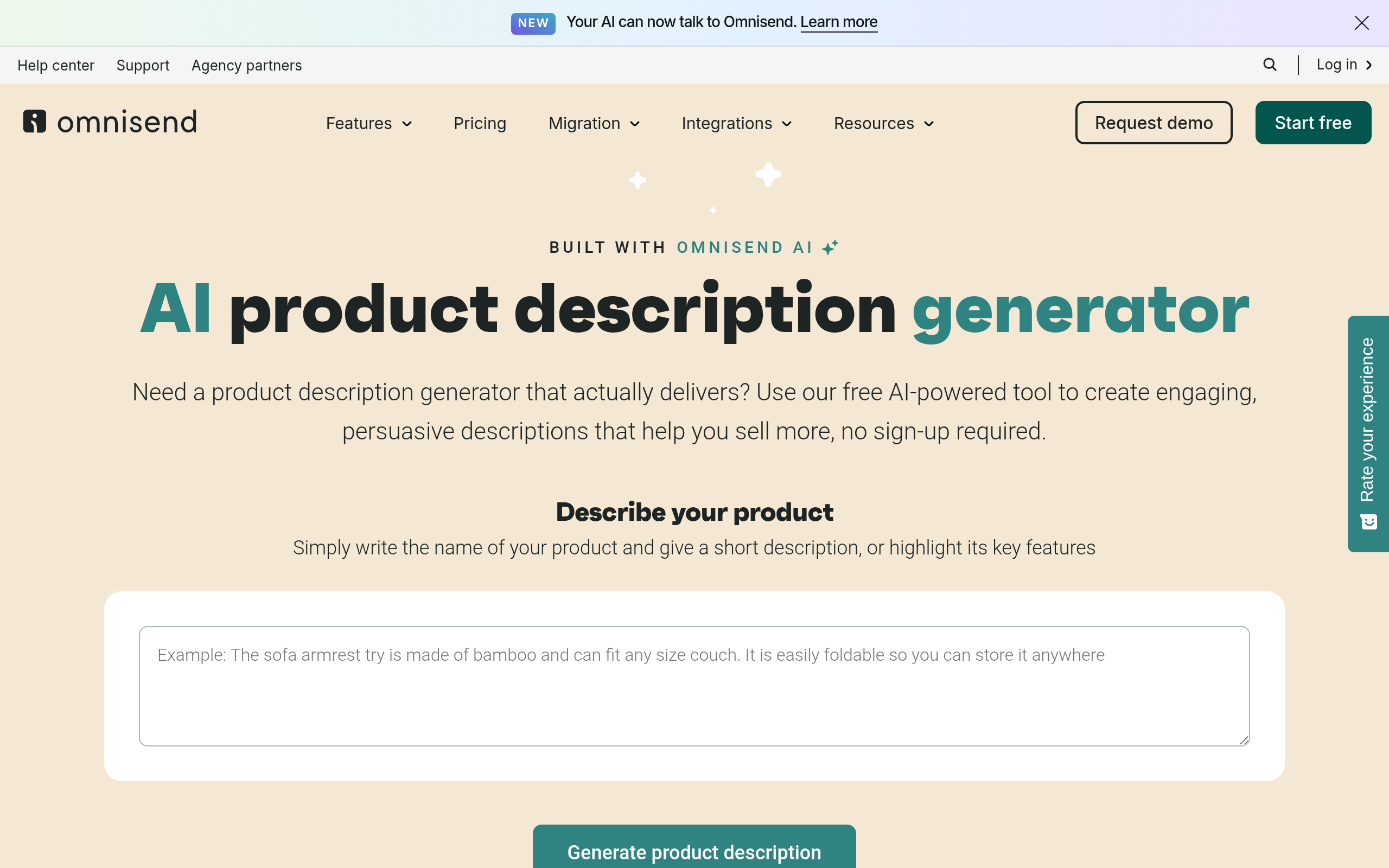
Omnisend AI Product Description Generator — Best for Ecommerce Product Email Content
Omnisend AI Product Description Generator is a specialized AI capability within the Omnisend platform designed to generate product descriptions at scale for email campaigns. Combined with Omnisend’s ecommerce automation flows — abandoned cart, back-in-stock, product recommendations, post-purchase — it dramatically reduces the content production time for online retailers who need to keep email product content fresh across large catalogs. If you are operating on Shopify or WooCommerce and need to produce personalized product-driven emails without a dedicated copywriting resource, this feature set is worth serious evaluation.
Which Pricing Model Fits Your Team’s Scale?
| Tool | Free tier? | Pricing model | Best team scale |
|---|---|---|---|
| Mailchimp | Yes (contact limit) | Contact-based tiers | Solo to mid-size |
| MailerLite | Yes | Contact-based tiers | Solo to SMB |
| GetResponse | Yes (feature-limited) | Contact-based tiers | SMB to mid-market |
| ActiveCampaign | No | Contact + feature tiers | SMB to mid-market |
| GMass | No (trial) | Flat monthly per Gmail account | Individual to small team |
| Mailbutler | Yes (basic) | Per-user monthly | Individual |
| Mailmodo | Yes (limited) | Contact and email volume tiers | SMB to mid-market |
| Moosend | Trial only | Contact-based tiers | SMB to ecommerce mid-market |
| Optimove | No | Enterprise contract | Enterprise (high volume) |
| CustomersAI | Limited | Usage-based and contact tiers | SMB to enterprise |
| Omnisend AI Product Description Generator | Yes | Email send volume tiers | Ecommerce SMB to mid-market |
What Should You Actually Look for When Choosing an AI Email Personalization Tool?
Beyond feature comparison tables, these are the practical questions that actually narrow the decision:
- What is your biggest bottleneck right now? Subject-line optimization is a fundamentally different problem than CDP-level behavioral segmentation. Do not pay for a full data platform if your real gap is just writing better subject lines. Start with the specific problem.
- Where does your customer data currently live? AI personalization is only as good as the data it learns from. If your contact list is incomplete, siloed across systems, or populated with anonymous visitors, platforms like CustomersAI that focus on data enrichment should come before feature-rich ESPs.
- Do you need email-only or multi-channel orchestration? Optimove and ActiveCampaign manage SMS, in-app, and push alongside email. Pure email tools like GMass or Mailbutler do not — and that is perfectly fine if email is your only channel.
- What is your ecommerce stack? If you are on Shopify or WooCommerce, prioritize native integrations. Moosend, Omnisend AI Product Description Generator, and Mailchimp all have strong ecommerce connectors. Integration depth drives product recommendation quality far more than the AI model underneath it.
- How technical is your marketing team? Optimove and ActiveCampaign’s advanced automation requires real implementation time. MailerLite and Mailchimp are designed for non-technical operators who want results without infrastructure investment.
- Do you need interactive email formats? Mailmodo is uniquely positioned with full AMP email support. For surveys, in-email checkout, and high-engagement product browsing, no other platform on this list comes close.
Comparee’s Verdict — The Right Tool for Each Type of Marketer
Specific picks, not hedged recommendations:
- Solo creator or freelancer with a newsletter: Start with GetResponse (free tier, all-in-one, scales cleanly) or MailerLite (cleanest UI at low cost). Skip enterprise platforms entirely — the complexity is not worth it at this scale.
- SMB marketing team (5–50 people): ActiveCampaign is the benchmark. The CRM plus email plus automation integration genuinely reduces tool sprawl, and the predictive send-time and ML segmentation deliver real lift without needing a data engineer. GetResponse is the solid alternative if you also need landing pages and webinar infrastructure.
- B2B sales rep or founder doing outreach: GMass for Gmail-native merge personalization at volume; Mailbutler if you want AI writing assistance and per-contact follow-up tracking without leaving your inbox.
- DTC ecommerce brand: Moosend for affordable product recommendation blocks and behavioral automation. Omnisend AI Product Description Generator if you are already in the Omnisend ecosystem and need to scale product content quickly. Mailmodo if in-email interactivity and higher conversion from your email channel is the primary goal.
- Enterprise or high-volume multi-channel team: Optimove for predictive cohort modeling and cross-channel orchestration. Evaluate CustomersAI if first-party data enrichment is the core bottleneck before you can personalize effectively.
- Budget-constrained team needing the basics: Mailchimp’s free tier gets you started with AI subject-line suggestions and basic send-time optimization at zero cost. Upgrade when your list and automation needs outgrow it.
Compare all tools in this category side by side on Comparee’s Marketing & Growth page.
Tools mentioned in this guide
Pricing, features and model availability can change over time. Always verify current details on each tool's official website before deciding.
Frequently Asked Questions
What is the best AI tool for email personalization for small businesses?
What is the best AI tool for email personalization for small businesses?
Can AI actually improve email open rates and click-through rates?
Can AI actually improve email open rates and click-through rates?
What is predictive send-time optimization and which tools offer it?
What is predictive send-time optimization and which tools offer it?
GetResponse vs ActiveCampaign: which is better for email personalization?
GetResponse vs ActiveCampaign: which is better for email personalization?
What is the difference between dynamic content and behavioral segmentation in email?
What is the difference between dynamic content and behavioral segmentation in email?
Do I need a CDP (customer data platform) or will a standard ESP be enough?
Do I need a CDP (customer data platform) or will a standard ESP be enough?
What makes Mailmodo different from other AI email tools?
What makes Mailmodo different from other AI email tools?
Is GMass good for personalized email campaigns?
Is GMass good for personalized email campaigns?
Don't just pick a tool — get the whole workflow
Tell Comparee your goal and get a complete step-by-step AI workflow with the right tool for every step.