AI for Customer Retention: Tools & Strategies (2026)
Best AI tools for customer retention in 2026 — churn prediction, lifecycle email, in-app engagement, and win-back campaigns. Real tool picks for SaaS, e-commerc
- The highest-ROI retention moves in 2026 are churn prediction (flag at-risk users before they leave) and behaviorally triggered lifecycle emails — both accessible via AI tools even for small teams.
- Optimove and CustomersAI lead for predictive churn modeling; ActiveCampaign and GetResponse are the go-to for lifecycle email automation.
- In-app tools like Intercom and HelpCrunch cut early churn by catching confused users in real time, while Usermaven and Mouseflow surface the behavioral signals that predict it.
- Win-back campaigns recover meaningful numbers of churned customers when messages are personalized and timed correctly — generic blasts barely move the needle.
- For support-heavy products, Zendesk's AI features reduce resolution time and directly impact renewal rates.
- Pick one tool per use case (prediction, email, in-app, analytics) — stacking six overlapping platforms is a common waste. Start with your biggest churn moment.
AI customer retention tools help marketers and founders identify at-risk users, automate personalized outreach, improve in-app engagement, and win back churned customers — without requiring a data science team. The best tools in 2026 combine predictive scoring, behavioral triggers, and multi-channel messaging into workflows that run automatically once configured. The right choice depends on your business model: SaaS needs different signals than e-commerce, and B2B relationship sales need different tools than high-volume consumer apps. Explore the full range in the Marketing & Growth category on Comparee.
What Is AI-Powered Customer Retention — and Why Does It Beat Manual Tactics?
Traditional retention relied on scheduled email blasts, manual CRM notes, and gut-feel timing. AI changes three things fundamentally:
- Prediction at scale: Machine learning models score every user on churn risk daily, using behavioral signals — login frequency, feature usage, support tickets — that no human team could monitor manually across thousands of accounts.
- Trigger-based automation: Instead of batch-and-blast, AI fires personalized messages when a specific behavior happens. A user who hasn't logged in for 12 days gets a different message than one who just downgraded their plan.
- Continuous optimization: AI-driven tools A/B test subject lines, send times, and message sequences automatically, so retention campaigns improve without manual iteration.
The net result: you engage the right customer with the right message at the moment they're most likely to respond — instead of hoping a weekly newsletter lands at the right time.
Which AI Tools Are Best for Predicting and Preventing Churn?
Churn prediction is the highest-leverage retention activity because it's preventative. Once a customer cancels, win-back is significantly harder than retention would have been.
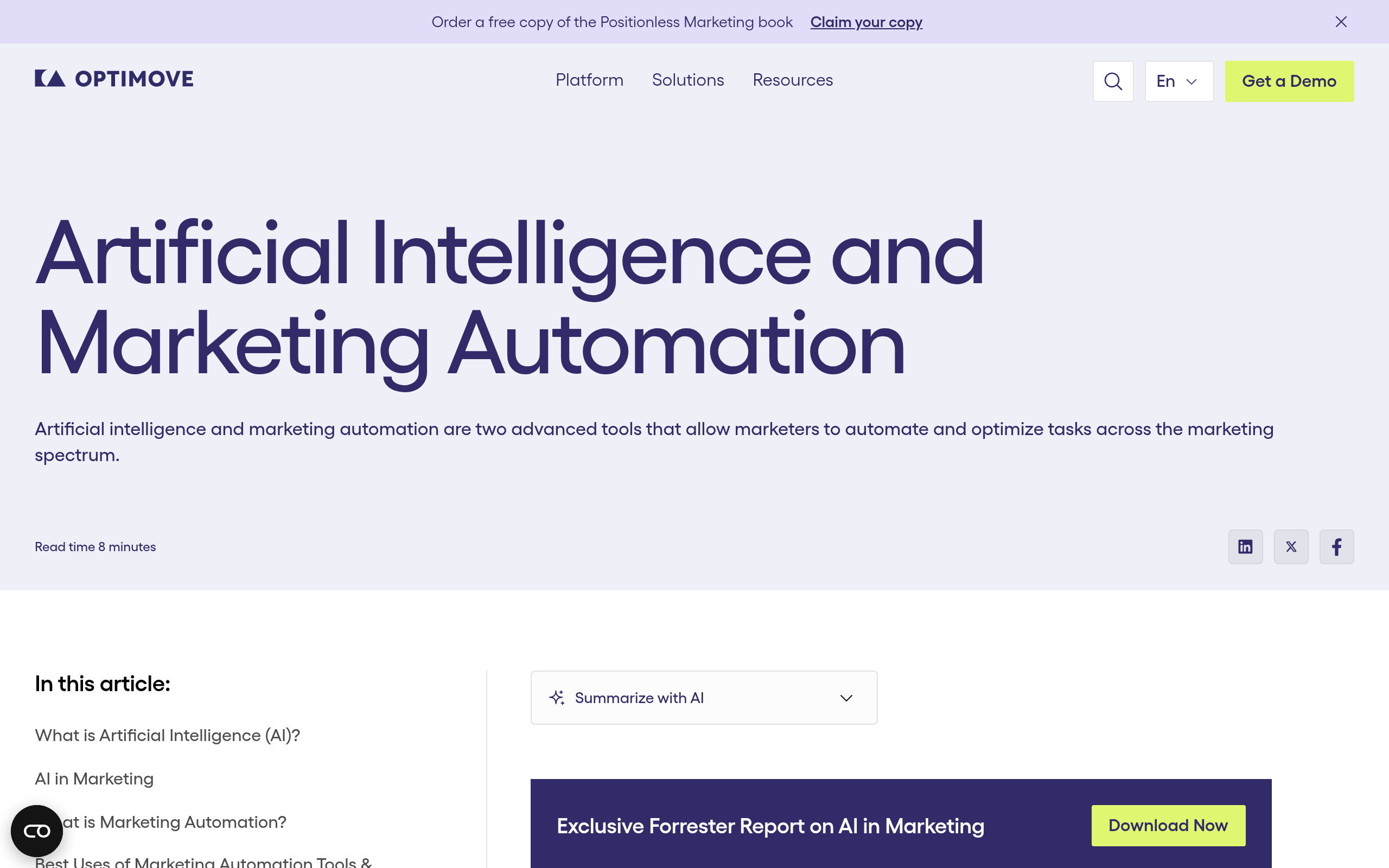
Optimove is purpose-built for retention marketing. It builds individual customer models using historical behavior, purchase patterns, and engagement data, then segments users into micro-cohorts automatically. Marketing teams use it to define trigger campaigns that fire when a user's churn risk score crosses a threshold. It's well-suited for e-commerce, gaming, and subscription businesses with meaningful transaction history. The platform is enterprise-tier — complex to implement and priced accordingly — but delivers measurable lift for teams with dedicated CRM managers and the data volume to feed its models.
CustomersAI takes a more accessible approach to behavioral targeting. It identifies website visitors and existing customers showing exit signals, then enables hyper-targeted re-engagement via email, ads, and push. For e-commerce it's strong at recovering cart-abandoners and dormant buyers before they fully churn. Smaller teams find the onboarding considerably more practical than Optimove's enterprise implementation process.
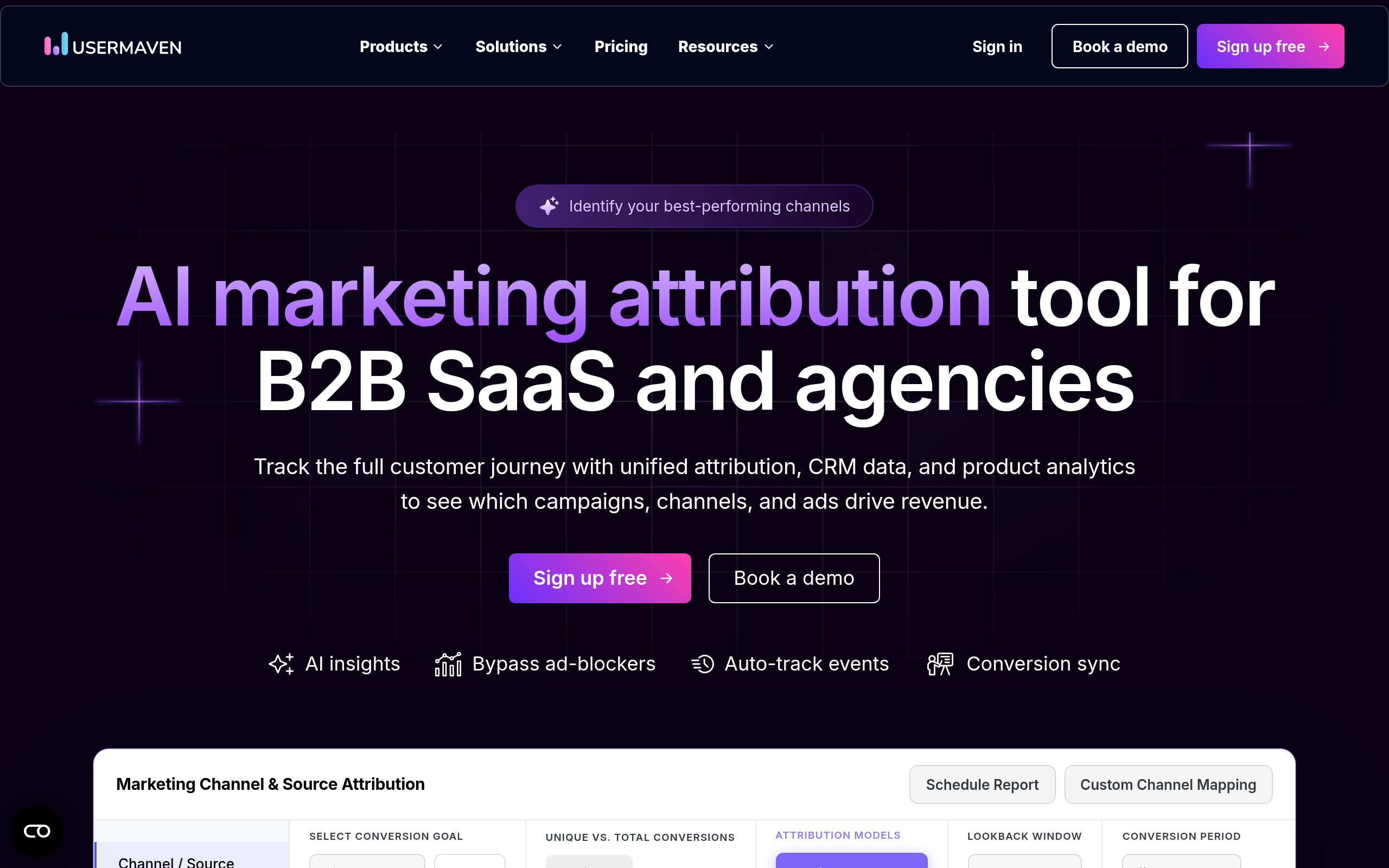
Usermaven approaches churn from the product analytics side. It tracks user journeys inside your product, flags users who aren't reaching key activation milestones — a reliable early churn indicator — and surfaces cohort-level drop-off data. It's particularly useful for SaaS companies who want to understand why users churn, not just who is at risk, feeding insights to both marketing and product teams.
How Can AI Help With Lifecycle Email Marketing and Reducing Churn?
Email remains the highest-ROI retention channel for most businesses. The difference between a retention-focused email program and a generic newsletter is behavioral triggers and personalization — both areas where AI excels.
ActiveCampaign is the most capable tool in this category for mid-market businesses. Its automation builder lets you construct complex lifecycle sequences based on CRM data, purchase history, email engagement, and site behavior. Where it shines for retention: you can build a churn-risk automation that automatically shifts users from standard nurture to a dedicated retention track based on behavioral signals — no manual intervention needed. The native CRM means sales and marketing share the same customer data, which matters when retention requires a coordinated human touchpoint. As one of our affiliate partners, we feature it where it genuinely fits — for lifecycle email automation with CRM integration, it's a serious contender for SMB and mid-market teams alike.
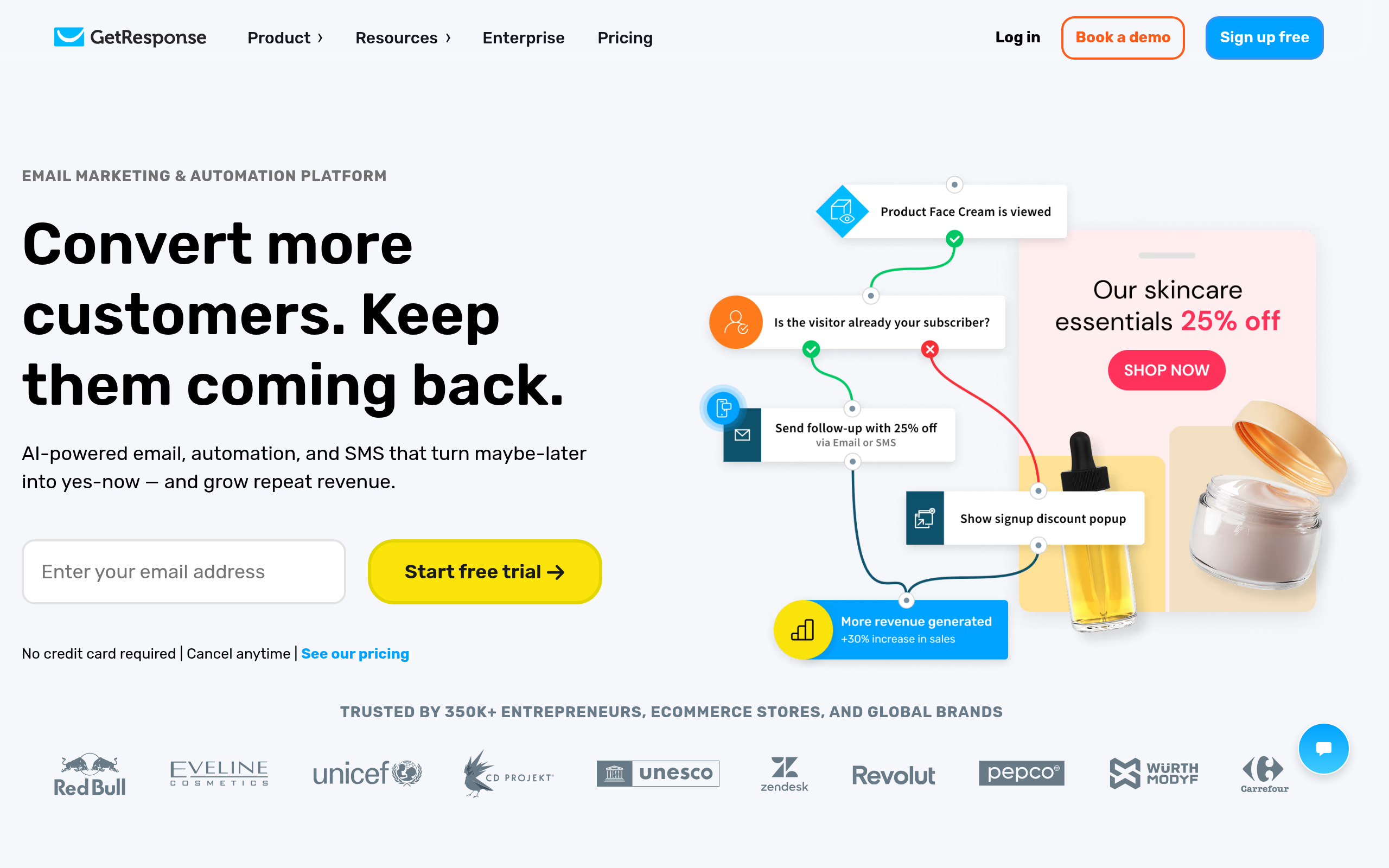
GetResponse covers email automation and basic lifecycle sequences with a simpler interface and lower entry cost. It suits smaller teams or early-stage companies building their first retention email sequences. The automation workflows are less sophisticated than ActiveCampaign's branching logic, but for a straightforward onboarding sequence, win-back series, and newsletter engagement tracking, it delivers without a steep learning curve. Also an affiliate partner — featured here because it genuinely fits the small-business and solo-founder use case.
Both platforms support segmentation, A/B testing, and behavioral triggers. The gap shows when your sequences need complex multi-condition branching or deep CRM sync — ActiveCampaign handles this natively; GetResponse is better for simpler, more linear playbooks.
What AI Tools Improve In-App Engagement and Cut Early-Stage Churn?
The most expensive churn is early churn — users who sign up, fail to see value in the first week, and disappear quietly. In-app messaging and customer communication tools address this directly.
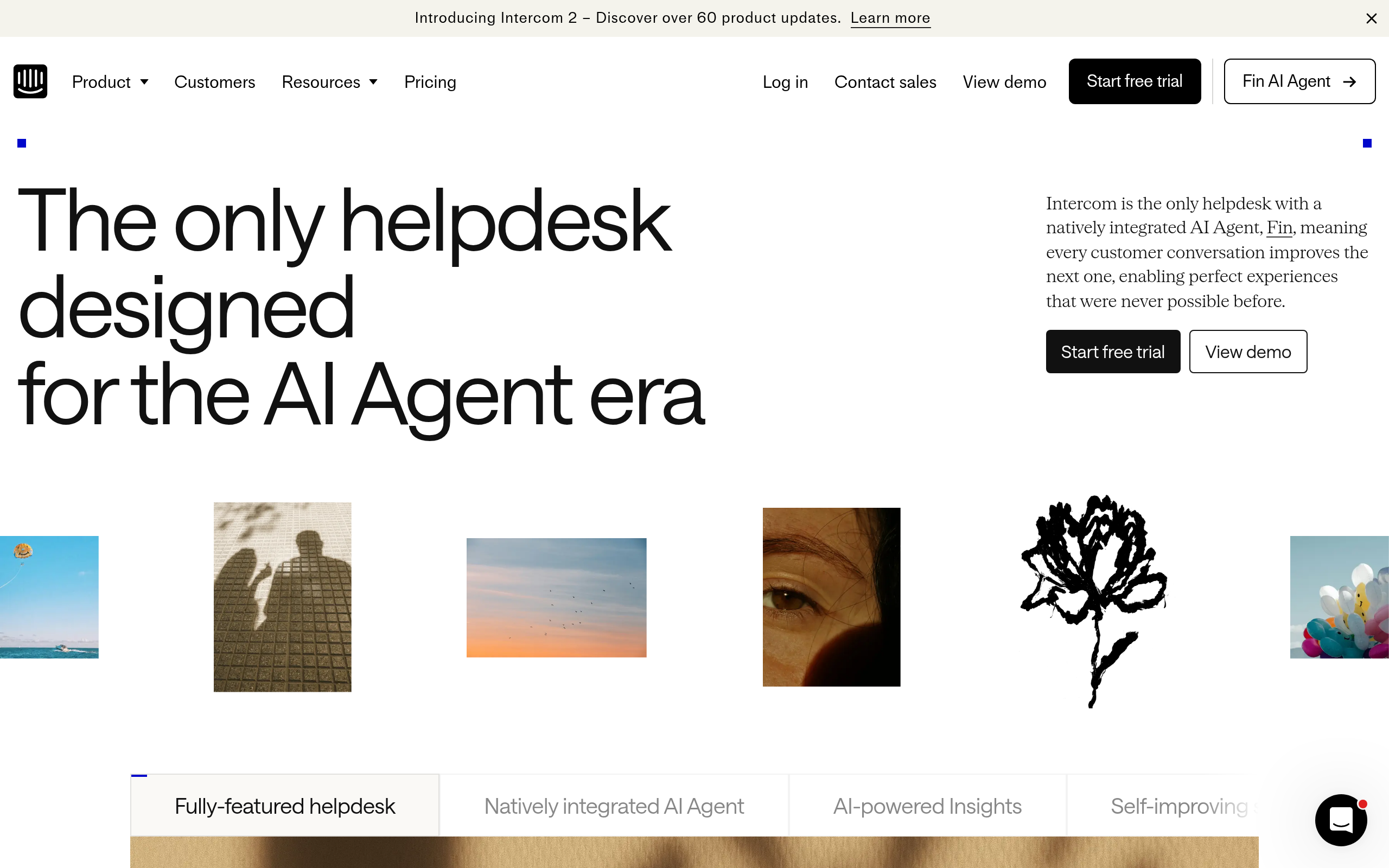
Intercom is the market standard for in-app customer messaging. Its product tours, behaviorally triggered messages, and AI-powered support agent (Fin) engage users at the exact moment they're confused or stuck — the primary driver of early churn in most SaaS products. For SaaS companies, combining product messaging, live chat, and an AI support agent in one platform means fewer users hit a dead end and leave without asking for help. Pricing scales with usage, which gets expensive at volume, but for companies where early activation is the main churn driver, the retention impact typically justifies the cost.
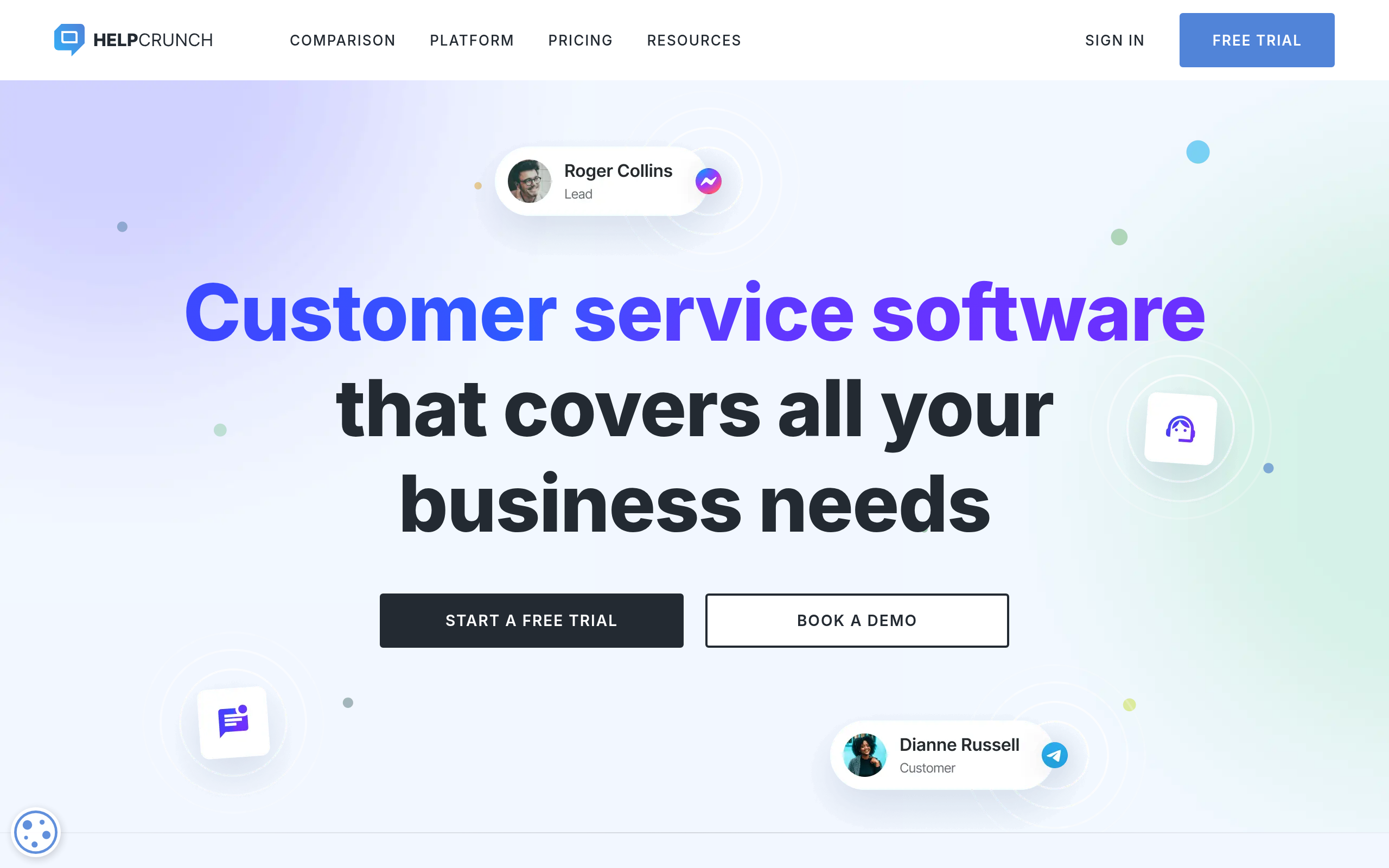
HelpCrunch is a strong Intercom alternative, especially for teams that find Intercom's pricing prohibitive at their current scale. It offers live chat, in-app messages, email, and a knowledge base in one platform. The AI features — auto-reply suggestions, basic chatbot — are more limited than Intercom's but functional for most support scenarios. Where HelpCrunch wins: more predictable pricing for growing teams and a faster setup process. If your primary need is multi-channel customer communication without enterprise pricing, it's a practical choice.
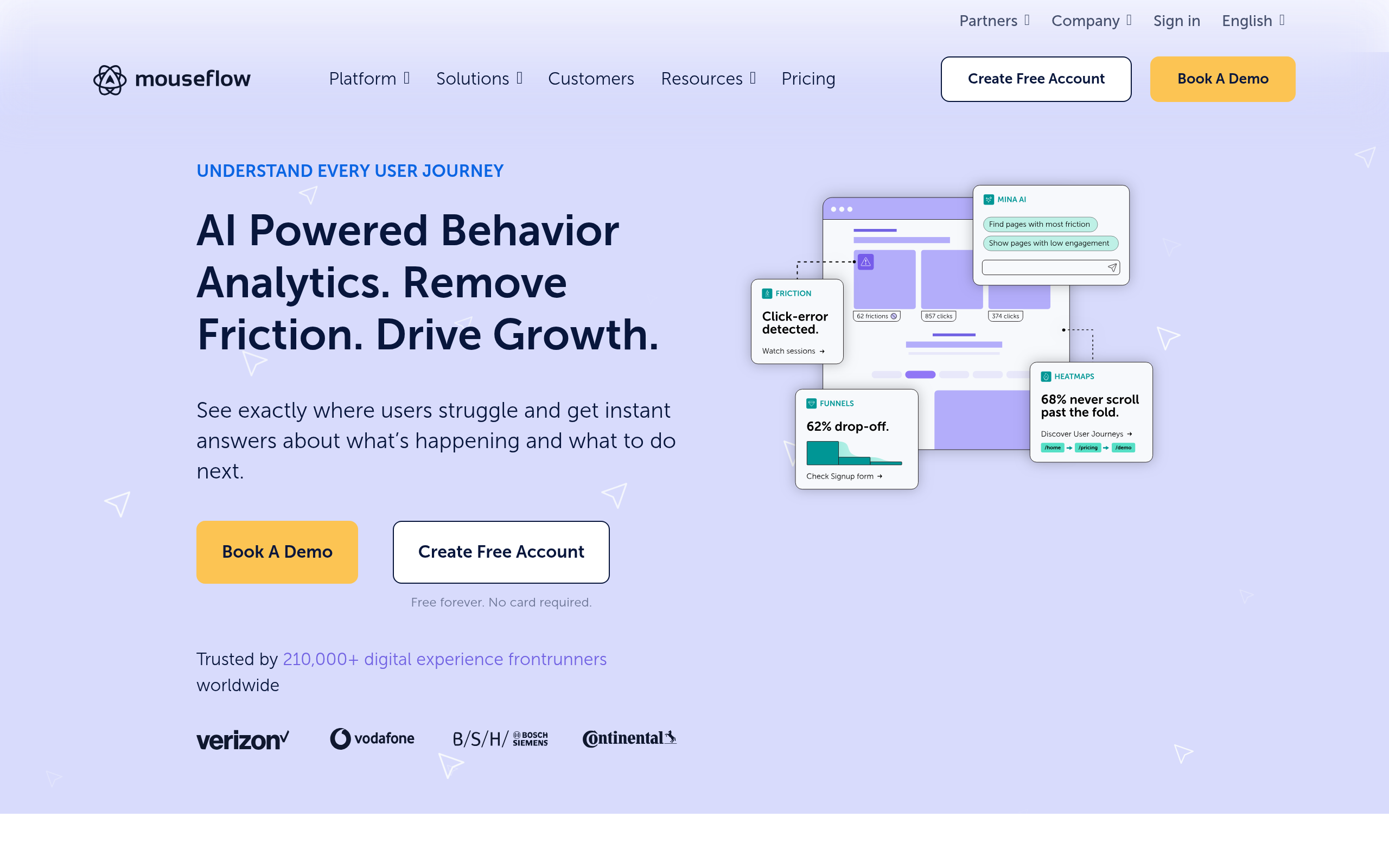
Mouseflow takes a different approach entirely — instead of messaging users, it shows you why they're dropping off. Session recordings, heatmaps, and funnel analysis reveal UX friction points that drive silent churn: forms users abandon, buttons they can't find, flows they rage-click through in frustration. The insights feed directly into product improvements that reduce structural churn. Fixing the friction points Mouseflow surfaces will often outperform any retention email campaign aimed at the same users.
How Do You Win Back Churned Customers With AI?
Win-back campaigns work when they're timely, personalized, and offer a clear reason to return. Generic emails have poor recovery rates. AI-powered win-back changes the equation in two ways: better timing (contacting users in the window when they're still reachable, not six months later) and better personalization (messaging based on what they actually used, not a template written for everyone).
CustomersAI excels at e-commerce win-back — it identifies churned customers still browsing your site or showing intent signals on other channels, enabling re-engagement before they've fully switched to a competitor. ActiveCampaign handles SaaS win-back well through automation: a churned user triggers a sequence personalized with CRM data (which features they used, what plan they were on), and the sequence escalates to a sales touchpoint if they re-engage with early messages.
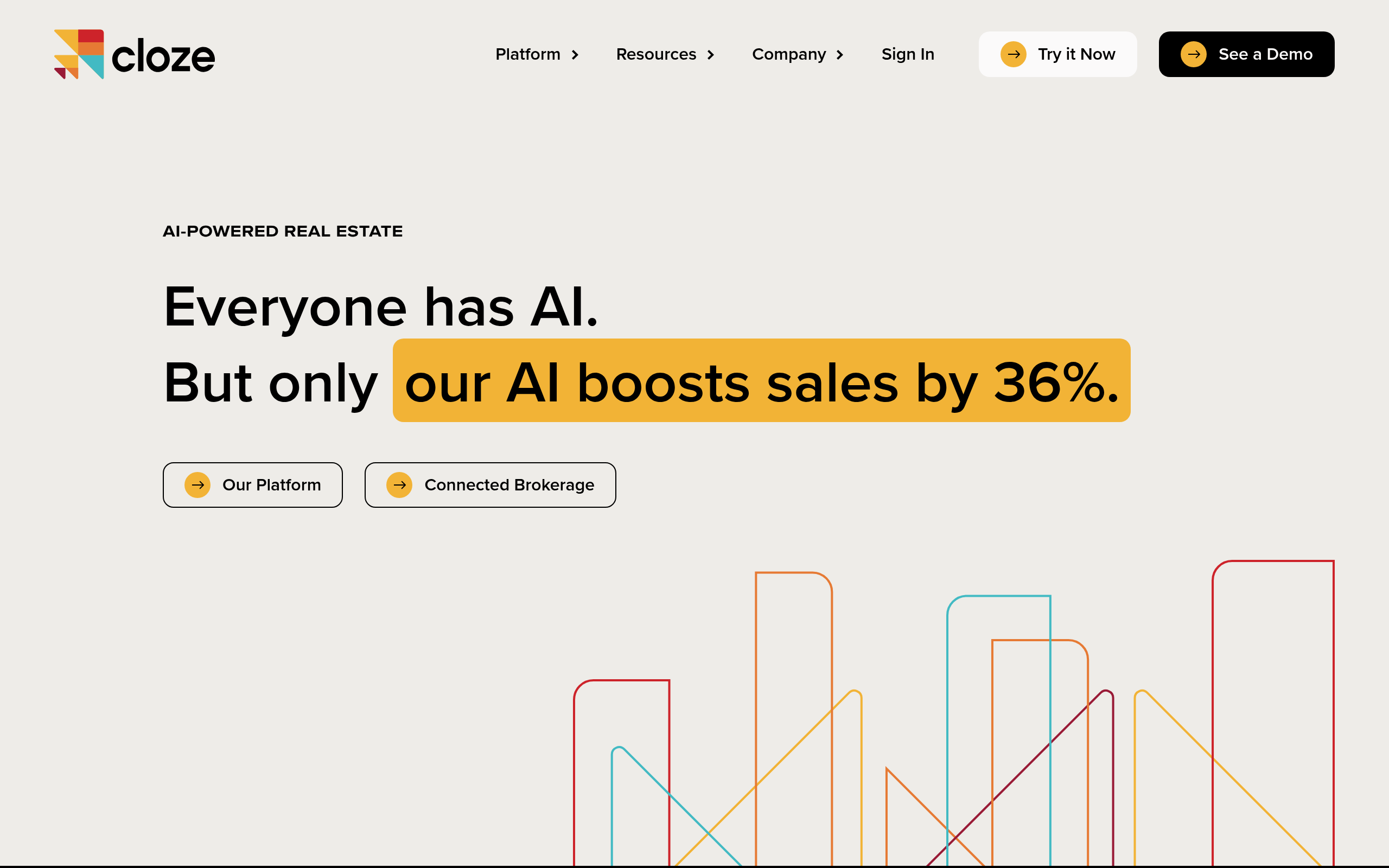
For B2B relationship sales, Cloze is a relationship intelligence CRM that tracks communication history and surfaces contacts who've gone quiet — the B2B equivalent of a win-back signal. It automatically identifies relationships at risk of going cold and prompts the right person to reach out. It's less a campaign tool and more a sales intelligence layer, but for agencies, consultancies, and B2B SaaS with high-touch sales cycles, it fills a gap that bulk email tools don't address.
For high-ticket support environments, Zendesk's AI-assisted workflows help teams resolve issues faster, which directly impacts renewal decisions. Many B2B churn events trace back to unresolved support tickets — Zendesk's AI triage and suggested replies reduce resolution time and keep frustration from tipping into cancellation.
How Do the Top Tools Compare on Core Retention Features?
| Tool | Churn prediction | Email automation | In-app messaging | Analytics / insights | Win-back |
|---|---|---|---|---|---|
| Optimove | Advanced (core feature) | Yes | No | Strong | Yes |
| ActiveCampaign | Via lead scoring | Advanced | No | Good | Yes (automation) |
| GetResponse | Basic | Solid | No | Basic | Limited |
| CustomersAI | Behavioral signals | Yes | No | Moderate | Strong |
| Intercom | No | Basic | Advanced | Moderate | No |
| HelpCrunch | No | Yes | Good | Basic | No |
| Zendesk | No | Via integrations | AI agent | Good (CS metrics) | No |
| Mouseflow | No | No | No | Advanced (UX/funnel) | No |
| Usermaven | Product signals | No | No | Advanced (product) | No |
| Cloze | Relationship risk | Limited | No | Relationship intel | B2B only |
Quick Verdict: Best Tool for Each Situation
| Tool | Best for | Team size | Pricing model |
|---|---|---|---|
| Optimove | Enterprise e-commerce / gaming churn prediction | Mid–large | Enterprise (custom) |
| ActiveCampaign | Lifecycle email automation + CRM | SMB to mid-market | Per-contact subscription |
| GetResponse | Simple lifecycle emails for small teams | Small | Per-contact subscription |
| CustomersAI | Behavioral targeting + e-commerce win-back | SMB to mid | Usage-based |
| Intercom | In-app messaging + AI support for SaaS | Any (scales) | Per-seat + usage |
| HelpCrunch | Multi-channel support + messaging (Intercom alt.) | Small to mid | Flat subscription |
| Zendesk | Support-driven retention for high-volume CS teams | Mid to large | Per-agent subscription |
| Mouseflow | UX friction discovery + funnel analysis | Any | By sessions |
| Usermaven | Product analytics + churn signal tracking | Small to mid | Subscription |
| Cloze | B2B relationship intelligence + at-risk contacts | Small B2B teams | Per-user subscription |
What Does a Practical AI Retention Stack Look Like?
The most practical approach is one tool per function, not one overlapping mega-platform:
- Analytics layer: Usermaven or Mouseflow to understand where users drop off and which behaviors predict churn.
- In-app engagement: Intercom for full-featured in-app messaging, or HelpCrunch for smaller budgets.
- Lifecycle email: ActiveCampaign for complex behavioral automation, or GetResponse for simpler sequences and tighter budgets.
- Win-back: Built within ActiveCampaign as an automation, or CustomersAI for behavioral retargeting alongside email.
- B2B relationship layer: Cloze to flag at-risk contacts before they go fully cold.
The anti-pattern: buying Optimove before you have sufficient transaction history for its models to work. Predictive churn tools need data. A startup with 300 customers will get more value from a well-configured lifecycle email sequence than from enterprise ML running on thin data.
Comparee's Verdict: Which AI Retention Tool Should You Actually Use?
Here's the direct answer, by situation — no hedging:
- SaaS startup, early churn is the main problem: Start with Intercom for in-app engagement and Usermaven to track activation milestones. Add GetResponse for onboarding email sequences. Three focused tools, manageable without a marketing ops hire.
- Mid-market SaaS with a marketing team: ActiveCampaign as the lifecycle email and CRM layer, Intercom for in-app, Mouseflow for UX friction discovery. This is a proven stack with solid integrations across all three.
- E-commerce brand, repeat purchase rate dropping: CustomersAI for behavioral targeting and win-back, ActiveCampaign or GetResponse for post-purchase and win-back email sequences. Optimove only if you're at enterprise scale with a dedicated CRM team.
- B2B / agency / services business: Cloze for relationship intelligence (who's going quiet), HelpCrunch for client communication, ActiveCampaign for nurture and renewal sequences.
- Support-heavy product with high ticket volume: Zendesk with AI features to reduce resolution time — slow support is one of the top churn drivers in this segment, and fixing it has a faster retention impact than any marketing campaign.
Don't over-index on prediction tools until you've fixed structural churn drivers — poor onboarding, slow support, missing features. Mouseflow heatmaps and Usermaven funnel data frequently reveal more actionable retention fixes than any predictive model will uncover on the same timeline.
Tools mentioned in this guide
Pricing, features and model availability can change over time. Always verify current details on each tool's official website before deciding.
Frequently Asked Questions
What is the best AI tool for reducing customer churn?
What is the best AI tool for reducing customer churn?
How does AI predict customer churn?
How does AI predict customer churn?
Can small businesses use AI for customer retention?
Can small businesses use AI for customer retention?
What is the difference between Intercom and HelpCrunch for retention?
What is the difference between Intercom and HelpCrunch for retention?
How do you win back churned customers using AI?
How do you win back churned customers using AI?
Is Optimove worth the cost for a mid-size company?
Is Optimove worth the cost for a mid-size company?
What role does Mouseflow play in customer retention?
What role does Mouseflow play in customer retention?
How does Cloze differ from other CRM tools for retention?
How does Cloze differ from other CRM tools for retention?
Don't just pick a tool — get the whole workflow
Tell Comparee your goal and get a complete step-by-step AI workflow with the right tool for every step.