AI for Sales: The Complete Guide for 2026 (Prospecting to Close)
AI for sales in 2026 — how to use AI for prospecting, outreach, deal intelligence and forecasting, plus the best tools like Seamless.AI and Reply.io.
Key takeaways
- AI helps across the sales funnel — finding leads, enriching and scoring them, automating outreach, and surfacing deal intelligence.
- It removes the repetitive grind so reps spend more time selling and less on data and admin.
- Best tools: Seamless.AI for prospect data, Reply.io and Outreach for outreach, ScaleXP for revenue analytics, Bluedot for call insight.
- AI augments reps; it does not replace the human relationship that closes deals.
- Mind data accuracy and compliance — especially for cold outreach.
AI helps sales teams across the entire funnel: it finds and enriches leads, scores and prioritises them, automates and personalizes outreach, and surfaces intelligence from calls and pipeline data — so reps spend more time selling and less on research and admin. Sales has always been part craft, part grind, and AI attacks the grind: the prospecting, data entry, follow-up sequencing and analysis that eat a rep's day. What it does not replace is the human relationship that actually closes deals. This guide walks through how AI helps at each stage of selling, the best tools, and how to use it without losing the human touch that wins.
Where AI helps across the sales funnel
AI shows up at every stage. In prospecting, it finds and verifies contacts and builds targeted lists far faster than manual research. In enrichment and scoring, it fills in data and prioritises the leads most likely to convert, so reps focus their time. In outreach, it personalizes and automates email and multichannel sequences at scale. In deal intelligence, it captures and analyses sales calls to surface insights and next steps. And in forecasting, it analyses pipeline and revenue to predict outcomes. The pattern is consistent: AI handles the volume and the data, freeing the rep for the conversations and judgement that move deals forward.
AI for prospecting and lead data
Prospecting is where reps lose the most time — hunting for the right contacts, verifying emails, and assembling lists. AI tools turn that into minutes: they build accurate contact lists, enrich records with firmographic and contact data, and keep it current. Good data is the foundation of everything downstream, because the best outreach in the world fails if it goes to the wrong or outdated contact. The honest caveat is that data quality varies between tools, so test accuracy on a sample of your real target market before committing — a list that is 90% accurate and one that is 60% accurate produce very different results.
AI for outreach and deal intelligence
Once you have the right prospects, AI scales the outreach. It drafts personalized messages, runs multi-step sequences across channels, and handles the follow-up cadence that reps so often drop. The win is doing personalized outreach at a volume that would be impossible by hand — but the same rule applies: edit so it sounds human, and respect cold-outreach regulations. Beyond outreach, deal intelligence is a fast-growing use: AI records and analyses sales calls, surfacing what was said, what mattered, and what to do next, so reps learn from every conversation and managers can coach with real data instead of anecdotes.
Best AI sales tools in 2026
| Stage | Best tool |
|---|---|
| Prospect data | Seamless.AI |
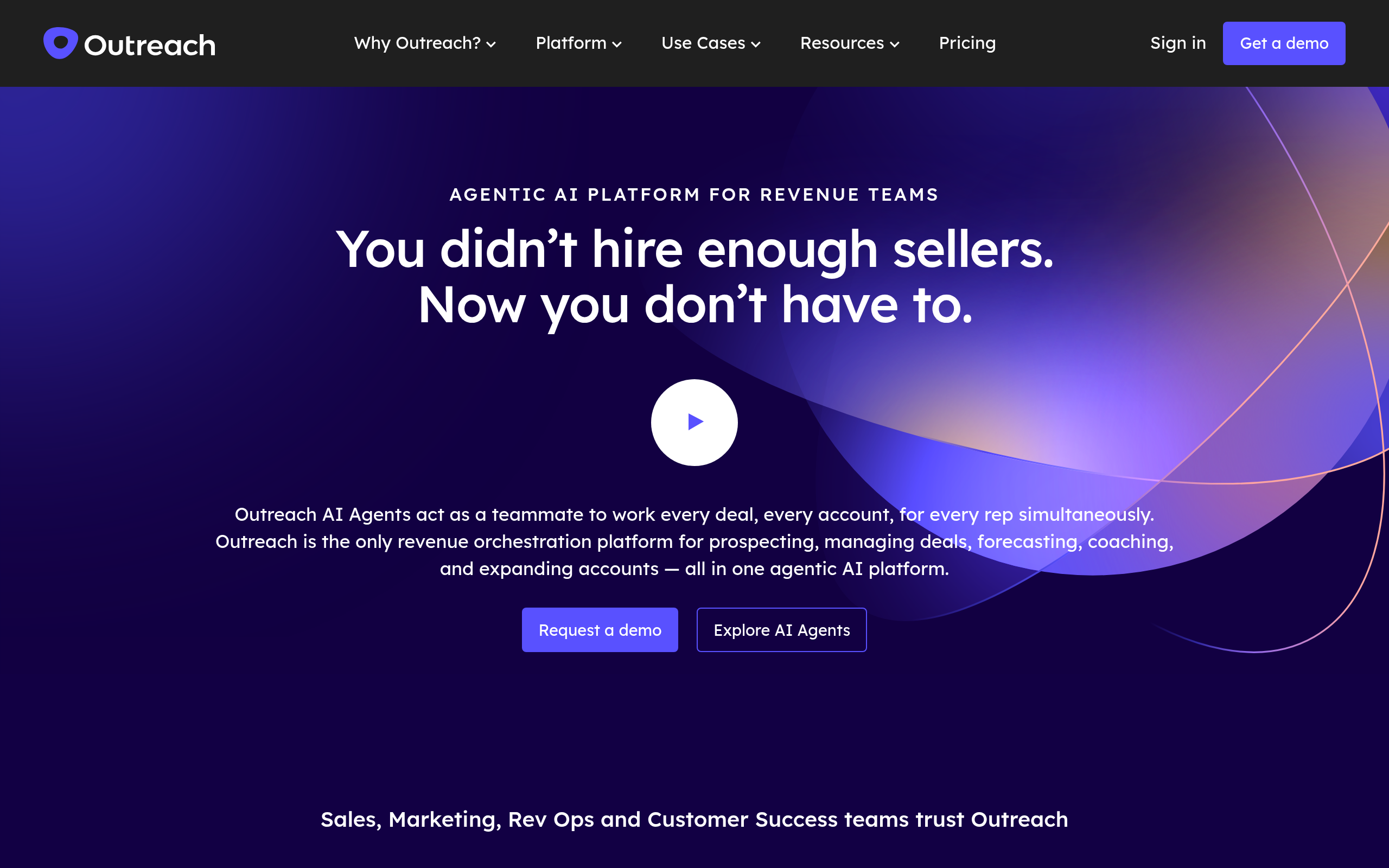
| Outreach | Reply.io, Outreach |
| Revenue analytics | ScaleXP |
| Sales-call insight | Bluedot |
Match the tool to the stage you most need to strengthen. For prospect data, Seamless.AI builds accurate contact lists. For outreach, Reply.io runs multichannel sequences and Outreach is a full sales engagement platform for teams. For revenue and pipeline analytics, ScaleXP helps you understand and forecast performance. And for insight from sales calls, Bluedot captures and surfaces what happened. Compare more in our Apollo.io alternatives, Salesloft alternatives and Pipedrive alternatives guides and the sales & lead gen category.
How to use AI in sales (without losing the human touch)
- Fix your data first — accurate prospect data with a tool like Seamless.AI underpins everything.
- Automate the grind, not the relationship — let AI handle research, sequencing and admin; keep the actual selling human.
- Personalize at scale with Reply.io, but edit so messages feel one-to-one, not mass-blasted.
- Learn from every call with Bluedot to coach and improve.
- Forecast with data using ScaleXP rather than gut feel.
- Stay compliant — cold-outreach rules vary by region; respect them.
Why AI is reshaping sales now
Sales has a structural problem AI is unusually good at solving: reps spend a large share of their time on everything except selling. Studies of sales productivity have long shown that the actual selling — talking to prospects, building relationships, closing — is a minority of a rep's day, with the rest lost to research, data entry, list-building, follow-up logistics and reporting. AI attacks exactly that non-selling overhead. By automating prospecting, enrichment, sequencing and analysis, it gives reps back the hours they were losing to admin and redirects them to the conversations that generate revenue. The result is leverage: the same team can work more pipeline, follow up more consistently, and learn faster from every interaction. This is why AI in sales has moved from experiment to expectation — it does not change what closes a deal (trust and relationships) but it dramatically increases how much time reps have to build those.
The balance that makes AI sales work
The teams that get the most from AI in sales share one trait: they are deliberate about what to automate and what to keep human. Automate the data and the grind — prospecting, enrichment, sequencing, call notes, forecasting — without hesitation, because these are repetitive and rules-based, and AI does them faster and more consistently than a person. But guard the relationship fiercely. Prospects can tell the difference between a genuinely personalized message and a mass-blasted one with their name swapped in, and trust — the thing that actually signs contracts — is built human to human. The right model is AI as the tireless assistant that prepares everything, surfaces the right insights, and handles the busywork, with the rep showing up to conversations better prepared and more present than ever. Get that balance right and AI multiplies a good salesperson; get it wrong and you automate your way into impersonal, ignored outreach.
Common mistakes with AI in sales
The first mistake is trusting prospect data blindly — AI-built lists vary in accuracy, and pouring effort into outreach aimed at wrong or outdated contacts wastes everyone's time, so verify quality on a sample first. The second is over-automating outreach until it reads as mass-blasted; prospects can tell, and impersonal volume damages your reputation more than it helps. The third is ignoring compliance, treating cold outreach as a free-for-all when it is in fact regulated. And the fourth is letting AI-generated call summaries or forecasts go unchecked into decisions. Avoid these by validating data, personalizing genuinely, respecting the rules, and keeping a human eye on anything that drives a decision.
The bottom line
AI is transforming sales by removing the grind — prospecting, data, sequencing, analysis — so reps can spend their time where it matters: building relationships and closing. Use Seamless.AI for data, Reply.io and Outreach for outreach, ScaleXP for analytics, and Bluedot for call insight. Just remember the limit: AI augments reps, it does not replace the human trust that signs deals. Automate the busywork, keep the relationship human, and your team sells more with less friction — the reps who embrace this are not replaced by AI, they are amplified by it, spending their best hours on the conversations that actually close.
Disclaimer: Sales data accuracy varies and cold outreach is regulated. Verify data quality, respect outreach laws in your markets, and keep human judgement on relationships and deals.
Tools mentioned in this guide
Pricing, features and model availability can change over time. Always verify current details on each tool's official website before deciding.
Frequently Asked Questions
How is AI used in sales?
How is AI used in sales?
What are the best AI sales tools?
What are the best AI sales tools?
Can AI do prospecting for me?
Can AI do prospecting for me?
Will AI replace salespeople?
Will AI replace salespeople?
What is sales deal intelligence?
What is sales deal intelligence?
Is AI sales outreach compliant?
Is AI sales outreach compliant?
Don't just pick a tool — get the whole workflow
Tell Comparee your goal and get a complete step-by-step AI workflow with the right tool for every step.