Midjourney vs Stable Diffusion vs Adobe Firefly: Image Gen Showdown
Compare Midjourney, Stable Diffusion, and Adobe Firefly on quality, licensing, LoRA control, and pricing — find the best AI image generator for your workflow.
- Midjourney produces the most aesthetically polished, consistent results out-of-the-box — the top pick for creatives who prioritize quality over technical control.
- Stable Diffusion is the only fully open-source option: run it locally for free, fine-tune with LoRA, and control composition with ControlNet — essential for technical and brand-specific workflows.
- Adobe Firefly is trained exclusively on licensed and Adobe Stock content, with IP indemnification for enterprise customers — the clear choice when legal risk is zero-tolerance.
- Cost diverges sharply: Stable Diffusion (local) costs nothing; Midjourney and Firefly both require paid plans for serious use.
- For brand-consistent generation, only Stable Diffusion (LoRA) and Firefly Custom Models support fine-tuning on your own image assets.
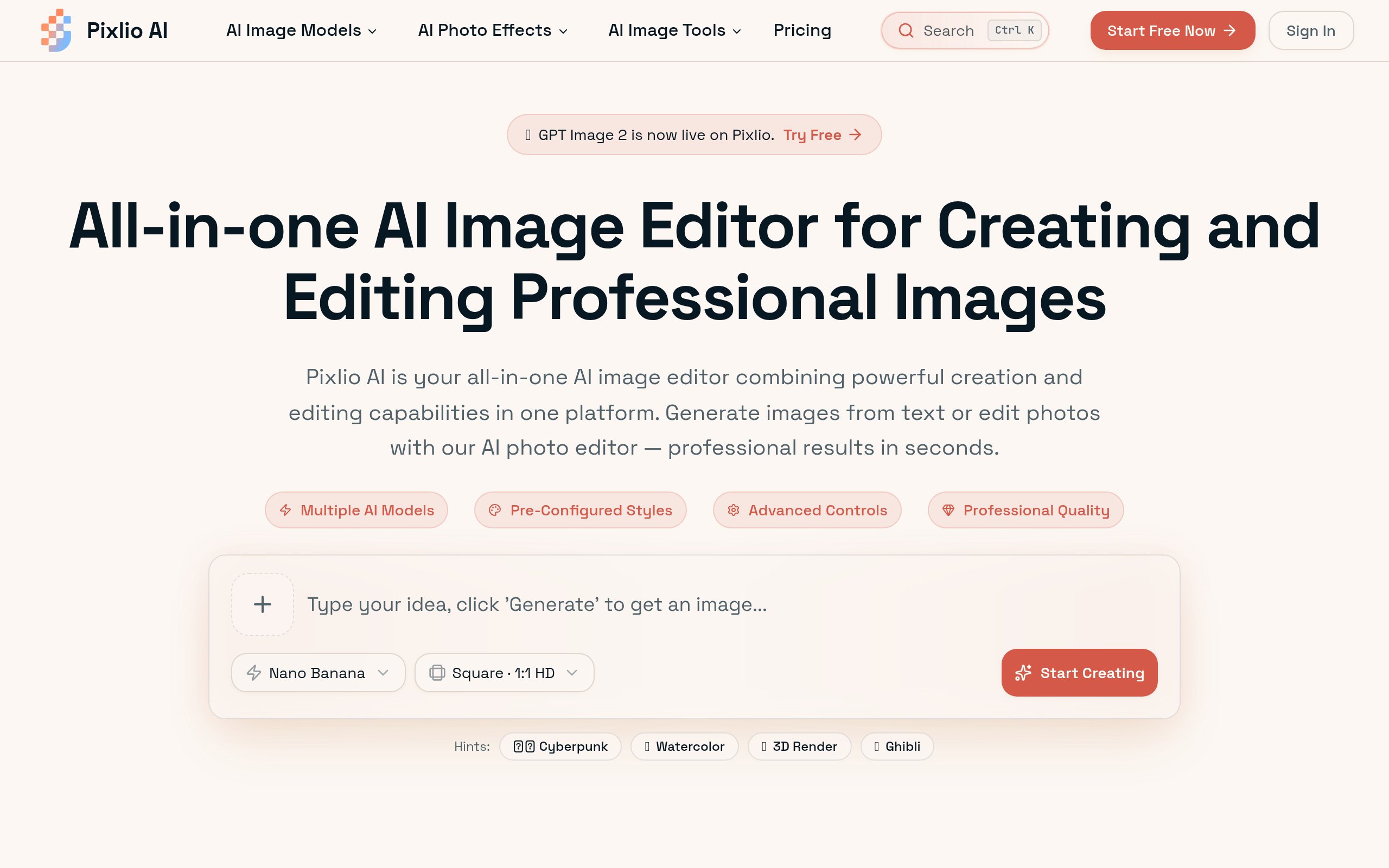
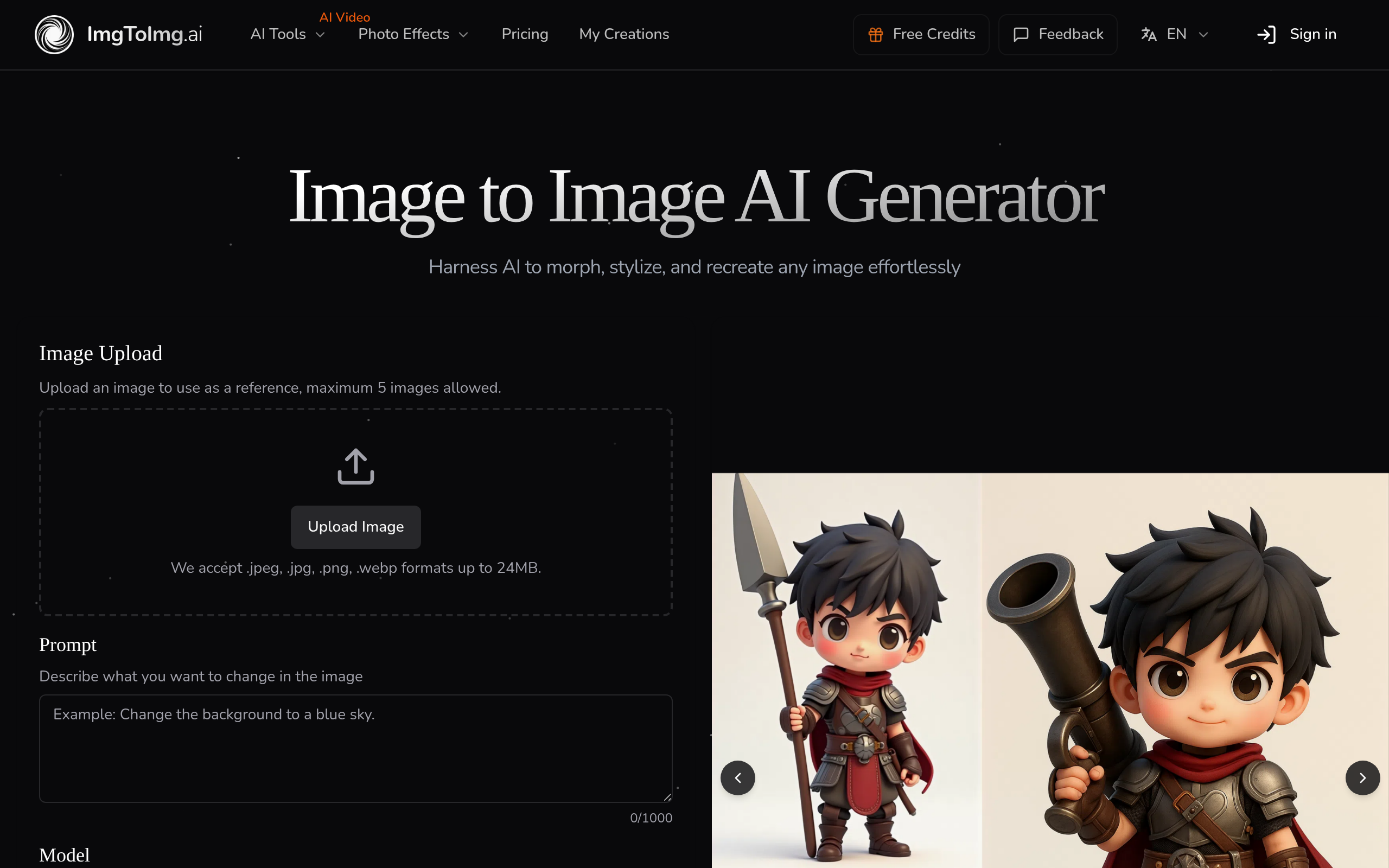
- If you want a hosted, no-setup image generation experience, catalog tools like Pixlio AI and Image To Image AI offer a faster starting point without local GPU requirements.
Which AI Image Generator Should You Choose?
Short answer: Midjourney is the best choice for out-of-the-box image quality and ease of use. Stable Diffusion is the best choice for technical control, LoRA fine-tuning, and zero licensing cost. Adobe Firefly is the best choice for commercial teams that need IP-indemnified assets and seamless Creative Cloud integration.
If you are a designer, marketer, or creative professional evaluating AI image generation, you have almost certainly landed on these three. They dominate the conversation for good reason — each makes a fundamentally different bet about what matters most: aesthetic quality, open customization, or commercial safety. Choosing the wrong one for your workflow means either hitting a hard ceiling quickly or investing significant setup time before seeing useful results.
This guide compares all three on four axes that actually drive purchasing decisions: output quality and aesthetic style, commercial licensing safety, technical control (LoRA, ControlNet, fine-tuning), and pricing model — with a clear Comparee verdict at the end that tells you exactly which tool fits which situation.
Quick Verdict: Best Tool by Use Case
| Use Case | Midjourney | Stable Diffusion | Adobe Firefly |
|---|---|---|---|
| Concept art and editorial illustration | Best choice | Strong with right model | Limited |
| IP-safe commercial campaigns | Acceptable (paid plans) | Model-dependent risk | Best choice |
| Brand LoRA / fine-tuning on own data | Not supported | Best choice | Enterprise only |
| Photorealistic hero images | Best choice | Strong (right checkpoint) | Good |
| In-Photoshop editing workflow | Not integrated | Limited | Best choice |
| Batch pipeline / API integration | Limited | Best choice | Available (enterprise) |
| Free local deployment | Not possible | Best choice | Not possible |
| Ease of first use | Easiest | Steep learning curve | Easy to moderate |
How Do Midjourney, Stable Diffusion, and Adobe Firefly Compare on Image Quality?
Midjourney has earned a genuine reputation for producing photorealistic and artistically polished images from relatively simple prompts. Its proprietary model excels at dramatic lighting, fine texture detail, and coherent compositions that feel curated rather than generated. This is not accidental — Midjourney has spent years refining its model through community feedback from a large creative user base, and the result is an aesthetic baseline that few competitors match at default settings. Later model versions brought significantly improved prompt adherence and text rendering within images, two historically weak areas for diffusion models.
Stable Diffusion — including variants like SDXL, SD 3.5, and thousands of community-fine-tuned checkpoints — delivers output that ranges from mediocre to extraordinary depending entirely on which model and configuration you use. The base models are technically capable but aesthetically neutral. Community-fine-tuned LoRA models can produce extraordinarily specific styles — anime, ultra-photorealistic portraits, product photography, architectural renders — that outperform generalist models in their respective niches. The quality ceiling is very high, but reaching it requires hands-on model knowledge and willingness to experiment.
Adobe Firefly targets a different quality standard. Its output is optimized for clean, commercially usable assets — not necessarily the most dramatic or artistic results. Where Firefly genuinely leads is in coherent text within images (a persistent weak point across diffusion models), vector-style illustrations, and product mockup generation. The Generative Fill and Generative Expand integrations inside Adobe Photoshop are genuinely compelling for professional retouching workflows, producing results that blend seamlessly with source images in ways that standalone generation tools struggle to match.
| Feature | Midjourney | Stable Diffusion | Adobe Firefly |
|---|---|---|---|
| Out-of-box image quality | Exceptional | Variable (model-dependent) | Good |
| Artistic style range | Broad | Extremely broad | Commercial-focused |
| Text rendering in images | Improved (recent versions) | Weak by default | Strong |
| LoRA fine-tuning | Not available | Full support | Enterprise (Custom Models) |
| ControlNet | Not available | Full support | Not available |
| Inpainting and Outpainting | Basic | Advanced | Advanced (via Photoshop) |
| Commercial license | Paid plans | Model-dependent | Yes — IP indemnified |
| Learning curve | Low | High | Low to medium |
| Deployment options | Cloud only | Local or cloud | Cloud / Creative Cloud |
Which AI Image Generator Is Safest for Commercial Use?
Licensing is where the three tools diverge most sharply — and it matters enormously for agencies, in-house design teams, and brands operating at scale.
Adobe Firefly is the only one of the three trained exclusively on Adobe Stock content and other rights-cleared material. Adobe offers IP indemnification for enterprise customers, meaning Adobe assumes legal responsibility if a Firefly output triggers a copyright claim. This makes Firefly the definitive choice for any organization that cannot afford a copyright dispute: marketing teams at large brands, companies in regulated industries such as healthcare, finance, and legal, and agencies serving clients with explicit IP requirements. This is a real and meaningful differentiator — not marketing language. No other major image generation platform offers comparable indemnification.
Midjourney grants commercial use rights to images generated on paid plans. The model was trained on a broad internet scrape, and Midjourney does not provide IP indemnification. For most SMB and freelance use cases, this is acceptable in practice — the actual litigation risk for individual outputs is low. Enterprise legal teams, however, frequently flag the training data provenance as a blocker when evaluating tools for scaled production use. The absence of indemnification is a real gap for risk-averse organizations.
Stable Diffusion is open-source under the CreativeML Open RAIL-M license, with variations by model version. Running the model locally gives you control over the pipeline, but the licensing situation depends entirely on which community checkpoint or fine-tune you deploy — some impose additional restrictions on commercial use. Before using any specific Stable Diffusion checkpoint commercially, you need to audit that model's specific license terms. This due-diligence burden is a real operational consideration for teams without a technical lead who can manage it systematically.
For commercial licensing safety, the ranking is unambiguous: Firefly > Midjourney (paid plan) > Stable Diffusion (model-dependent). If IP safety is your primary constraint, start and stop at Firefly.
How Much Control Do You Get? LoRA, ControlNet, and Customization Explained
This is the dimension where Stable Diffusion has no real competition — and where Midjourney most reliably frustrates technically sophisticated users who need brand-consistent or structurally controlled output.
Stable Diffusion: Maximum Customization
Stable Diffusion's open architecture supports the full stack of diffusion model customization techniques that have emerged from the research community:
- LoRA (Low-Rank Adaptation): Fine-tune the model on your own images to reproduce a specific character, product, art style, or face — with as few as 10 to 20 reference images. This is the key capability for brand-consistent generation at scale. If your brand has a mascot, a product line, or a visual style guide, LoRA is how you enforce it in generated output.
- ControlNet: Impose structural constraints on generation using edge maps, depth maps, OpenPose skeleton estimation, scribble inputs, and other conditioning signals. This gives you precise compositional control over generated images that no prompt-only tool can match. If you need a person in a specific pose, a room with exact spatial proportions, or a product shot with a defined camera angle, ControlNet delivers it.
- img2img: Start from an existing image and transform it — preserving structural elements while changing style, content, or lighting conditions. This is particularly powerful for product photography retouching workflows where you want to keep object shape but replace backgrounds or change lighting.
- Inpainting and Outpainting: Edit specific regions of an image with surgical precision, or extend images beyond their original borders while maintaining visual coherence with the original content.
- Community ecosystem: Thousands of specialized checkpoints, LoRA libraries, VAEs, and embeddings exist for specific domains — anime, architecture, fashion, medical illustration, game asset generation, and more. This ecosystem has no equivalent in closed platforms.
This depth makes Stable Diffusion the tool for product photographers who need background replacement with perfect lighting consistency, 3D artists stylizing renders, game studios generating asset variations, and developers building bespoke image pipelines embedded in larger software systems.
Midjourney: Prompt-Driven with Limited but Improving Controls
Midjourney has added meaningful control features in recent model versions: style references (--sref for visual style matching), character references (--cref for character consistency across images), aspect ratio control, and robust negative prompting. These additions matter and have made Midjourney meaningfully more controllable than it was in earlier versions. However, it remains fundamentally a prompt-driven, black-box service. You cannot fine-tune Midjourney on your own data, cannot impose structural constraints equivalent to ControlNet, and cannot run it locally or via a fully open API. For brand-consistent generation — reproducing your specific product, character, or visual identity reliably — Midjourney hits a hard ceiling that prompt engineering alone cannot break through.
Adobe Firefly: Structured but Gated at Enterprise
Adobe offers Firefly Custom Models at the enterprise tier, allowing organizations to train the model on their own brand visual identity and generate on-brand assets at scale. This is powerful for large content operations where brand consistency across thousands of generated assets is the core requirement. However, it lacks the open-ecosystem depth of Stable Diffusion: no ControlNet equivalent, no community LoRA library, no local deployment option, and no access to the broader research community's tooling. The trade-off is simplicity and legal safety in exchange for a lower customization ceiling, and the cost and access requirements put it out of reach for most teams that are not enterprise accounts.
| Capability | Midjourney | Stable Diffusion | Adobe Firefly |
|---|---|---|---|
| LoRA training on own data | Not available | Full support | Enterprise (Custom Models) |
| ControlNet structural control | Not available | Full support | Not available |
| Pose and depth conditioning | Not available | Full support | Not available |
| Style reference | Yes (--sref) | Yes (via LoRA / img2img) | Limited |
| Character consistency | Yes (--cref) | Yes (via LoRA) | Not available |
| Inpainting | Basic | Advanced | Advanced (Photoshop) |
| Outpainting | Not available | Yes | Yes (Generative Expand) |
| Negative prompting | Yes | Yes (advanced) | Limited |
| Local / self-hosted deployment | Not possible | Yes (free) | Not possible |
How Do the Pricing Models Compare?
Midjourney is subscription-only with no free tier currently available — the early Discord-based free trial was discontinued. Plans scale by the volume of GPU hours per month, with a distinction between fast and relaxed generation queues. Light personal use can fit into lower tiers, but serious daily professional use or team collaboration requires higher plans. There is no self-hosted option, so all generation goes through Midjourney's servers.
Stable Diffusion can be run completely free, locally, on a capable GPU. NVIDIA hardware with at least 6 GB VRAM is the common minimum, though quantized model variants lower this threshold. Running locally costs only electricity, making it the clear winner for high-volume generation at the lowest per-image cost. Cloud-based Stable Diffusion services — hosted ComfyUI providers, DreamStudio, Replicate, and others — introduce per-generation credit pricing for users who prefer not to manage local hardware. The open-source model itself carries no licensing fee regardless of deployment method.
Adobe Firefly includes a monthly generative credit allowance within Creative Cloud subscriptions — existing CC subscribers often find Firefly effectively covered by their existing plan for moderate usage. Standalone Firefly plans are available for non-CC users with a defined monthly credit allocation. Enterprise access, which includes Firefly Custom Models and production API integration, is priced separately and targeted at organizations with scaled content production needs. For teams already paying for Creative Cloud, this bundling makes Firefly the lowest incremental-cost option.
| Pricing Dimension | Midjourney | Stable Diffusion | Adobe Firefly |
|---|---|---|---|
| Free tier available | No | Yes (local) | Limited credits |
| Subscription required | Yes | Optional (cloud only) | Yes (or Creative Cloud) |
| Pay-per-generation model | No | Yes (cloud APIs) | Generative credits |
| Enterprise plan | Yes | Self-hosted | Yes |
| API access | Paid (limited) | Open (local / cloud) | Yes (enterprise) |
| Bundled with existing suite | No | No | Yes (Creative Cloud) |
What Are the Best Use Cases for Each Tool?
The right tool is determined by your workflow requirements, not by an abstract quality ranking. Here is where each genuinely excels in practice:
- Midjourney: Concept art and mood boards for client presentations, editorial illustration, social media visual content, photography-style hero images for websites and ads, book covers, album artwork, and any context where you need high-quality output quickly without technical setup time.
- Stable Diffusion: Product photography background replacement with consistent lighting, character design pipelines using LoRA fine-tuning, brand-specific image generation at scale, game asset creation, research and rapid prototyping, batch processing pipelines, and any workflow where you need to integrate generation into custom software or stay entirely on-premises for data privacy reasons.
- Adobe Firefly: Ad campaigns and marketing materials requiring legally safe commercial assets, in-Photoshop retouching and photo compositing, brand asset generation at scale for teams on Creative Cloud, packaging and product design with text elements, and enterprise content operations where legal risk management and creative software integration are both primary requirements.
What Are the Best Alternatives Worth Considering?
The three tools above cover the major archetypes in AI image generation — premium quality, maximum control, and commercial safety. But the space has expanded considerably, and for teams who want a more accessible hosted experience without managing local Stable Diffusion infrastructure or committing to Midjourney or Firefly subscriptions, there are strong alternatives in the Image Generation & Editing category.
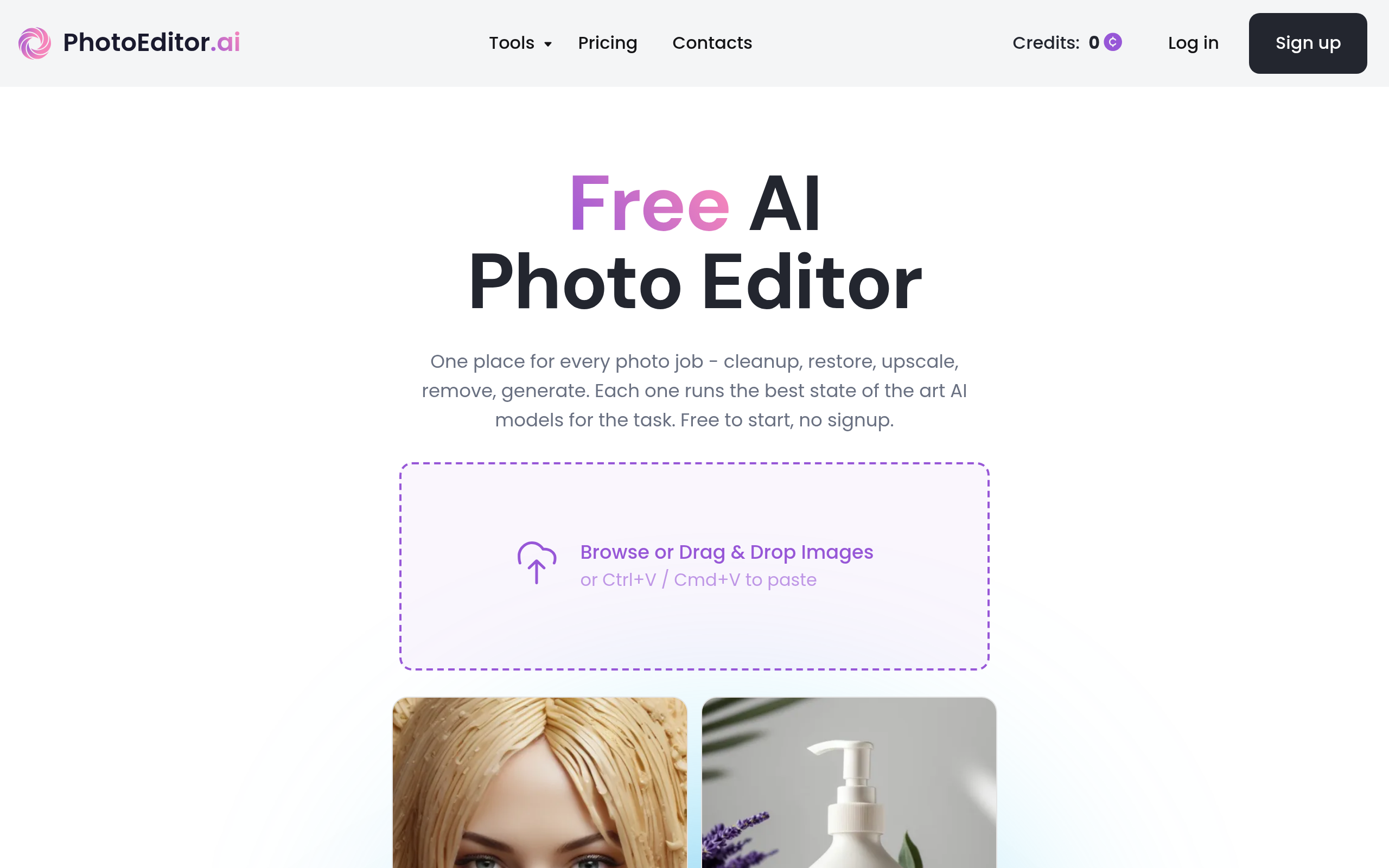
Pixlio AI is one of the top-rated tools in this category on Comparee and provides an accessible cloud-based generation experience well-suited to users who want capable results without the complexity of local setup. For workflows centered on transforming existing assets — stylizing, remixing, or recomposing source images — Image To Image AI is built specifically for that use case and removes the barrier of learning Stable Diffusion's full toolchain. When the primary need is AI-powered retouching and enhancement rather than generation from scratch, photoeditor.ai offers a more targeted feature set for editing workflows.
For teams whose image needs are specifically oriented around brand assets, logos, and visual identity rather than general creative generation, the Design & Branding category covers specialized tools built around those constraints.
Comparee's Verdict: Which AI Image Generator Is Right for You?
Comparee's verdict: Midjourney is the best choice for freelance designers, content creators, social media managers, and marketers who want the highest-quality images with the least technical overhead. If your primary need is compelling visual output and you are willing to work within the constraints of a prompt-driven, subscription cloud service without fine-tuning, Midjourney delivers the best results for that profile.
Comparee's verdict: Stable Diffusion is the best choice for technical users, developers, studios, and any team that needs to train the model on proprietary data via LoRA, requires ControlNet for precise compositional control, wants to keep generation on-premises, or needs to build image generation into a larger software pipeline at scale. The setup investment is real, but the capability ceiling and cost efficiency are unmatched.
Comparee's verdict: Adobe Firefly is the best choice for enterprise marketing teams, regulated-industry brands, and agencies for whom IP indemnification is a hard requirement — particularly organizations already on Creative Cloud subscriptions who can integrate Firefly into existing Photoshop workflows at no additional platform cost.
If you are genuinely uncertain where to start: try Midjourney for one month of real production use. If you hit its ceiling — cannot fine-tune for your brand, cannot control composition precisely enough, or cannot justify subscription cost at your generation volume — graduate to Stable Diffusion and invest in the setup time. If you operate in a regulated enterprise environment where legal risk management is the primary constraint, skip directly to Firefly and evaluate Custom Models for scaled content production. Each tool earns its place for a specific profile; there is no universal winner.
Tools mentioned in this guide
Pricing, features and model availability can change over time. Always verify current details on each tool's official website before deciding.
Frequently Asked Questions
Is Midjourney better than Stable Diffusion?
Is Midjourney better than Stable Diffusion?
Can I use Midjourney images commercially?
Can I use Midjourney images commercially?
Is Stable Diffusion free to use?
Is Stable Diffusion free to use?
What is Adobe Firefly best for?
What is Adobe Firefly best for?
Does Stable Diffusion support ControlNet?
Does Stable Diffusion support ControlNet?
Which AI image generator is safest for enterprise commercial use?
Which AI image generator is safest for enterprise commercial use?
Can I fine-tune Midjourney on my own brand images?
Can I fine-tune Midjourney on my own brand images?
What is LoRA and why does it matter for AI image generation?
What is LoRA and why does it matter for AI image generation?
Don't just pick a tool — get the whole workflow
Tell Comparee your goal and get a complete step-by-step AI workflow with the right tool for every step.