AI Tools for Writers & Bloggers: The Complete Guide for 2026
The 2026 guide to AI tools for writers and bloggers: drafting, long-form, SEO content and newsletters with edit and fact-check discipline.
Key takeaways
- Writers and bloggers can use AI for drafting, long-form structure, SEO content and newsletters — as long as editing and fact-checking stay rigorous.
- Tools like Copymatic, ContentBot.ai, Simplified AI Writer and NeuralText speed up the slowest parts of writing.
- AI is best at the blank page and the boring scaffolding, not the final judgement that makes writing worth reading.
- SEO and newsletters reward consistency, and AI helps you publish reliably without burning out.
- Treat every AI draft as a rough first pass that must be edited, fact-checked and made genuinely yours.
For writers and bloggers in 2026, AI is a drafting and structuring assistant — not an author — and the entire value depends on disciplined editing and fact-checking after the draft exists. The blank page and the slow scaffolding work are where AI genuinely helps: outlining a long-form post, generating a rough first draft, suggesting SEO angles, and turning notes into a newsletter shell. What AI cannot do is supply the originality, accuracy and judgement that separate writing worth reading from forgettable filler. The writers who benefit treat AI output as raw clay to shape, never as a finished pot to ship. This guide covers where AI helps across drafting, long-form, SEO and newsletters, and the editorial discipline that keeps quality and trust intact.
What are AI tools for writers and bloggers?
AI tools for writers and bloggers are software products that assist with producing written content — generating drafts, structuring long-form articles, researching and optimising for search, and shaping newsletters. They range from general writing assistants that turn a prompt into prose, to SEO-focused tools that analyse what ranks and suggest how to cover a topic comprehensively. The defining feature of this category is that the output is always a starting point. Unlike a calculator that produces a correct answer, a writing tool produces a plausible draft that may contain errors, generic phrasing or invented facts. That makes the human editor the essential part of the workflow. The tools handle speed and structure; the writer handles truth, voice and the final quality bar.
Where AI helps across the writing workflow
AI earns its place at specific stages of writing rather than across the whole job. At the outline stage it is excellent, quickly proposing a structure for a long-form piece that you can reorder and refine. At the drafting stage it removes the blank-page paralysis, turning an outline into prose you can rewrite. For SEO, it helps identify subtopics and questions a comprehensive article should answer, so you do not miss what readers and search engines expect. For newsletters, it can shape recurring sections and turn rough notes into a readable draft, helping you ship on schedule. Where it does not belong is the final voice and the factual core — those require a human who knows the subject. The skill is knowing which stage you are in and using AI only where it genuinely accelerates you without compromising trust.
The non-negotiable editing and fact-check discipline
The single most important habit for any writer using AI is treating every draft as unverified. AI models produce confident, fluent text that can contain fabricated facts, misremembered details and subtly wrong claims. Publishing that without checking is how writers lose credibility and how blogs get penalised for unreliable content. The discipline is straightforward but must be consistent: read every line as a sceptical editor, verify any fact, statistic, quote or date against a primary source, and rewrite anything that sounds generic or unlike you. A useful rule is that you should be able to defend every sentence as if you wrote it from scratch, because in the reader's eyes you did. This is also what keeps your voice intact — heavy editing naturally pulls AI prose back toward how you actually write.
Best AI tools for writers and bloggers
| What you need | Best tool to start with |
|---|---|
| Draft blog posts and web copy fast | Copymatic |
| Generate long-form content workflows | ContentBot.ai |
| Turn outlines into first drafts | Simplified AI Writer |
| Research and optimise for SEO | NeuralText |
| Write and structure newsletters | Hoppy Copy |
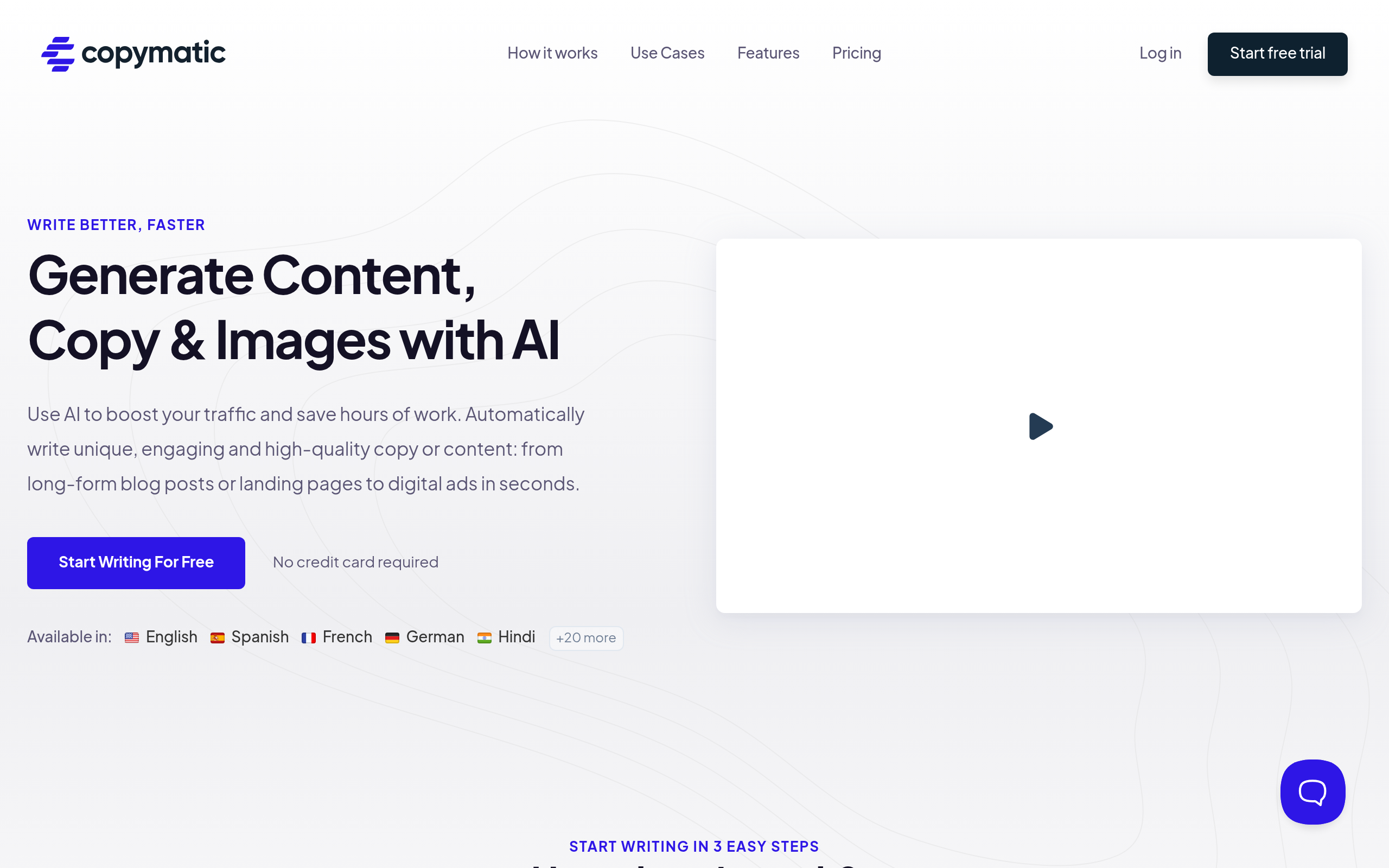
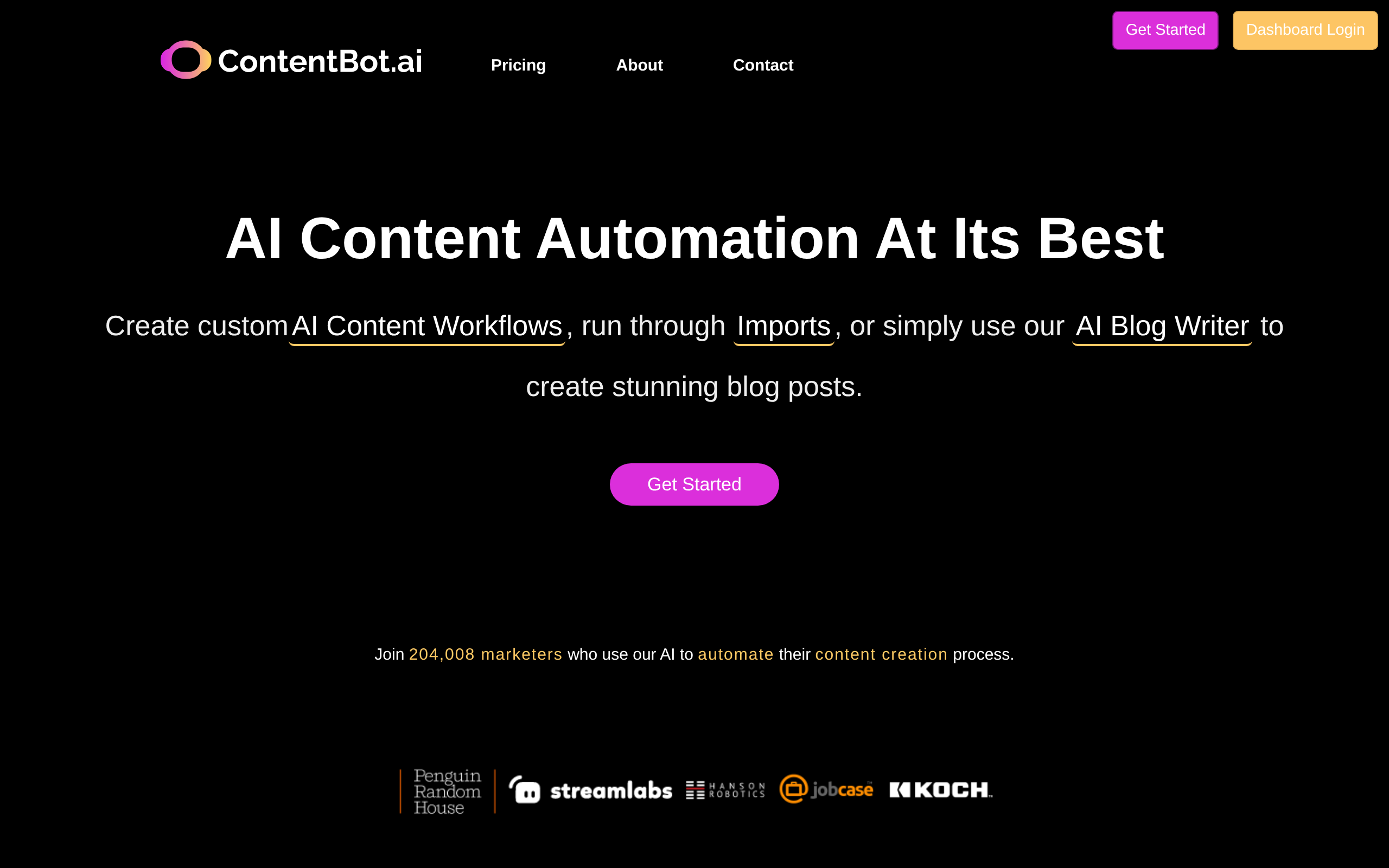
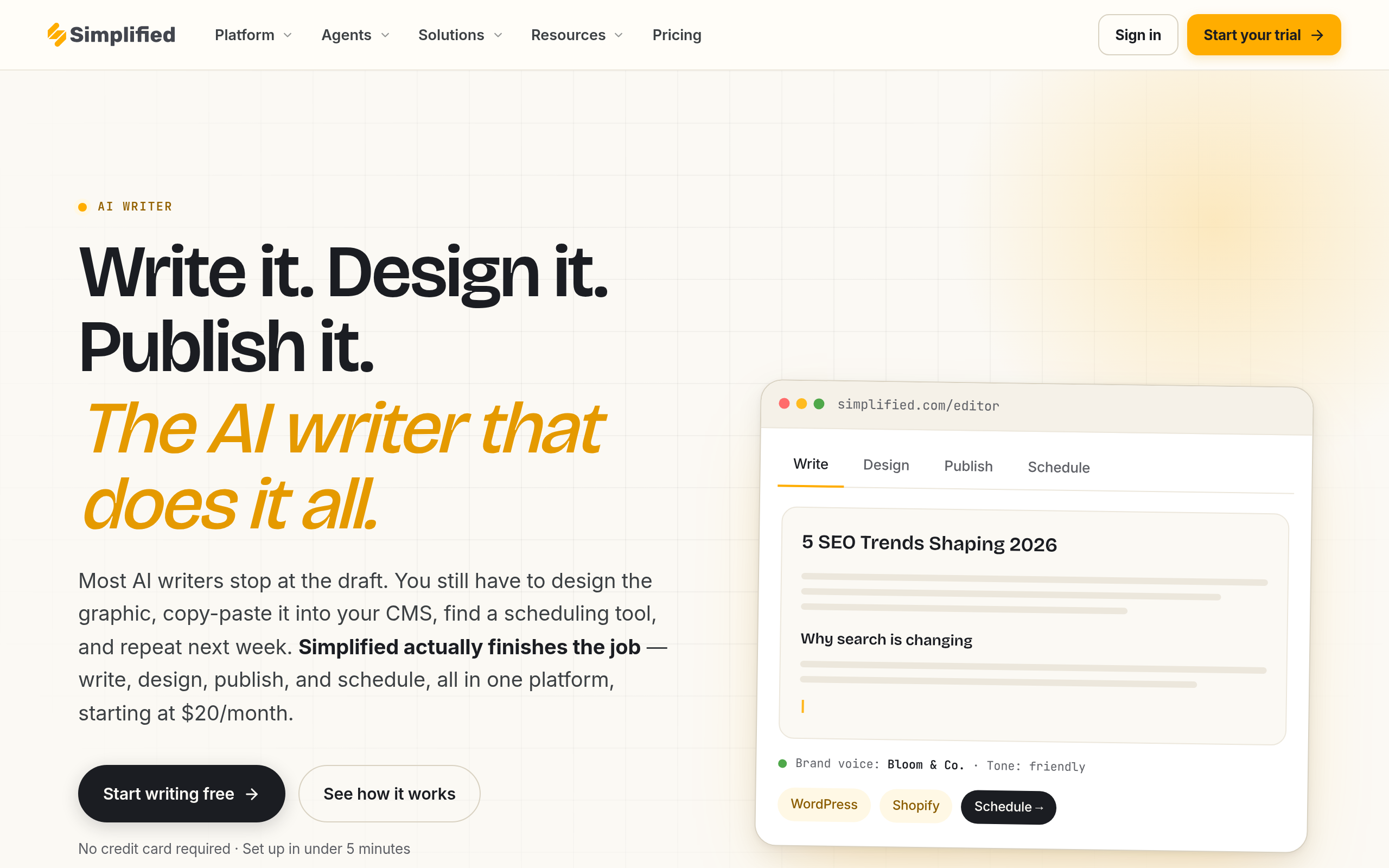
Copymatic is a solid starting point for bloggers who need to produce posts and web copy quickly, generating drafts you then edit into shape. ContentBot.ai leans toward longer-form content workflows, helping structure and generate the longer pieces that anchor a blog. Simplified AI Writer is dependable for turning an outline into a first draft fast, removing the blank-page problem so you can spend your energy on revision. NeuralText sits on the SEO side, helping you research what a topic should cover and optimise a piece so it competes in search. And Hoppy Copy helps write and structure newsletters, which reward the consistency AI makes easier to sustain. For deeper craft technique, our complete guide to AI copywriting covers prompting and editing, and the AI for SEO guide goes deeper on ranking content.
How to write with AI (step by step)
- Start with your own angle and key points so the piece is grounded in something only you would write.
- Use NeuralText to map the subtopics and questions a comprehensive article should answer.
- Generate a structured outline, then a first draft with Simplified AI Writer or Copymatic, treating it as raw material.
- Rewrite the draft in your own voice, cutting generic phrasing and adding your real examples and opinions.
- Fact-check every claim, statistic, date and quote against a primary source before it goes anywhere near publish.
- For recurring formats, build a repeatable newsletter shell in Hoppy Copy so you ship consistently without starting from zero.
Why editorial discipline matters now
Search engines and readers in 2026 are increasingly good at detecting low-effort, mass-produced content, and the penalty for publishing it is real — lost rankings, lost trust, and a brand that reads as filler. As AI makes it trivially easy to generate volume, the differentiator flips: anyone can produce a thousand mediocre words in seconds, so the value moves to accuracy, originality and genuine usefulness. That is precisely where human editing comes in. A blogger who uses AI to draft faster but enforces strict fact-checking and a strong voice will outperform one who floods the same topics with unedited output. Editorial discipline is no longer a nice-to-have; it is the moat. The tools democratise drafting, which means the quality of your editing and the truth of your claims become the things that actually distinguish your writing.
Common mistakes writers make with AI
The most damaging mistake is publishing AI drafts with little editing, which produces generic, sometimes false content that erodes trust and search performance. A close second is failing to fact-check; AI's confident tone makes fabricated details easy to miss, and a single invented statistic can undermine an entire post. Another mistake is letting AI flatten your voice — if your blog sounds like every other AI blog, there is no reason for readers to choose you. Writers also over-rely on AI for the parts that matter most, like the core argument, when it should mainly handle scaffolding and speed. Finally, some chase volume because AI makes it cheap, not realising that more weak posts can hurt a site more than a few strong ones help. The fix for all of these is the same: draft fast, but edit and verify slowly and seriously.
The bottom line
AI is a powerful drafting partner for writers and bloggers, but it is only as good as the editing and fact-checking that follow. Use Copymatic and Simplified AI Writer for fast drafts, ContentBot.ai for long-form, NeuralText for SEO research, and Hoppy Copy for newsletters. Let AI beat the blank page, then do the human work that makes writing worth reading: verify every fact, restore your voice, and ship only what you would proudly put your name on.
Disclaimer: This guide is for general informational purposes only and reflects the landscape as of 2026. Tool features, pricing and availability change frequently — confirm current details on each provider's official site, and always fact-check and edit AI-generated content before publishing.
Tools mentioned in this guide

Pricing, features and model availability can change over time. Always verify current details on each tool's official website before deciding.
Frequently Asked Questions
Can AI write a full blog post for me?
Can AI write a full blog post for me?
How do I keep my writing voice when using AI?
How do I keep my writing voice when using AI?
Is AI content bad for SEO?
Is AI content bad for SEO?
Why is fact-checking AI content so important?
Why is fact-checking AI content so important?
What AI tool is best for newsletters?
What AI tool is best for newsletters?
Should bloggers use AI to produce more posts?
Should bloggers use AI to produce more posts?
Don't just pick a tool — get the whole workflow
Tell Comparee your goal and get a complete step-by-step AI workflow with the right tool for every step.