AI Tools for Startups: The Complete Toolkit for 2026
The best AI tools for startups in 2026 — to build a product, automate operations, create a brand, market, and support customers on a lean budget.
Key takeaways
- AI lets a tiny startup team punch far above its weight — building, automating, marketing and supporting without hiring for each.
- The startup advantage: do more with less, faster, on a budget — exactly what AI enables.
- Core toolkit: WeWeb to build, n8n to automate, LogoAI for brand, Pitch for decks, Chatling for support, getimg.ai for visuals.
- Use AI to validate and ship fast, but keep founder judgement on what to build and why.
- Start lean with free tiers; add tools as the company grows.
AI tools let a startup team of one or a few do the work that once required hiring specialists — building a product, automating operations, creating a brand, marketing, and supporting customers, all on a lean budget. For startups, the constraint has always been resources: not enough hands, not enough money, not enough time. AI directly attacks that constraint, which is why it has become a founder's superpower. This guide lays out the essential AI toolkit for startups across every function, how to use it to move fast without burning cash, and the judgement that founders must keep human.
Why AI is a startup superpower
Startups win by doing more with less, faster — and that is precisely what AI enables. A founder can now build a product front-end without engineers, automate operations without an ops team, create a brand without a designer, market across channels without an agency, and support customers without a support team. Each of these used to require a hire or a budget a young company did not have. AI compresses them into tools a single founder can wield. The result is that the gap between a scrappy startup and a funded competitor narrows dramatically on execution — what matters more than ever is the founder's judgement about what to build and why, because the building itself is no longer the bottleneck.
The essential AI toolkit for startups
| Function | Best AI tool |
|---|---|
| Build a product / web app | WeWeb |
| Automate operations | n8n |
| Brand & logo | LogoAI |
| Pitch decks | Pitch |
| Customer support | Chatling |
| Visuals & content | getimg.ai, Simplified AI Writer |
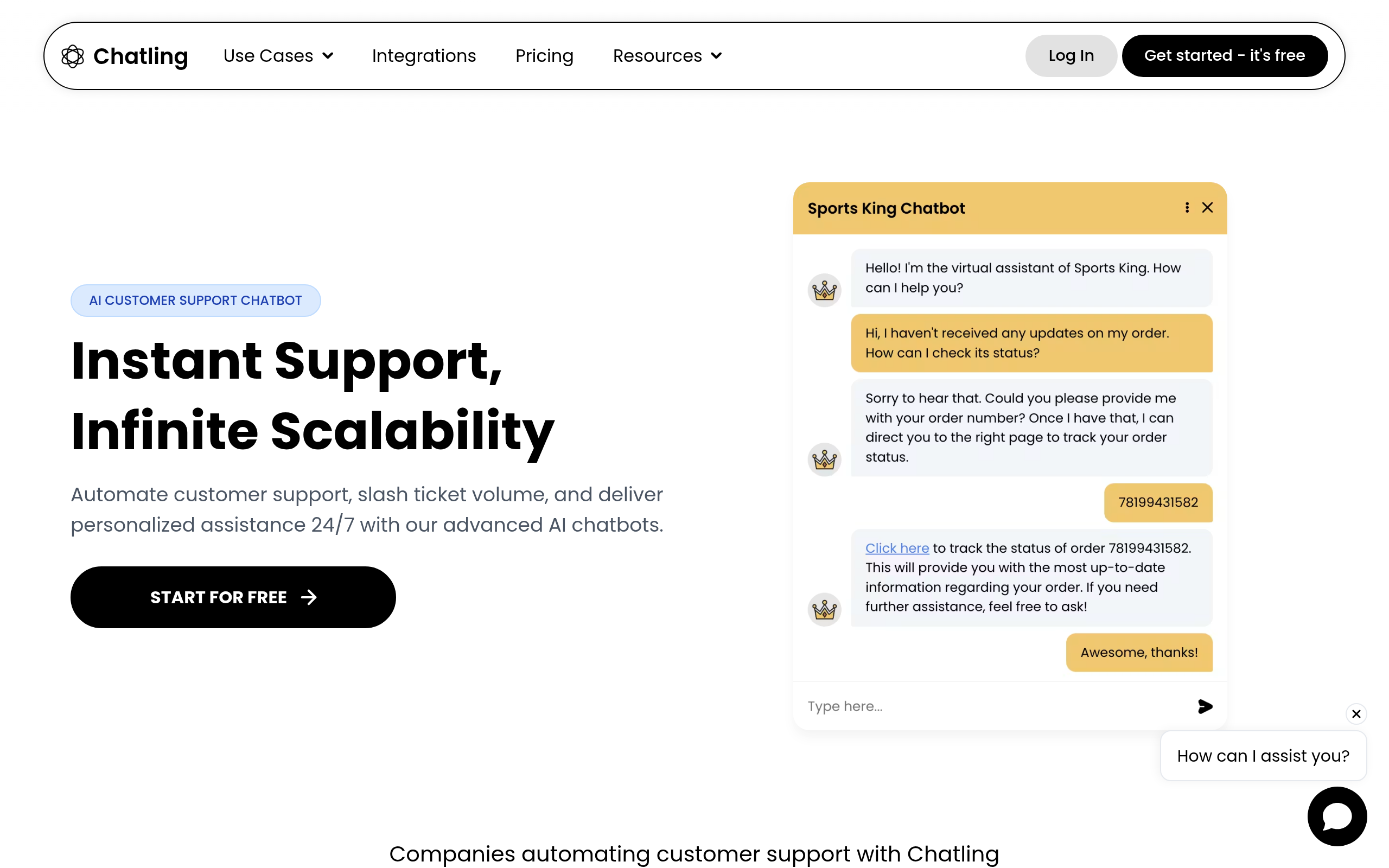
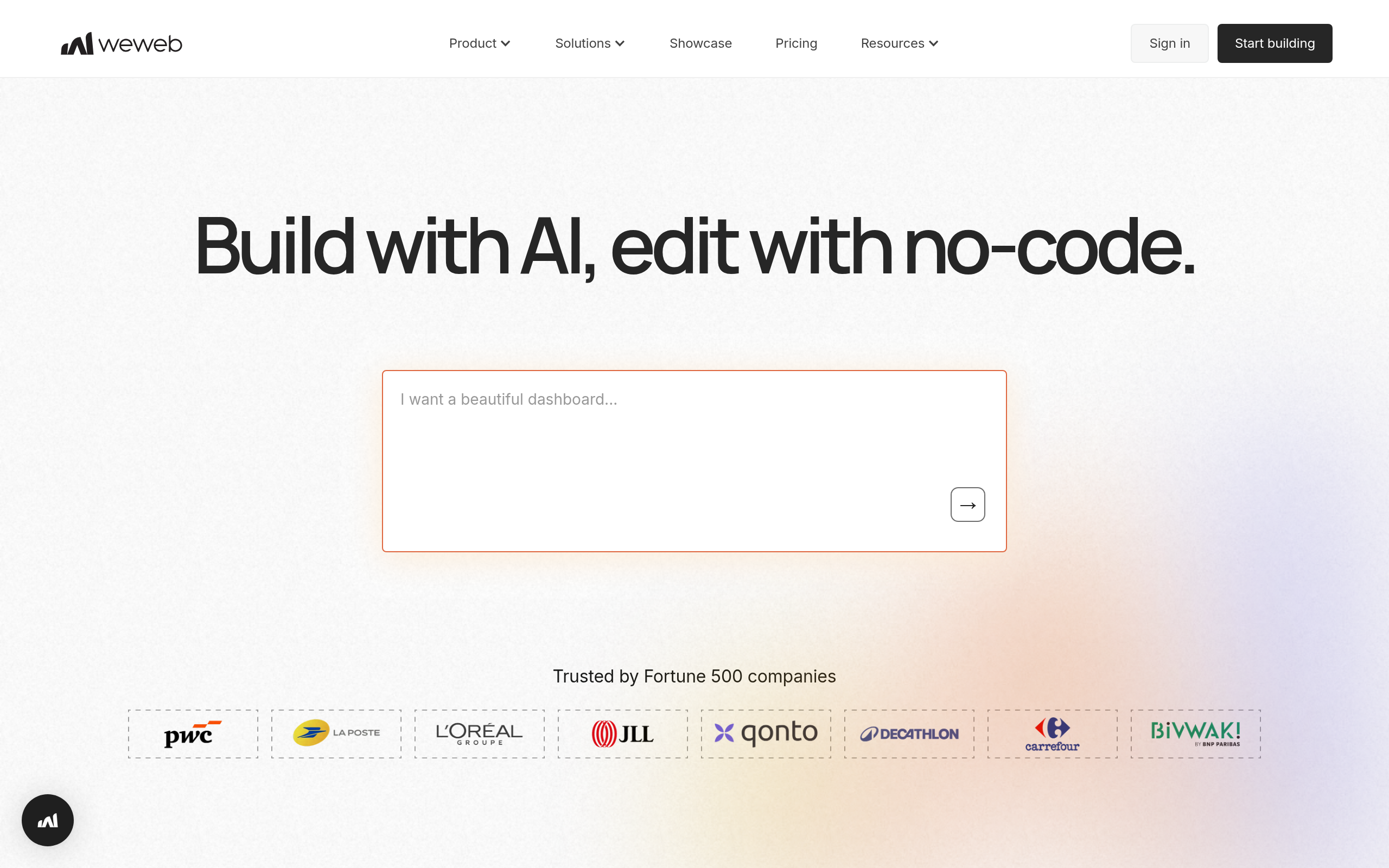
To build a real product front-end without code, WeWeb is a strong no-code choice. To automate the repetitive operations that eat a founder's time, n8n connects your tools and adds AI steps, self-hostable to keep costs down. For brand, LogoAI produces a logo and basic identity fast. For investor and sales decks, Pitch. For support, Chatling adds an AI chatbot that deflects common questions 24/7. And for visuals and content, getimg.ai and Simplified AI Writer. Explore deeper in our guides to no-code app builders, AI agents and AI branding.
How to use AI as a startup (step by step)
- Validate before you build — use AI to test messaging, build a landing page, and gauge interest before investing in a product.
- Ship a lean version fast with no-code tools like WeWeb; learn from real users.
- Automate the repetitive early with n8n so you are not drowning in manual ops.
- Look credible quickly — brand with LogoAI, decks with Pitch.
- Support customers without a team using Chatling.
- Stay lean — use free tiers, add paid tools only when they clearly pay for themselves.
What founders must keep human
AI removes the execution bottleneck, which makes the founder's judgement more important, not less. AI will happily help you build the wrong product faster, market a weak value proposition more efficiently, and automate a broken process at scale. The decisions that determine whether a startup succeeds — what problem to solve, for whom, and why now — are exactly the ones AI cannot make for you. So use AI to execute fast and cheap, but reserve your own judgement for strategy, for talking to customers, and for the hard calls about direction. The startups that thrive with AI are the ones where the founder uses the freed-up time to think and to sell, not just to ship more.
How AI shifts what matters for founders
When building was the bottleneck, a startup's edge often came from execution speed — who could ship the product, run the campaign, or build the tool fastest. AI has largely neutralised that edge, because now anyone can execute fast and cheap. That sounds like it should make competition harder, and in one sense it does, but it also clarifies what actually matters. With execution commoditised, the differentiators move up the stack: a genuine understanding of the customer's problem, a sharp value proposition, and the judgement to point limited effort at the right thing. The founders who win in an AI world are not the ones who use AI to ship the most features; they are the ones who use the time AI frees up to talk to customers, refine their thesis, and make better decisions about direction. AI handles the how; the founder's job is increasingly the what and the why.
A lean AI rollout for a young company
The smart way for a startup to adopt AI is sequenced, not all at once. In the earliest stage, use AI to validate — build a landing page, test messaging, and gauge real interest before committing to a product. Once there is signal, ship a lean version with no-code tools and automate the operations that would otherwise consume the founder's time. As the company gains traction and needs to look credible, layer in brand and pitch tools, and add a support chatbot so growing customer questions do not overwhelm a tiny team. At every stage, lean on free tiers and only pay when a tool clearly earns it. This staged approach keeps burn low while ensuring AI is solving a real, current bottleneck rather than being adopted for its own sake — which is exactly the discipline a young company needs.
The startup AI mistake to avoid
The most common trap founders fall into with AI is mistaking activity for progress — using AI to crank out more landing pages, more features, more outreach, without first being sure they are building something people want. AI makes it dangerously easy to scale in the wrong direction, because everything is now fast and cheap to produce. The antidote is discipline: before you automate or generate anything at volume, make sure you have validated that the underlying thing is worth doing. Talk to real customers, test the value proposition, and point AI at executing a validated idea rather than a hopeful guess. Used to accelerate a proven direction, AI is rocket fuel; used to accelerate an unproven one, it just helps you reach the wrong destination faster.
The bottom line
AI tools have made the lean startup leaner — a founder can now build, automate, brand, market and support with a toolkit that costs little and replaces several hires. Use WeWeb to build, n8n to automate, LogoAI for brand, Pitch for decks, Chatling for support, and getimg.ai for visuals. Start with free tiers, validate before you build, and keep founder judgement on what matters. Used that way, AI lets a tiny team compete on execution with companies many times its size.
Disclaimer: AI tools accelerate execution but do not replace founder judgement on strategy and direction. Validate with real customers and keep human decision-making on what to build and why.
Tools mentioned in this guide
Pricing, features and model availability can change over time. Always verify current details on each tool's official website before deciding.
Frequently Asked Questions
What are the best AI tools for startups?
What are the best AI tools for startups?
How can AI help my startup?
How can AI help my startup?
Can AI build a startup product without code?
Can AI build a startup product without code?
How do startups stay lean with AI tools?
How do startups stay lean with AI tools?
What should founders not delegate to AI?
What should founders not delegate to AI?
Are AI tools affordable for early-stage startups?
Are AI tools affordable for early-stage startups?
Don't just pick a tool — get the whole workflow
Tell Comparee your goal and get a complete step-by-step AI workflow with the right tool for every step.