AI for Dynamic Pricing: Tools & Strategy (2026)
Compare the best AI dynamic pricing tools for 2026 — Prisync, BQool, Teikametrics, Quartile, SellerApp — plus strategy for Amazon, Walmart, and DTC sellers.
- Two repricing philosophies: rules-based repricers react instantly to competitor moves; ML-based platforms adapt over time using demand signals, sales velocity, and margin data — each suits a different seller profile.
- Buy Box first, margin second — but set guardrails: on Amazon, winning the Buy Box drives volume, but without floor-price rules, automated repricing becomes a race to zero margin.
- Best tools by use case: Prisync for multi-channel competitor monitoring, BQool for dedicated Amazon repricing, Teikametrics and Quartile for ad-plus-pricing synergy, SellerApp for an all-in-one Amazon suite.
- Set floor prices before enabling any automation: define your minimum acceptable margin per SKU — no AI tool can protect profitability if your cost data is missing or stale.
- Strategy beats speed: the sellers winning on pricing AI feed real landed-cost data into their platforms and run deliberate pricing experiments — they don't just react to competitors.
AI dynamic pricing is no longer a luxury reserved for enterprise retailers. In 2026, independent Amazon sellers, Shopify store owners, and omnichannel merchants can access machine-learning repricers and competitor-monitoring platforms that used to cost six figures to build in-house. The core question is not whether to use AI pricing automation — it's which approach fits your catalog, your channels, and your margins. This guide breaks down the tools, the strategy, and what actually separates sellers who benefit from those who automate their way into thin margins.
What Is AI Dynamic Pricing — and Why Does It Matter for Online Sellers?
Dynamic pricing means automatically adjusting product prices in response to changing conditions: competitor moves, demand signals, inventory levels, time of day, or margin targets. "AI" in this context refers to tools that go beyond simple if/then rules — they use machine learning to predict optimal price points, not just match the lowest competitor.
For marketplace sellers, the stakes are immediate. On Amazon, the Buy Box algorithm favors competitive pricing — typically the lowest landed price from a seller with strong performance metrics. A repricer that's faster and smarter can materially shift your Buy Box win rate and, by extension, your revenue. For direct-to-consumer (DTC) sellers on Shopify or WooCommerce, dynamic pricing serves a different purpose: maximizing margin on high-demand SKUs, clearing slow-moving inventory automatically, and staying competitive without manual price monitoring.
Browse more tools in the full E-commerce & Retail tools directory on Comparee to see how repricing fits into the broader ecommerce stack.
Rules-Based vs. ML-Based Repricing: Which Approach Fits Your Business?
Before evaluating specific platforms, you need to understand the fundamental architecture choice. Every repricing system falls somewhere on the spectrum between pure rules and pure machine learning — and that choice has real implications for setup time, predictability, and long-term performance.
| Dimension | Rules-Based Repricing | ML-Based Repricing |
|---|---|---|
| Setup complexity | Low — define conditions and actions | Higher — needs historical sales data to train |
| Predictability | High — you know exactly what triggers a change | Lower — model logic is often opaque |
| Reaction speed | Near-instant (event-driven) | Variable — often batch or hourly updates |
| Margin awareness | Only if you manually set floor and ceiling prices | Can optimize for margin or profit directly |
| Demand signal use | Ignored — price-only logic | Incorporated: velocity, seasonality, conversion data |
| Best for | Sellers with stable catalogs and simple competitive ladders | Sellers with large catalogs and strong sales history |
Practical takeaway: New sellers with limited data often get better results starting with rules-based repricing — it's predictable and controllable. Migrating to ML becomes worthwhile once you have 6–12 months of solid sales history per SKU. ML models need volume to learn; thin data produces erratic pricing recommendations.
Which AI Dynamic Pricing Tools Are Best for Amazon and Marketplace Sellers in 2026?
Here's an honest breakdown of the leading platforms, organized by primary use case rather than marketing copy.
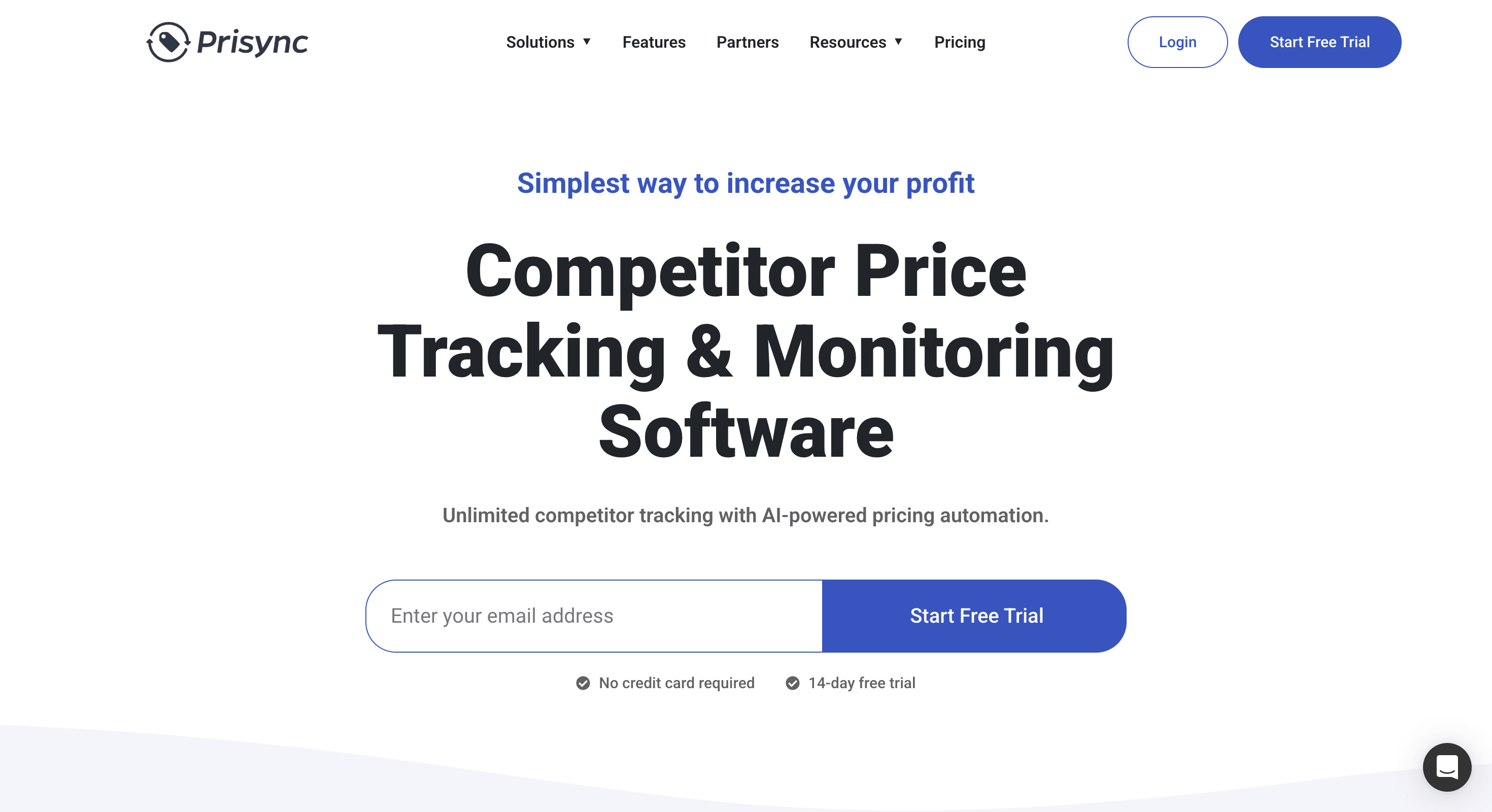
Prisync — Best for Multi-Channel Competitor Monitoring
Prisync is a competitor price tracking and dynamic pricing platform built primarily for DTC ecommerce brands and omnichannel retailers — not Amazon-native sellers. It connects to Shopify, WooCommerce, Magento, PrestaShop, and custom stores, scraping competitor prices from across the web and your target marketplaces. Its strength is visibility: a real-time dashboard showing how your prices compare across competitors, with rule-based automation to reprice your own store in response.
Prisync is not an Amazon repricer — it doesn't interact with the Buy Box algorithm directly. For sellers whose primary channel is their own website, it's one of the most straightforward competitor-intelligence-to-repricing pipelines available. Pricing is subscription-based and tiered by the number of products tracked.
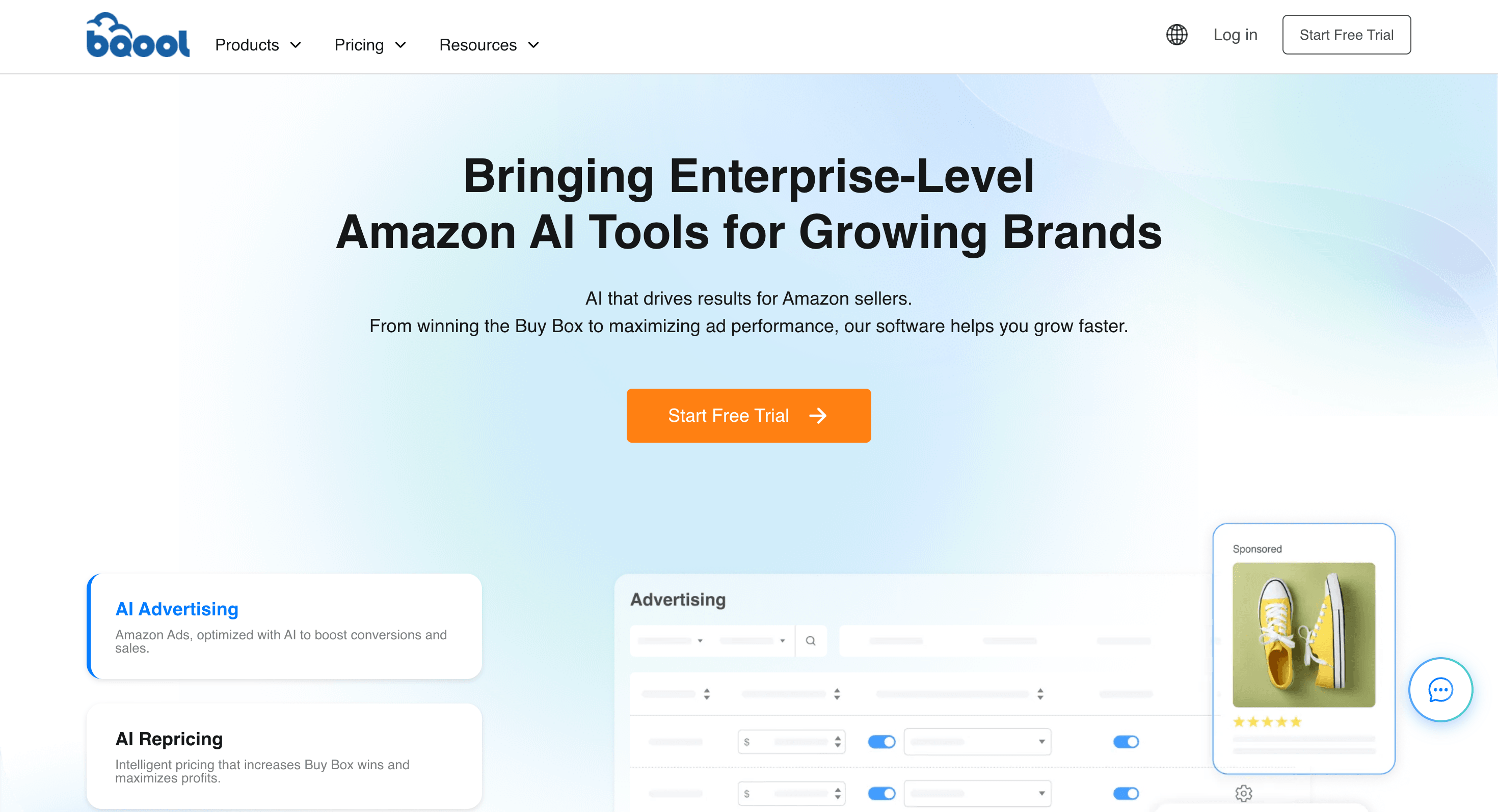
BQool — Best Dedicated Amazon Repricer
BQool is a purpose-built Amazon repricer with AI capabilities focused squarely on Buy Box optimization. You define your minimum and maximum price range; the AI finds the optimal price within that band to maximize Buy Box share without unnecessarily sacrificing margin. BQool supports both rule-based and AI-driven modes, making it accessible to sellers who want guardrails as well as those who prefer full automation.
It also offers repricing scheduling — useful for time-of-day pricing strategies where you want different price aggressiveness during peak and off-peak hours — and integrates with inventory data so it can factor in stock levels. For Amazon-first sellers who want a dedicated, focused repricer without the overhead of a full advertising suite, BQool is a strong fit.
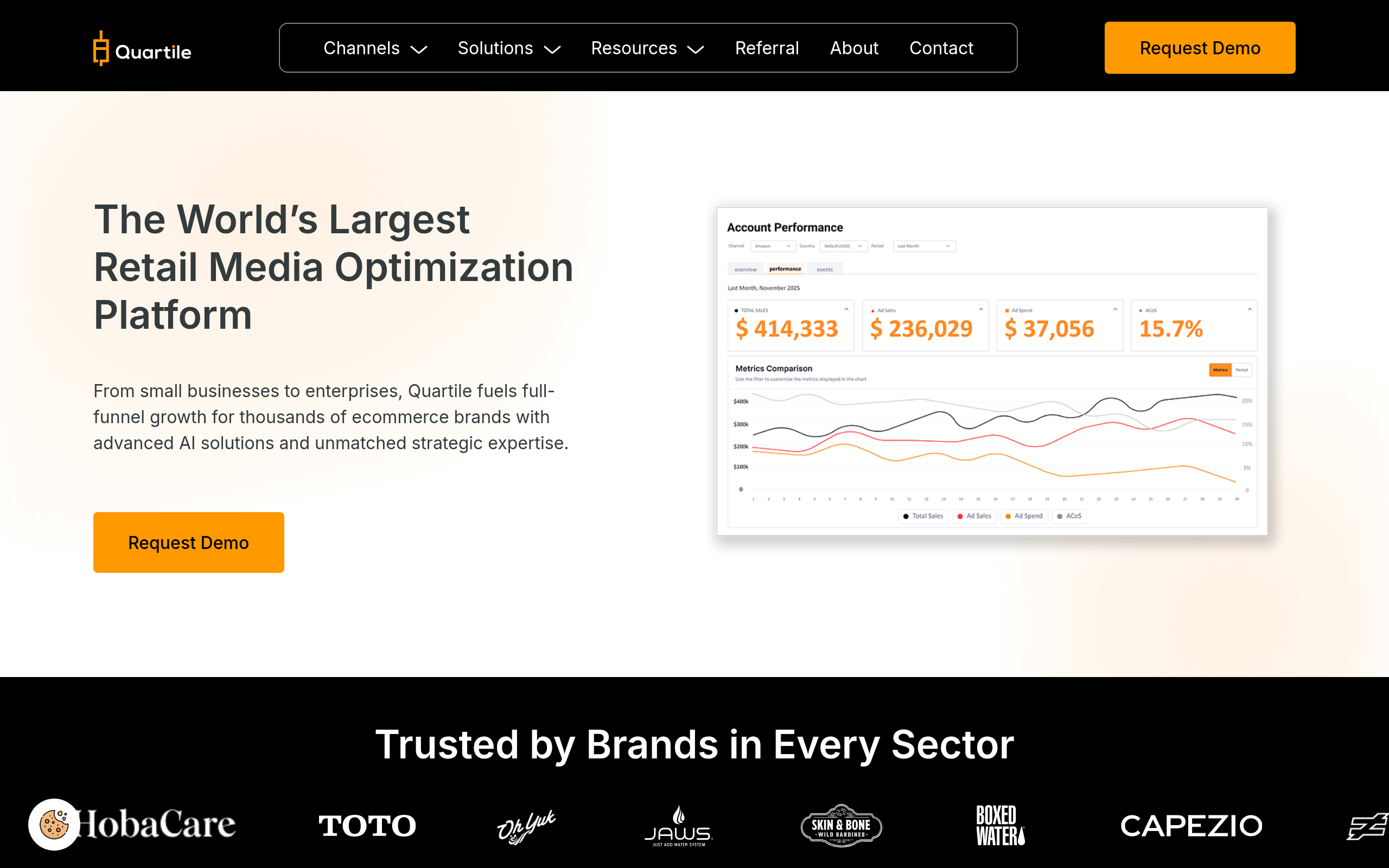
Quartile — Best for Sellers Who Need PPC + Pricing in One System
Quartile approaches the pricing problem from the advertising angle. Its core product is an ML-powered PPC automation platform for Amazon and other channels, but pricing intelligence and bid-level optimization are tightly integrated. The logic is sound: ad spend and product pricing are not independent variables. The optimal bid for a keyword depends on your current price point and the margin you're defending. Quartile's AI accounts for this interaction.
It's best suited for sellers managing meaningful Amazon ad budgets who want algorithmic bid management alongside pricing visibility. It's not a standalone repricer, but for ad-heavy sellers it offers a more holistic view than repricers that ignore advertising economics entirely.
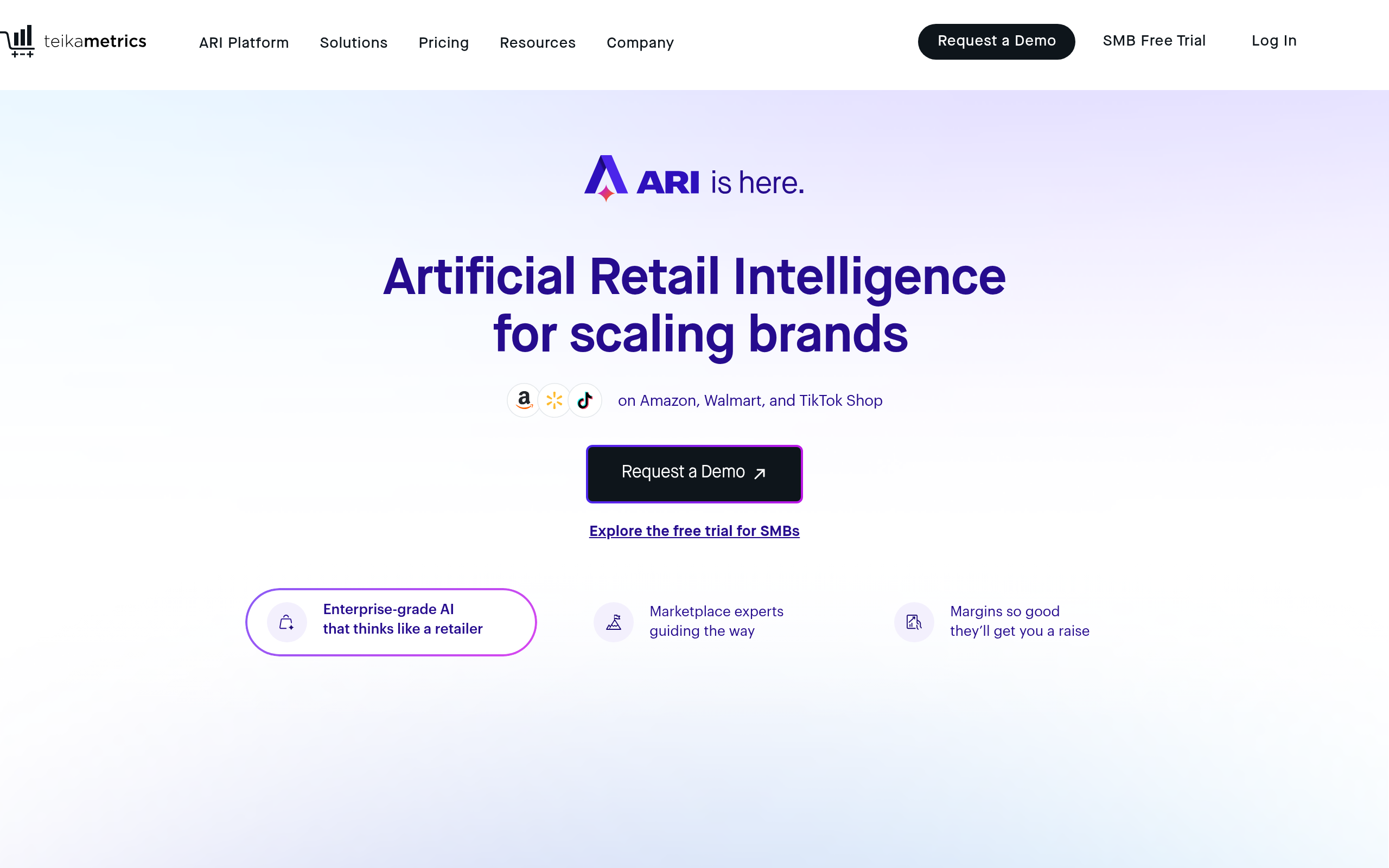
Teikametrics — Best for Data-Driven Amazon + Walmart Sellers
Teikametrics (known for its Flywheel platform) takes a full-funnel view of selling on Amazon and Walmart: advertising automation, pricing guidance, and business analytics in one platform. Its AI optimizes ad bids based on profitability targets — meaning it adjusts spend based on your actual margins, not just ACoS (Advertising Cost of Sale). This makes Teikametrics particularly powerful for sellers who have detailed, accurate cost data in the system: the AI can pursue a target profit-per-unit rather than a blunt revenue goal.
Teikametrics offers a free tier for smaller sellers covering basic ad management, with paid tiers unlocking full AI optimization features. For growing brands selling on both Amazon and Walmart who want a unified data layer connecting advertising and pricing decisions, it's one of the most sophisticated options in this space.
SellerApp — Best All-in-One Amazon Seller Suite
SellerApp is a comprehensive Amazon seller platform covering product research, keyword tracking, PPC automation, and repricing in a single dashboard. Its repricing module uses algorithmic rules and AI-driven suggestions to keep you competitive on Buy Box while protecting margins. The integrated suite makes it particularly valuable for sellers who want to manage their Amazon business from one place: instead of stitching together separate tools for repricing, keyword ranking, and ad management, SellerApp consolidates them under one interface.
It suits mid-market Amazon sellers who prioritize operational simplicity over best-of-breed specialization in any single function. You may not get the deepest repricing logic of a dedicated tool like BQool, or the advertising sophistication of Teikametrics, but the reduction in tool-switching and data fragmentation is real value.
How Do These Tools Compare? Side-by-Side Feature Breakdown
| Tool | Primary Channel | Repricing Type | Ad Management | Competitor Monitoring | Margin Guardrails |
|---|---|---|---|---|---|
| Prisync | DTC / own store | Rules-based | No | Yes — web-wide | Yes (min/max price rules) |
| BQool | Amazon | Rules + AI hybrid | No | Amazon competitors | Yes (min/max price bands) |
| Quartile | Amazon, multi-channel | ML (via ad bidding) | Yes — core feature | Limited | Via ROAS / profit targets |
| Teikametrics | Amazon, Walmart | ML (profit-driven) | Yes — core feature | Partial | Yes (profit-per-unit targets) |
| SellerApp | Amazon | Rules + AI suggestions | Yes | Yes | Yes |
What Are Margin Guardrails — and Why Should You Configure Them Before Enabling Any Automation?
Margin guardrails are the floor and ceiling prices you configure to prevent automated repricing from crossing into unprofitable territory. Without them, AI repricers will follow competitors down to penny-level prices on commodity listings — a well-documented failure mode sometimes called the "price war death spiral," where two automated repricers race each other to the bottom with no human in the loop to stop it.
Setting effective guardrails requires knowing your true landed cost per SKU: product cost plus inbound shipping, customs duties, Amazon FBA fees (which vary by size and weight tier), return rate impact, and allocated ad spend per unit. Most repricing platforms accept a minimum price input — feed it the true break-even price plus your minimum acceptable margin, not just the purchase price from your supplier.
Guardrail setup checklist before enabling any repricing automation:
- Calculate fully-loaded unit cost: COGS + inbound freight + fulfillment fees + estimated returns + platform fees
- Define minimum margin percentage per product category — commodity items may accept 5–8%; branded or differentiated items should hold 20%+
- Set floor price = unit cost ÷ (1 − minimum margin fraction)
- Set ceiling price based on realistic demand — what's the highest price at which you still convert?
- Review guardrails monthly — FBA fee schedules change, shipping costs fluctuate, and COGS drift
Tools like Teikametrics go further by optimizing toward a profit-per-unit target rather than just protecting a minimum floor, which is more sophisticated — but requires accurate, up-to-date cost data in the system. BQool and SellerApp rely on you setting the floor correctly; the AI works within whatever band you define. Garbage in, garbage out.
How Do I Build a Dynamic Pricing Strategy That Actually Works?
The tools are only as good as the strategy behind them. Sellers who extract the most from AI repricing consistently follow a similar framework.
Segment your catalog before automating. Not all SKUs benefit equally from dynamic pricing. High-velocity, commoditized products — where you compete with dozens of sellers on identical listings — benefit most from fast, aggressive repricing. Niche or differentiated products benefit more from demand-based pricing: raise price when demand spikes (holiday periods, trending moments) rather than reflexively following competitors down.
Feed real cost data, not estimates. ML platforms like Teikametrics and Quartile optimize toward profit targets — but only if your cost inputs are accurate and current. A seller who entered rough estimates from eight months ago will receive AI recommendations that look intelligent on screen but erode real-world margin in practice.
Use competitor monitoring as a leading indicator, not an instant trigger. Prisync and similar platforms surface what competitors are doing in real time. The temptation is to match every move automatically. A more resilient approach: use competitor price trends to inform your repricing band boundaries, but add dampening logic — don't reprice on every single competitor change, only on sustained directional shifts that persist for a defined period.
Run pricing experiments deliberately. Treat pricing like a conversion rate optimization experiment: change one variable at a time, measure impact on conversion rate and margin over a defined window, and roll back if results are negative. Most enterprise retailers run systematic price experiments — most SMB sellers do not, leaving meaningful revenue on the table.
Align pricing and advertising spend. This is the structural advantage of integrated platforms like Quartile and Teikametrics: they can reduce ad bids automatically when your price drops (protecting blended margin) and increase bids when your price is competitive (accelerating volume). Running repricing and ad management in separate, unconnected tools leads to misaligned signals and inefficient spend.
Quick Verdict: Which AI Pricing Tool Is Best for Your Situation?
| Seller Profile | Best Tool | Why |
|---|---|---|
| DTC brand on Shopify, WooCommerce, or Magento | Prisync | Best web-wide competitor monitoring plus own-store repricing automation; not designed for Amazon |
| Amazon FBA seller wanting a simple, focused repricer | BQool | Dedicated Amazon repricer with rules + AI hybrid; reliable Buy Box optimization without extra complexity |
| Amazon seller with significant ad spend to manage | Quartile | Integrates PPC automation and pricing logic in one ML system; optimizes both signals together |
| Amazon + Walmart seller focused on profitability targets | Teikametrics | Profit-target optimization across both marketplaces; strongest for sellers with accurate, detailed cost data |
| Amazon seller wanting one dashboard for repricing + PPC + analytics | SellerApp | All-in-one suite; best for operational simplicity over best-of-breed depth in any single function |
Comparee's Verdict: Which Tool Should You Choose in 2026?
If you sell primarily through your own website — Shopify, WooCommerce, Magento, or a custom store — and need to monitor competitor prices across the web and reprice automatically, start with Prisync. It's purpose-built for this use case, integrates cleanly with major platforms, and delivers actionable competitor intelligence without the Amazon-specific complexity that would go unused.
If you're an Amazon-focused seller and want the simplest, most reliable path to Buy Box improvement, go with BQool. It has been refined specifically for Amazon repricing, setup is manageable, and you don't pay for advertising features you won't use. It's a focused tool that does its job well.
If your Amazon business runs meaningful advertising campaigns and you want pricing and ad spend to work from the same data model, Teikametrics is the stronger long-term investment — especially if you're also selling on Walmart. Its profit-target optimization is more sophisticated than pure ACoS-chasing and pays off once your cost data is dialled in. Quartile is the right alternative if your primary need is best-in-class PPC automation with pricing intelligence as a secondary layer.
If you're growing an Amazon business and want to consolidate your toolstack rather than manage multiple subscriptions and data exports, SellerApp gives you a solid all-in-one foundation. It won't be best-in-class in any single category, but the operational simplicity — one dashboard, one data model — is genuinely worth something at scale.
Universal rule, regardless of which platform you choose: configure your margin guardrails before enabling any automation. Set your floor prices based on fully-loaded unit cost, not just purchase price. The AI is only as smart as the constraints you give it. A well-configured simple repricer consistently outperforms a sophisticated but misconfigured ML system.
For more tools across the full ecommerce and retail stack, browse the E-commerce & Retail tools directory on Comparee.
Tools mentioned in this guide
Pricing, features and model availability can change over time. Always verify current details on each tool's official website before deciding.
Frequently Asked Questions
What is AI dynamic pricing in ecommerce?
What is AI dynamic pricing in ecommerce?
What is the best AI repricing tool for Amazon sellers?
What is the best AI repricing tool for Amazon sellers?
How do I prevent automated repricing from destroying my margins?
How do I prevent automated repricing from destroying my margins?
What is the difference between rules-based and ML-based repricing?
What is the difference between rules-based and ML-based repricing?
Does dynamic pricing work for Shopify or WooCommerce stores?
Does dynamic pricing work for Shopify or WooCommerce stores?
What is Buy Box repricing and why does it matter?
What is Buy Box repricing and why does it matter?
How does Teikametrics Flywheel work?
How does Teikametrics Flywheel work?
Can I use dynamic pricing on both Amazon and my own website simultaneously?
Can I use dynamic pricing on both Amazon and my own website simultaneously?
Don't just pick a tool — get the whole workflow
Tell Comparee your goal and get a complete step-by-step AI workflow with the right tool for every step.