Best AI Tools for Contract Review & Analysis in 2026
Compare the best AI contract review tools of 2026. Expert breakdown of Spellbook, LegalOn, Ivo, DocJuris, and more — matched by role, workflow, and budget.
- AI contract review tools extract key terms, flag risky clauses, suggest redlines, and apply your legal playbook automatically — compressing hours of review into minutes.
- The best tool depends on your context: Spellbook and LegalOn lead for in-house legal teams; LEGALFLY and Superlegal suit law firms; AI Lawyer and Legitt AI work well for SMBs and founders.
- Most top tools integrate directly with Microsoft Word as a native add-in — no need to change your existing drafting workflow.
- None of these tools replace a qualified lawyer. They accelerate review and surface risks; attorney judgment on high-stakes provisions remains essential.
- Pricing models range from per-document pay-as-you-go to flat-seat subscriptions — match the model to your contract volume and team size.
- Data security and confidentiality matter enormously. Check each vendor's data handling policy and whether your documents are used for model training before uploading sensitive agreements.
If you review, negotiate, or sign contracts regularly, AI contract review tools can compress what used to take a lawyer two to three hours into a ten-minute automated pass. The best AI contract review tools in 2026 combine clause extraction, risk flagging, redlining, and playbook enforcement — and most drop directly into Microsoft Word so your workflow barely changes. But the market has fragmented: some tools are built for solo founders reviewing their first vendor agreement, others for Fortune 500 in-house teams processing hundreds of contracts per month. This guide cuts through the noise with a direct comparison of the leading tools, mapped to who each is actually built for and where the real risks lie.
Browse the full Legal & Compliance AI tools category on Comparee for the complete catalog.
What Does AI Contract Review Actually Do?
Modern AI contract review is not simply a chatbot reading your PDF. Purpose-built tools perform several distinct functions that a general-purpose language model cannot replicate reliably in a legal workflow:
- Key term extraction: Automatically pulls out parties, effective dates, termination provisions, payment terms, liability caps, notice periods, and governing law — structured into a summary you can scan in seconds rather than reading every page.
- Risk flagging: Compares clauses against a baseline (your playbook or the tool's trained standard positions) and highlights deviations, missing provisions, or one-sided language that falls outside acceptable bounds.
- Redlining: Suggests specific edits using your preferred fallback language. The best tools let you configure clause libraries so redlines reflect your actual negotiated positions, not generic suggestions from a default model.
- Playbook enforcement: You define acceptable language for indemnification, limitation of liability, IP ownership, data protection, and other key provisions. The AI checks every incoming contract against those positions automatically and tells you exactly where the counterparty's draft deviates.
- Clause libraries and negotiation guidance: Some tools surface historical negotiation outcomes and flag what you have accepted or rejected in similar contracts before, building institutional memory into the review process.
The practical result: your legal team reviews flagged issues and exercises judgment on contested provisions rather than reading every paragraph from scratch. The repetitive extraction work is handled; the lawyering focuses where it adds the most value.
Which AI Contract Review Tool Is Best for In-House Legal Teams?
In-house legal teams typically need playbook enforcement at scale, Word integration, audit trails, and the ability to handle a diverse mix of contract types. Here are the strongest options for this buyer:
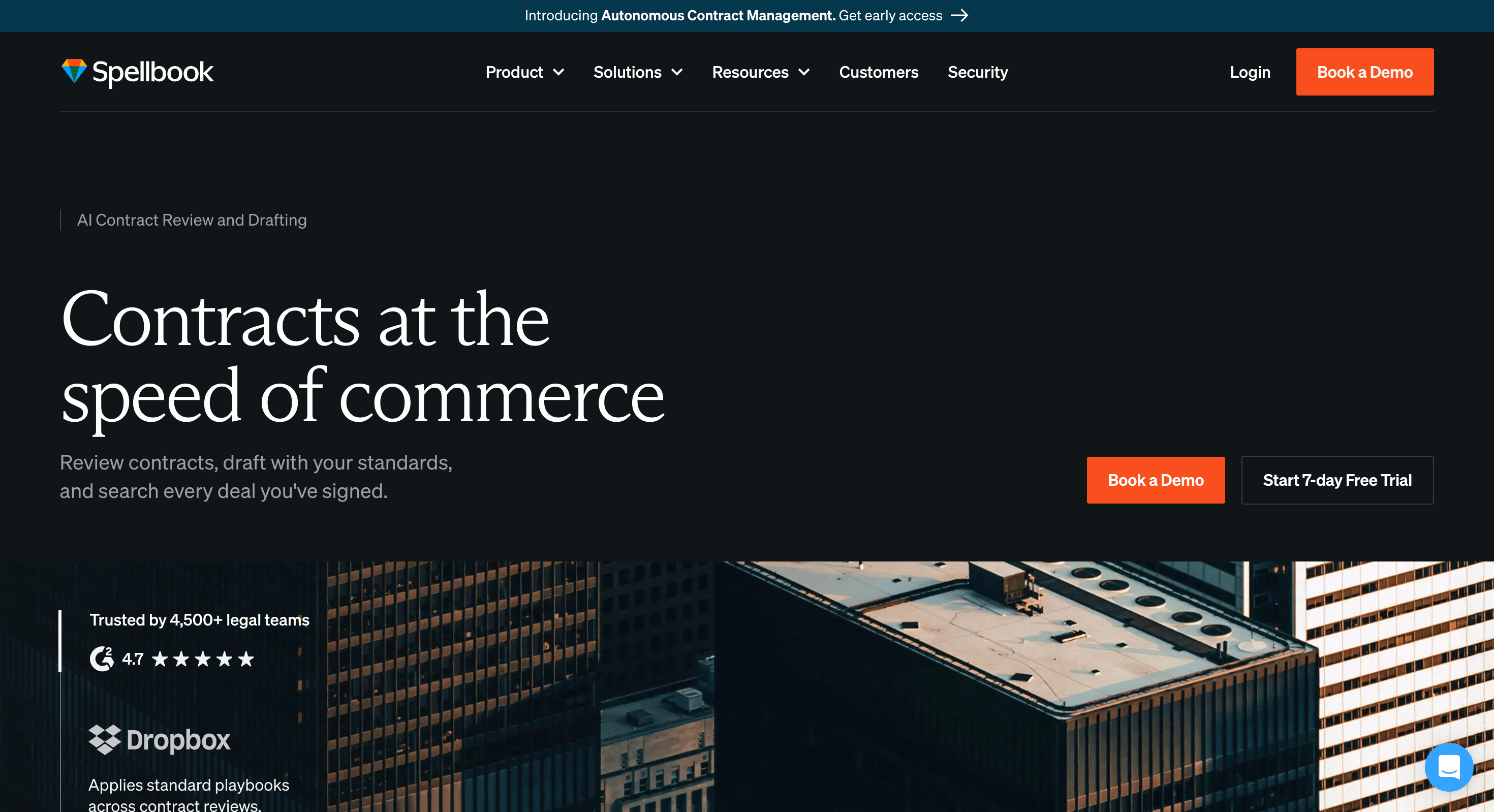
Spellbook is arguably the most mature AI contract tool available to legal teams today. It runs as a Microsoft Word add-in, trained on a large corpus of commercial agreements. It drafts, reviews, and redlines directly inside your document — no copy-pasting into a separate interface. The playbook feature lets you define your standard positions, and Spellbook flags anything that deviates, with suggested alternative language. It handles a broad range of contract types, making it a strong generalist choice for in-house teams that see everything from NDAs to complex commercial agreements.
LegalOn takes a more structured approach, shipping with pre-built playbooks covering the most common contract types — MSAs, NDAs, SOWs, and vendor agreements — with highly specific guidance on acceptable and unacceptable language. For teams that want to generate value quickly without spending weeks configuring a custom playbook, LegalOn's out-of-the-box coverage is a meaningful advantage. It also provides a web-based interface alongside the Word add-in for teams that prefer a browser workflow.
Ivo is built specifically for in-house legal teams and focuses on the review-and-redline workflow for high-volume contract processing. It integrates with both Word and Google Docs — a rare combination — extracts key information into a structured summary, and applies your playbook positions to generate redlines. Ivo's design emphasizes speed and consistency on standardized contract types, making it particularly effective for teams processing large numbers of similar agreements.
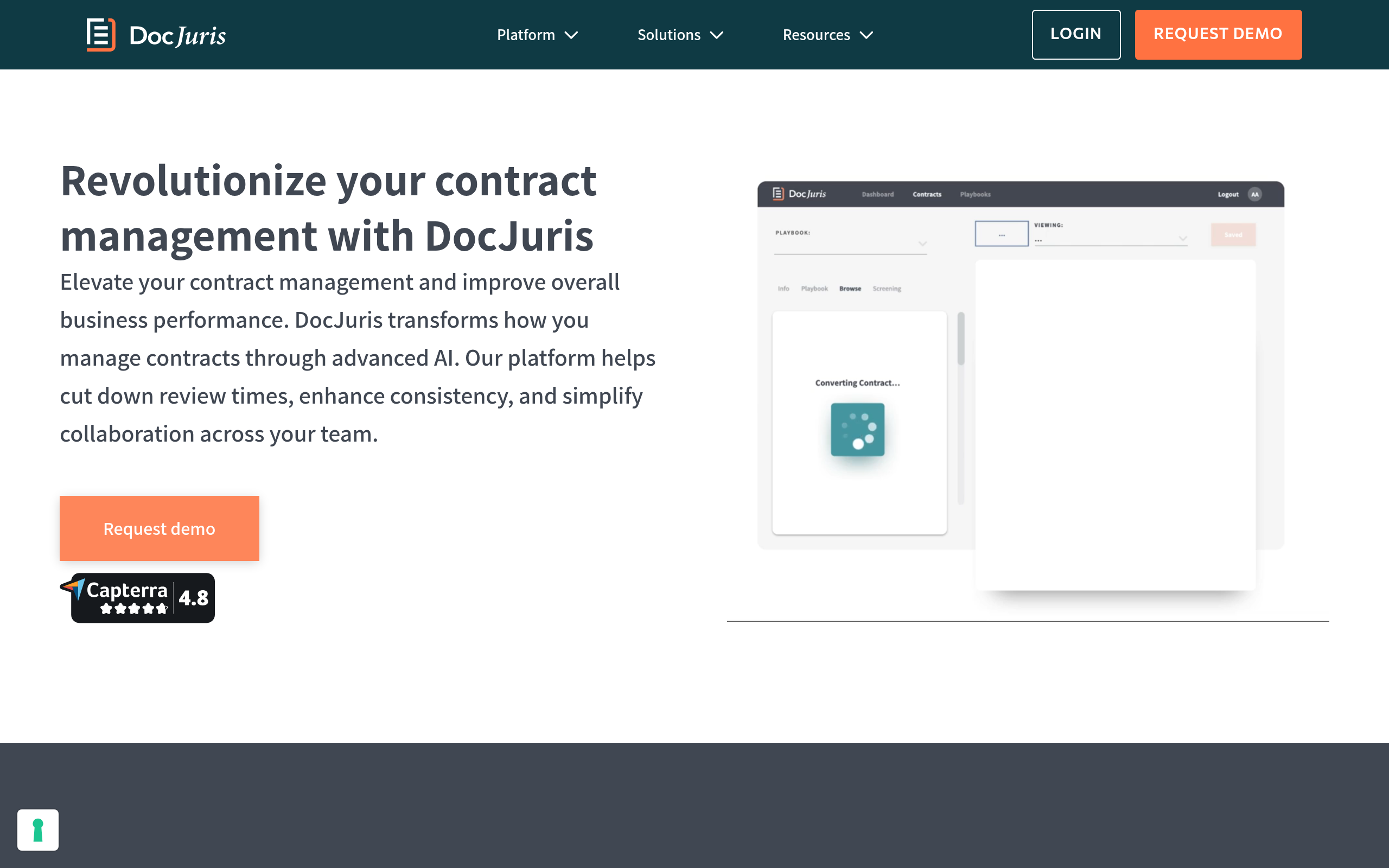
DocJuris focuses on contract negotiation rather than one-pass review. It maps your positions, tracks counterparty deviations, and maintains a negotiation history across contract versions. If your team handles many back-and-forth negotiations with external counsel, DocJuris is worth evaluating for its negotiation workflow and deviation tracking capabilities.
| Tool | Best For | Primary Deployment | Standout Feature |
|---|---|---|---|
| Spellbook | In-house teams & law firms | Word add-in | Deep redlining, broad contract type coverage |
| LegalOn | In-house teams wanting fast time-to-value | Word add-in + web | Pre-built playbook library |
| Ivo | High-volume in-house review | Word + Google Docs | Structured summaries + redlines, Google Docs support |
| DocJuris | Negotiation-heavy in-house teams | Web platform + Word | Negotiation tracking & deviation mapping |
| LEGALFLY | EU-based law firms | Web + integrations | EU-jurisdiction focus, GDPR-compliant data handling |
| Superlegal | Law firms, managed review | Web platform | Hybrid AI + lawyer review model |
| Concord | SMB contract management | Web platform + Word | Full CLM + e-signature built-in |
| Legitt AI | SMBs & growing startups | Web + integrations | Contract lifecycle management + AI review combined |
| ContractSafe | Teams needing a contract repository | Web (cloud) | Smart search & renewal deadline tracking |
| AI Lawyer | Founders, freelancers, individuals | Web (consumer-facing) | Plain-English summaries, low barrier to entry |
| Robin | Operations teams & non-lawyers | Web + Slack + Teams | Self-serve contract Q&A for the whole business |
Which Tools Work Best for Law Firms and External Counsel?
Law firms operate under different constraints from in-house teams. Client confidentiality is paramount. Billing by the hour means that efficiency directly affects revenue — but lawyers also need to own and defend their work product. The following tools are well-suited to the firm environment:
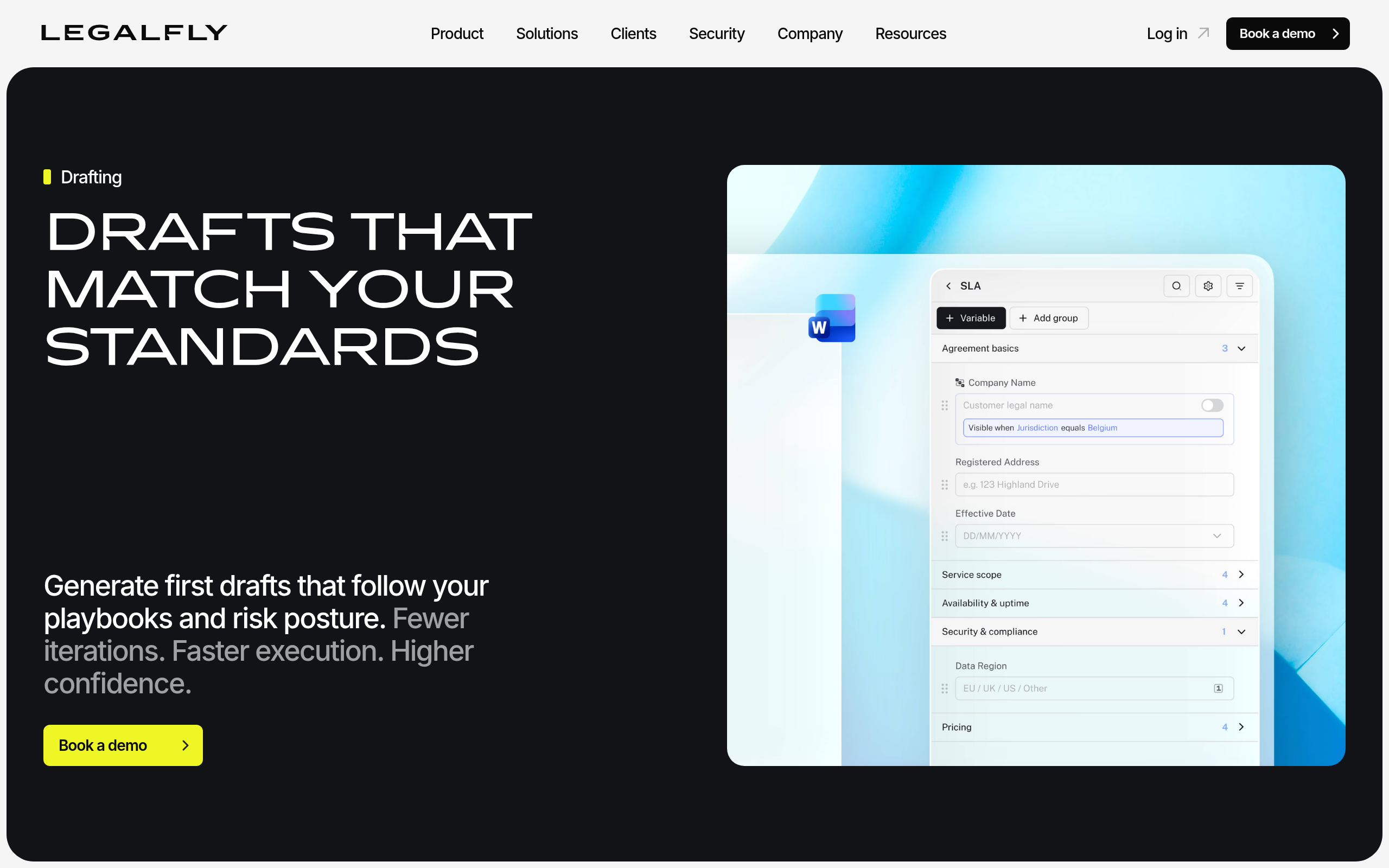
LEGALFLY is built with a strong focus on European legal professionals, with data residency options and a design philosophy aligned with GDPR and EU legal practice norms. If your firm operates in the EU or serves clients with strict data localization requirements, LEGALFLY is worth evaluating for its compliance posture alongside its core contract analysis capabilities.
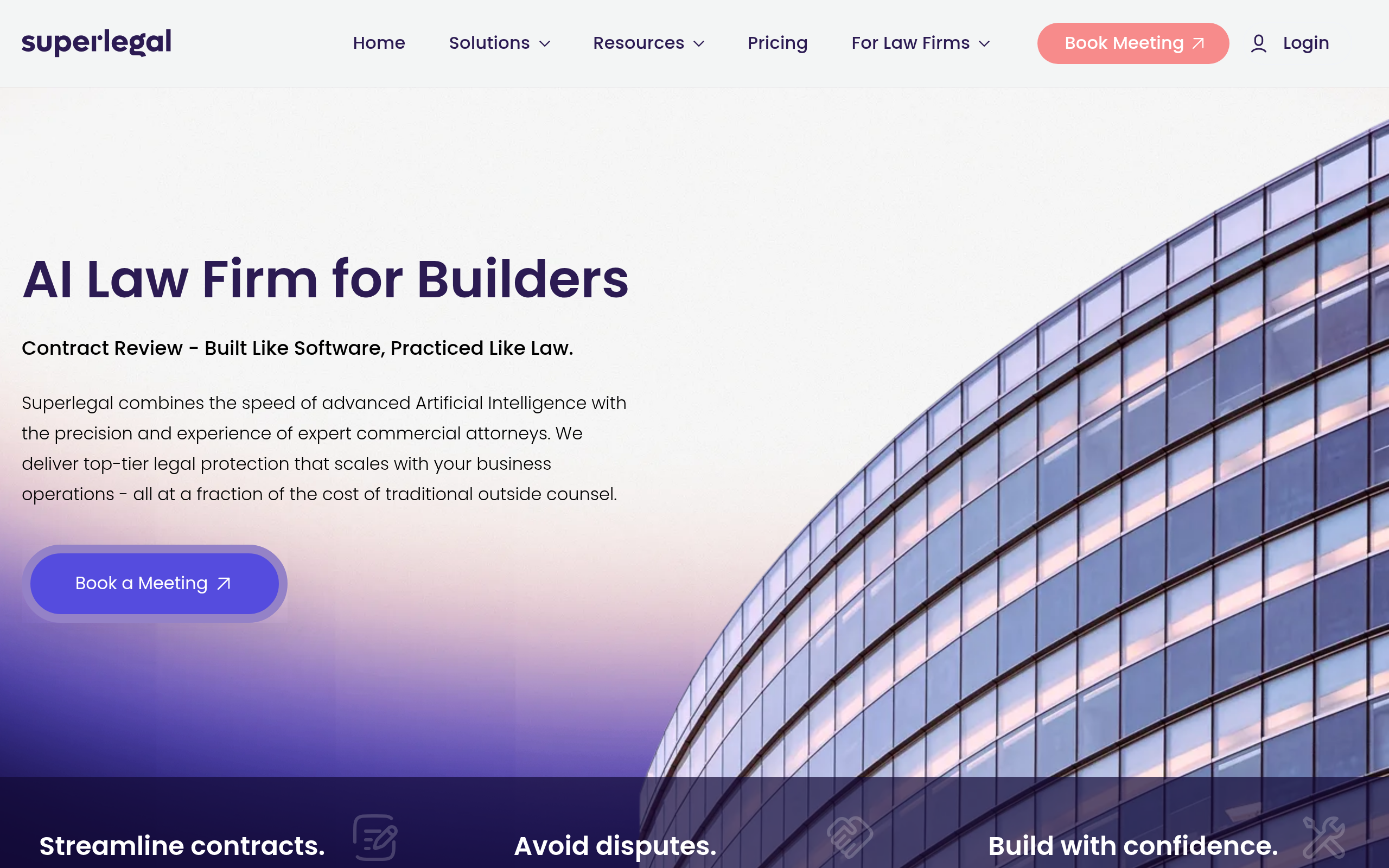
Superlegal operates a hybrid model: AI performs the initial review pass, then human lawyers review the output before delivery. This is particularly appealing for firms that want AI efficiency without fully removing attorney oversight from the work product. Clients receive a lawyer-backed output rather than a raw AI-generated review, which addresses the professional responsibility concerns that purely automated tools raise.
Spellbook is also widely used by law firm associates and partners. Because it runs inside Word and works on a per-document basis, it fits naturally into how attorneys already operate — it can be adopted by individual lawyers without requiring a firm-wide rollout or IT approval.
Robin takes a different angle, designed to let non-lawyers within a client organization self-serve answers to routine contract questions. For law firms exploring client-facing service offerings or wanting to reduce the volume of low-complexity questions reaching fee-earning attorneys, Robin represents an interesting positioning.
What Are the Best AI Contract Review Tools for SMBs and Founders?
Small businesses and founders reviewing contracts without in-house counsel need tools that require minimal configuration, provide plain-English guidance rather than assuming legal expertise, and are cost-effective at low contract volumes.
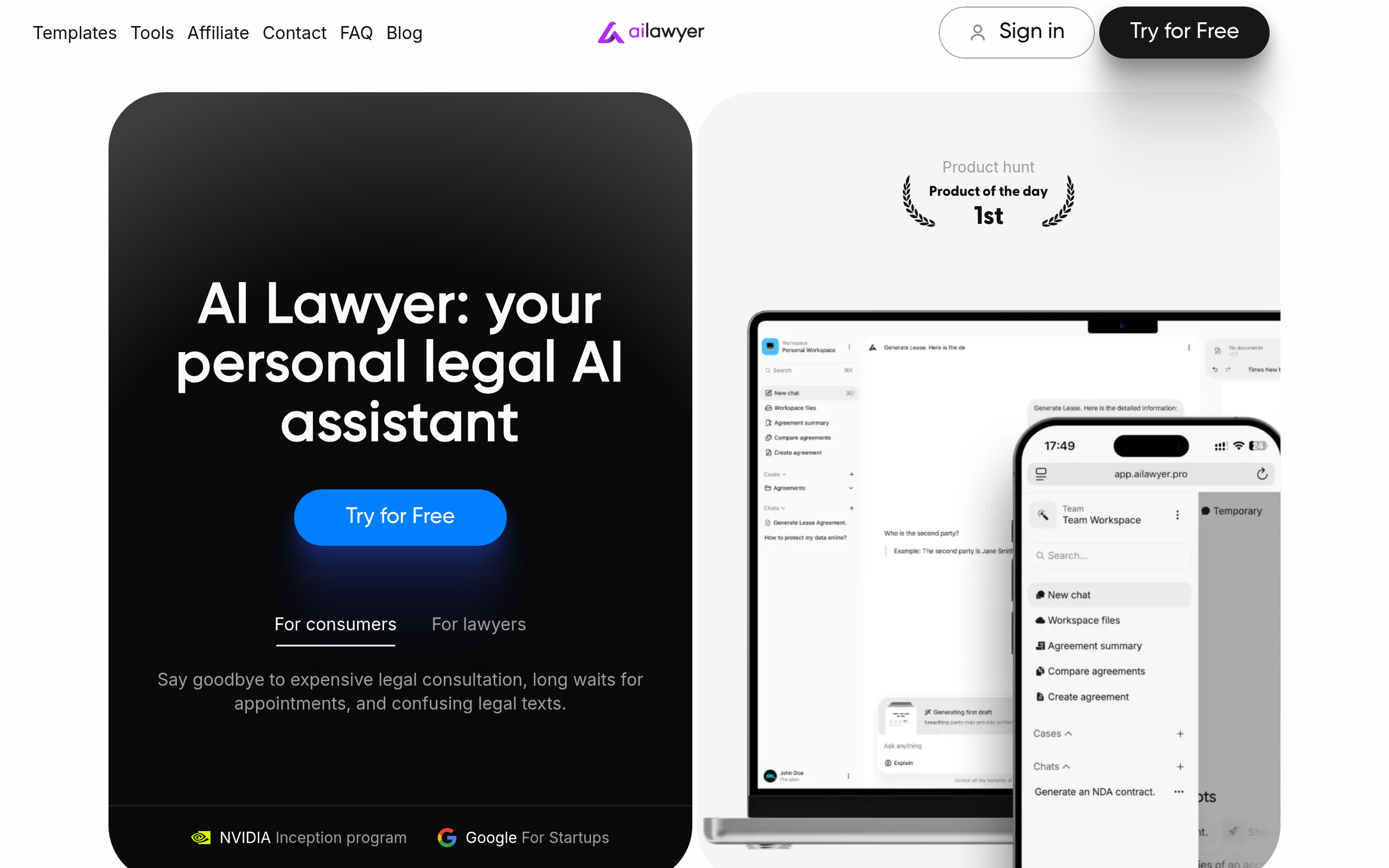
AI Lawyer is designed explicitly for this audience. Upload a contract, and it produces a plain-English summary of your obligations and risks, flags unusual or potentially unfavorable clauses, and answers questions about specific provisions in accessible language. It is not a playbook-based redlining tool — it does not replace negotiation guidance — but for founders reviewing standard vendor agreements, SaaS contracts, and NDAs, it covers the essentials effectively.
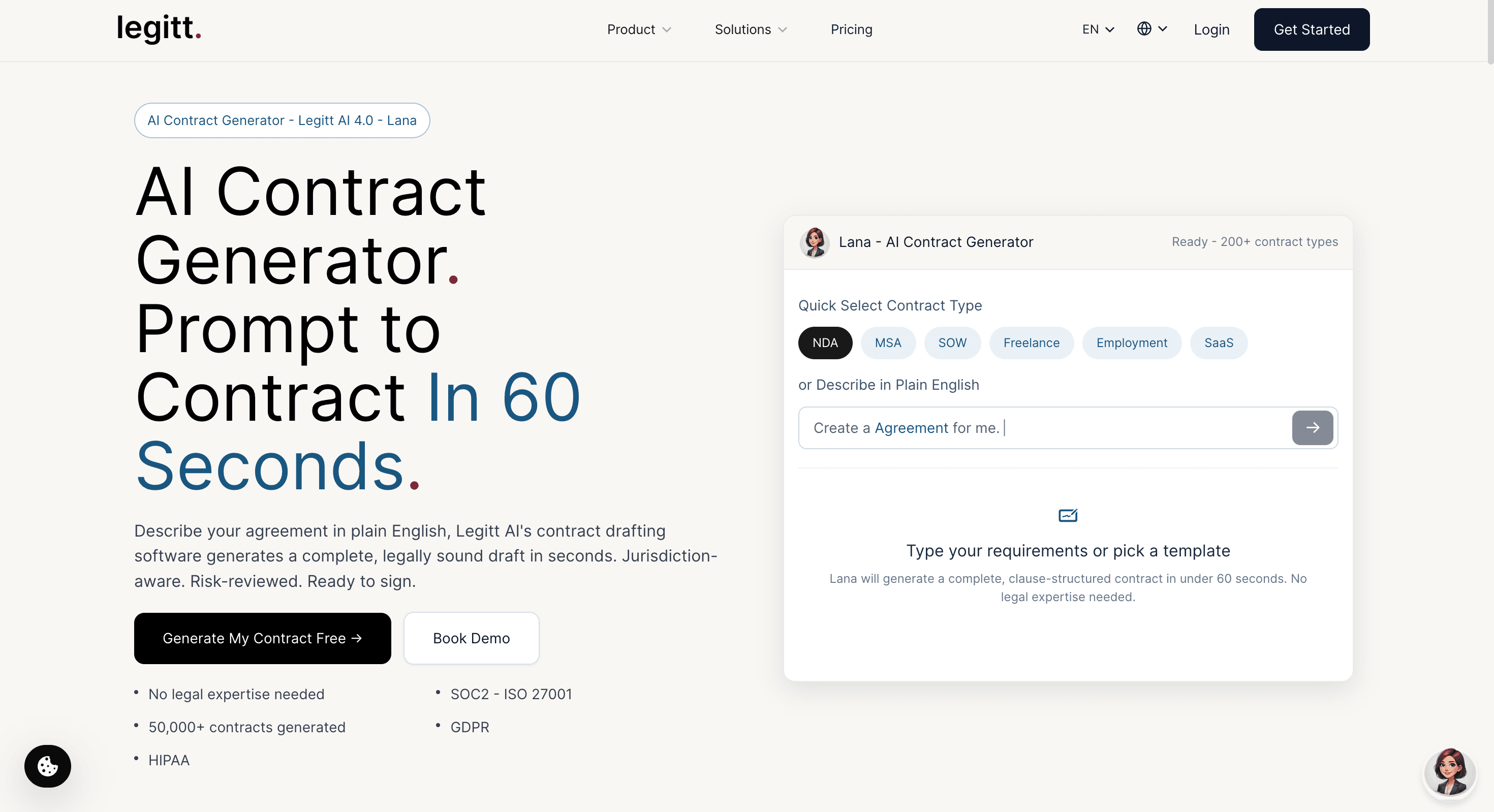
Legitt AI offers contract creation, review, and lifecycle management in a single platform. For a growing startup managing a mix of customer contracts, vendor agreements, and employment documents, the combined workflow — draft, review, e-sign, track renewals — reduces the need for multiple point solutions. It is a practical choice for teams that have grown beyond spreadsheet-based contract tracking but are not yet ready for an enterprise CLM investment.
Concord is primarily a contract lifecycle management platform with AI review capabilities built in. If you need a contract repository, e-signature, version history, and AI-assisted review in one tool, Concord is one of the most complete options available at the SMB price point. It is less specialized than Spellbook or LegalOn for deep redlining, but for operational contracts where you are primarily the drafter rather than the reviewer, it is efficient.
ContractSafe is best understood as a smart contract repository rather than an active review tool. Its AI-powered search and key date tracking make it excellent for teams inheriting a backlog of undocumented agreements or managing renewal deadlines across dozens of vendor relationships. If your primary pain point is finding what you signed and knowing when it expires, ContractSafe solves that problem cleanly.
How Do These Tools Integrate with Microsoft Word and Your Existing Workflow?
Most legal teams draft and negotiate in Microsoft Word. The practical question is whether an AI tool adds friction by requiring you to leave Word, or reduces friction by operating inside it.
| Tool | Word Add-in | Google Docs | Standalone Web App | Third-Party Integrations |
|---|---|---|---|---|
| Spellbook | Yes (primary interface) | No | Limited | No |
| LegalOn | Yes | No | Yes | Limited |
| Ivo | Yes | Yes | Yes | Yes |
| DocJuris | Yes | No | Yes | Yes |
| LEGALFLY | Yes | No | Yes | Yes |
| Superlegal | No | No | Yes (primary) | No |
| Concord | Yes | No | Yes | Salesforce, Slack, Zapier |
| Legitt AI | No | No | Yes | Yes |
| ContractSafe | No | No | Yes | Zapier, Salesforce |
| AI Lawyer | No | No | Yes (primary) | No |
| Robin | No | No | Yes | Slack, Microsoft Teams |
For teams that actively negotiate and redline contracts, a Word add-in is close to essential — context-switching between applications adds friction and creates version conflict risks. Spellbook, LegalOn, and Ivo are the strongest choices if staying in Word is a hard requirement. Ivo is unique in also supporting Google Docs, making it the best option for legal teams working in Google Workspace environments.
How Do AI Contract Playbooks Work — and Which Tools Implement Them Best?
A playbook is a structured set of your acceptable, preferred, and fallback positions for key contract provisions: indemnification limits, IP assignment language, data protection obligations, limitation of liability caps, and so on. When correctly configured, an AI playbook means the tool can assess each incoming clause against your actual positions — not generic market standards — and tell you precisely where the counterparty's draft requires negotiation.
Playbook quality and configurability vary significantly across tools:
- LegalOn ships with pre-built playbooks for common commercial contract types, allowing teams to generate value from day one without extensive configuration. This is a meaningful time-to-value advantage for legal teams that review standard contract types at volume.
- Spellbook supports custom playbook configuration with considerable flexibility, but requires your team to build and maintain the playbooks. This gives more control over positions but requires an upfront investment in configuration.
- DocJuris focuses specifically on negotiation workflows, tracking what you have accepted or rejected across past contracts. This builds a living playbook from your actual negotiation history rather than requiring manual configuration of positions.
- Ivo offers a combination of pre-built clause library content and custom playbook support, striking a practical middle ground between immediate utility and longer-term customization.
| Tool | Pre-built Playbooks | Custom Playbooks | Negotiation History | Clause Library |
|---|---|---|---|---|
| Spellbook | Partial | Yes | No | Yes |
| LegalOn | Yes — strong out-of-the-box coverage | Yes | Limited | Yes |
| Ivo | Yes | Yes | Limited | Yes |
| DocJuris | Partial | Yes | Yes (core feature) | Yes |
| LEGALFLY | Yes | Yes | No | Yes |
| Superlegal | Yes | Yes | Limited | Yes |
| Concord | Partial | Yes | No | Yes |
What Are the Risks of AI Contract Review — and How Should You Manage Them?
AI contract review tools deliver real value, but they carry risks that buyers need to understand before deploying them in production legal workflows:
- Hallucination and missed clauses: AI models can miss provisions, misread cross-referenced language, or produce summaries that are subtly inaccurate. No current tool achieves 100% accuracy across all contract types. Human review of AI-flagged issues — alongside a spot-check of sections the AI did not flag — remains necessary on any high-stakes agreement.
- Jurisdiction specificity: Most tools are primarily trained on US commercial contract language. If you regularly review contracts governed by UK, EU, or other jurisdictions, validate carefully that AI suggestions are appropriate for your governing law and local legal standards before relying on them in negotiations.
- Not legal advice: Every tool in this category includes an explicit disclaimer that their output does not constitute legal advice. This is both legally significant and practically important — the AI is a research and drafting assistant, not a substitute for attorney judgment on complex or high-value provisions.
- Data security and confidentiality: Contracts routinely contain trade secrets, deal terms, and personal data. Before uploading sensitive agreements to any cloud-based tool, review the vendor's data processing agreement, subprocessor list, and whether your documents are used for model training. Some vendors offer private deployment or data residency options for this reason.
- Playbook drift: Legal positions evolve — new case law, updated company policy, changed risk tolerance. If your AI playbook is not updated to reflect those changes, it will produce guidance based on outdated positions. Playbook maintenance needs to be someone's job.
The human-in-the-loop principle is non-negotiable for anything material. The right mental model: AI handles repetitive extraction and first-pass risk flagging; your lawyer applies judgment to flagged issues and takes responsibility for anything the AI might have missed.
Comparee's Verdict: The Right AI Contract Review Tool for Your Situation
After mapping the tools against real buyer profiles, here are our direct recommendations — not hedged, not vague:
- Best for in-house legal teams with complex contract types: Spellbook — mature feature set, deep Word integration, broad coverage of contract types, and strong redlining capabilities.
- Best for in-house teams that want fast time-to-value: LegalOn — pre-built playbooks mean you are generating value in hours, not weeks of configuration.
- Best for high-volume in-house review, especially in Google Workspace: Ivo — the only major tool with both Word and Google Docs support, designed for speed on standardized contracts.
- Best for teams with heavy negotiation workflows: DocJuris — negotiation tracking and deviation mapping are best-in-class for counterparty-heavy environments.
- Best for EU-based law firms: LEGALFLY — purpose-built with European jurisdiction and GDPR compliance in mind.
- Best for law firms wanting attorney-backed AI outputs: Superlegal — the hybrid AI plus lawyer review model gives firms a defensible work product with professional accountability.
- Best for startups and founders without in-house counsel: AI Lawyer for one-off contract checks in plain English; Legitt AI for teams that also need contract lifecycle management alongside review.
- Best for teams needing a smart contract repository: ContractSafe — strongest for organizing, searching, and tracking an existing library of signed agreements.
- Best full CLM platform for growing SMBs: Concord — covers drafting, review, e-signature, and renewal tracking in a single tool at an accessible price point.
- Best for enabling non-lawyers to self-serve contract questions: Robin — routes routine contract queries to an AI trained on your agreements, reducing the volume of low-complexity questions reaching your legal team.
The three questions that drive the decision: Do you need native Word integration for active redlining? Do you need a pre-built playbook or are you configuring your own? And is your primary need active review and negotiation support, or contract storage and lifecycle tracking? Answer those three, and the right tool from this list becomes clear.
See the complete Legal & Compliance AI tools directory for full catalog listings and additional options.
Tools mentioned in this guide
Pricing, features and model availability can change over time. Always verify current details on each tool's official website before deciding.
Frequently Asked Questions
Is AI contract review legally reliable enough to use on real contracts?
Is AI contract review legally reliable enough to use on real contracts?
Which AI contract review tool is best for startups and small businesses?
Which AI contract review tool is best for startups and small businesses?
Can AI contract review tools completely replace a contract lawyer?
Can AI contract review tools completely replace a contract lawyer?
Do AI contract review tools work directly inside Microsoft Word?
Do AI contract review tools work directly inside Microsoft Word?
What is contract redlining and can AI do it automatically?
What is contract redlining and can AI do it automatically?
What is a legal playbook in AI contract review?
What is a legal playbook in AI contract review?
Are AI contract review tools secure for confidential and sensitive documents?
Are AI contract review tools secure for confidential and sensitive documents?
Which AI tool is best for reviewing and creating non-disclosure agreements (NDAs)?
Which AI tool is best for reviewing and creating non-disclosure agreements (NDAs)?
Don't just pick a tool — get the whole workflow
Tell Comparee your goal and get a complete step-by-step AI workflow with the right tool for every step.