SpaceX Agrees to Buy AI Coding Startup Cursor for $60 Billion, Days After Its Record IPO
SpaceX agreed to buy AI coding startup Cursor (Anysphere) for ~$60B in stock, days after its record IPO and its xAI merger. What the deal means, explained.
Key takeaways
- According to CNBC, TechCrunch, and Ars Technica, SpaceX agreed on June 16, 2026 to acquire Anysphere — the company behind the AI coding tool Cursor — in an all-stock deal valued at roughly $60 billion.
- Reporting describes it as the largest acquisition of a venture-backed startup on record, and it came just days after SpaceX's record-setting IPO on June 12–13, 2026.
- The deal makes more sense in context: SpaceX had earlier merged with xAI, Elon Musk's AI company, so the buyer is a combined rockets-plus-AI group rather than a pure aerospace firm.
- It builds on an April 2026 option and compute agreement, with reporting citing a roughly $10 billion walk-away arrangement if the deal had not proceeded.
- The stated rationale is to compete with Anthropic and OpenAI in AI coding; the transaction is expected to close in Q3 2026, subject to regulatory approval.
According to reporting from CNBC, TechCrunch, Ars Technica, and others, SpaceX agreed on June 16, 2026 to acquire Anysphere — the startup behind the popular AI coding tool Cursor — in an all-stock deal valued at about $60 billion, in what coverage describes as the largest acquisition of a venture-backed startup ever recorded. The announcement landed just days after SpaceX completed a record-setting public offering, and it follows the company's earlier merger with Elon Musk's AI firm, xAI. That combination is the key to making sense of a headline that, at first glance, reads as deeply improbable: a rocket company does not obviously need a coding assistant, but a merged SpaceX–xAI group competing with Anthropic and OpenAI does. This article lays out what was announced, the structure of the deal, the context that makes it coherent, and the caveats worth keeping in mind. The figures and quotes below are as reported by the cited coverage and have not been independently verified by comparee.ai.
What was announced
Per CNBC and TechCrunch, SpaceX entered a definitive agreement to buy Anysphere, the maker of Cursor, in an all-stock transaction valued at approximately $60 billion. Cursor would become a wholly owned subsidiary of SpaceX once the deal closes, which the companies expect to happen in the third quarter of 2026, pending regulatory approval. Multiple outlets characterize the price tag as the largest ever paid to acquire a venture-backed startup — a superlative that itself signals how much the AI coding category has been re-rated over the past two years.
The "all-stock" structure matters. Rather than paying cash, SpaceX is reported to be issuing its own Class A common stock to Anysphere's shareholders, with the exchange ratio tied to SpaceX's recent trading price. According to TechCrunch's reporting, the consideration represented roughly low-single-digit dilution at SpaceX's post-IPO valuation — a manageable figure for a company whose market value had surged into the trillions of dollars in the days after going public. In other words, SpaceX is spending freshly minted, highly valued equity rather than cash on hand, which is a very different proposition from a $60 billion cash outlay.
Why a rocket company is buying a coding tool
The single fact that resolves most of the skepticism is the SpaceX–xAI merger. According to the reporting, SpaceX and xAI — Musk's AI company behind the Grok chatbot — combined earlier in 2026, so the entity acquiring Cursor is not "just a rocket company." It is a combined aerospace-and-AI group with serious compute infrastructure, including the Colossus training supercomputer associated with xAI. Viewed that way, buying the maker of one of the most widely used AI coding tools is a straightforward bet on the AI software layer, not a baffling detour for a launch provider.
The stated strategic logic, as relayed by Ars Technica, is to compete with Anthropic and OpenAI, both of which offer increasingly capable coding products. Cursor gives the merged group an established, fast-growing product with a large paying user base, while xAI brings the model-training muscle and compute. Reporting cites Cursor CEO Michael Truell framing the combination around "building the world's most useful AI models," and a Cursor revenue executive describing the tie-up as creating a "generational company." Those are, of course, the optimistic framings of the parties to the deal; they describe ambition rather than guaranteed outcomes.
What Cursor is and how it got here
Cursor is an AI-assisted code editor and coding agent: it lets developers write, edit, search, and refactor code using natural-language instructions, and it has become one of the most talked-about tools of the recent AI coding wave. According to Wikipedia's summary of the company, Anysphere was founded in 2022 by four MIT friends — Michael Truell, Sualeh Asif, Aman Sanger, and Arvid Lunnemark — and grew at an unusually steep pace.
That growth is the backdrop for the price. Per the reporting, Cursor's revenue scaled from roughly $100 million in annualized terms in early 2025 to figures cited in the billions by 2026, with coverage referencing several billion dollars in annual recurring revenue and more than a million paying users. Its private valuation reportedly climbed from around $400 million in 2024 to roughly $29 billion by late 2025, before the $60 billion acquisition price. The trajectory helps explain how a four-year-old startup commands a number that would have sounded absurd not long ago — though it also means the deal is priced for continued rapid expansion, which is never assured.
The IPO and the April option that set it up
Timing is part of the story. According to TechCrunch and Ars Technica, SpaceX went public around June 12–13, 2026 at a reported $135 per share, in what coverage calls the largest IPO on record, and the stock then traded sharply higher in the following days. That run-up gave SpaceX a richly valued currency — its own shares — to fund a massive acquisition without touching cash, which is precisely what an all-stock deal of this size requires.
The acquisition also did not come out of nowhere. Reporting points to an April 2026 option and compute agreement between the parties, structured so that SpaceX could either proceed with the full ~$60 billion purchase or trigger a walk-away arrangement reported in the neighborhood of $10 billion (described in various accounts as a termination fee plus committed compute resources). The June announcement, in this telling, was SpaceX exercising a pre-negotiated path rather than striking a deal from scratch — which is one reason it could be finalized so quickly after the IPO.
Key reported details at a glance
The table below summarizes the core numbers as reported by the cited coverage. These figures are as relayed by secondary sources and have not been independently verified here:
| Detail | As reported |
|---|---|
| Acquirer | SpaceX (combined with xAI) |
| Target | Anysphere, maker of Cursor |
| Deal value | ~$60 billion |
| Structure | All-stock (SpaceX Class A shares) |
| Announcement date | June 16, 2026 |
| Expected close | Q3 2026, pending regulatory approval |
| Prior framework | April 2026 option + compute agreement; ~$10B walk-away |
| SpaceX IPO | ~June 12–13, 2026, reported $135/share, record size |
| Cursor founded | 2022, by four MIT founders |
| Cursor prior valuation | ~$29 billion (late 2025) |
| Strategic aim | Compete with Anthropic and OpenAI in AI coding |
How this fits the wider AI race
Strip away the surprising buyer, and the deal fits a clear pattern: the most valuable layer of the AI stack is increasingly the developer-facing application that sits on top of frontier models. Anthropic and OpenAI have both pushed hard into coding, where usage is sticky, willingness to pay is high, and the work is concrete enough to show clear productivity gains. Owning Cursor gives the SpaceX–xAI group a flagship product in exactly that category, paired with its own models and compute — a vertically integrated position that mirrors what its rivals are assembling.
It also reflects a broader 2026 dynamic in which AI valuations have detached from traditional software multiples. A $60 billion price for a company founded in 2022 implies enormous confidence in future growth and durability of Cursor's lead, in a market where competition is fierce and switching costs for individual developers are not always high. Whether that confidence proves justified depends on whether the combined group can keep Cursor ahead of fast-moving alternatives while integrating it into a much larger, more complex organization — integration that history suggests is often harder than the deal logic implies.
What to watch and what stays uncertain
A few things remain genuinely open. The deal is not closed: it is expected to complete in Q3 2026 and is subject to regulatory approval, which for a transaction this large is not a formality. Antitrust and national-security reviews can reshape or delay big tech acquisitions, and a deal that bundles aerospace, frontier AI, and a leading developer tool under one roof may draw scrutiny. Until close, the announced terms are an agreement, not a finished transaction.
There is also execution risk. Acquiring a startup is one thing; retaining its talent, preserving the product's momentum, and merging it into a far larger entity are another. Cursor's value rests heavily on its team and its pace of iteration, both of which can be disrupted by a change of ownership. And the financials cited across coverage — revenue run-rates, user counts, valuations — come from secondary reporting and company-friendly framing, so they should be treated as reported figures rather than audited facts. The core of the story is well corroborated across major outlets; the surrounding numbers and the eventual outcome deserve the usual caution.
Disclaimer: based on reporting by CNBC, TechCrunch, Ars Technica, Quartz, and others, linked below. Figures, quotes, and deal terms are as reported and have not been independently verified by comparee.ai. The transaction had not closed as of the cited reporting.
Tools mentioned in this guide
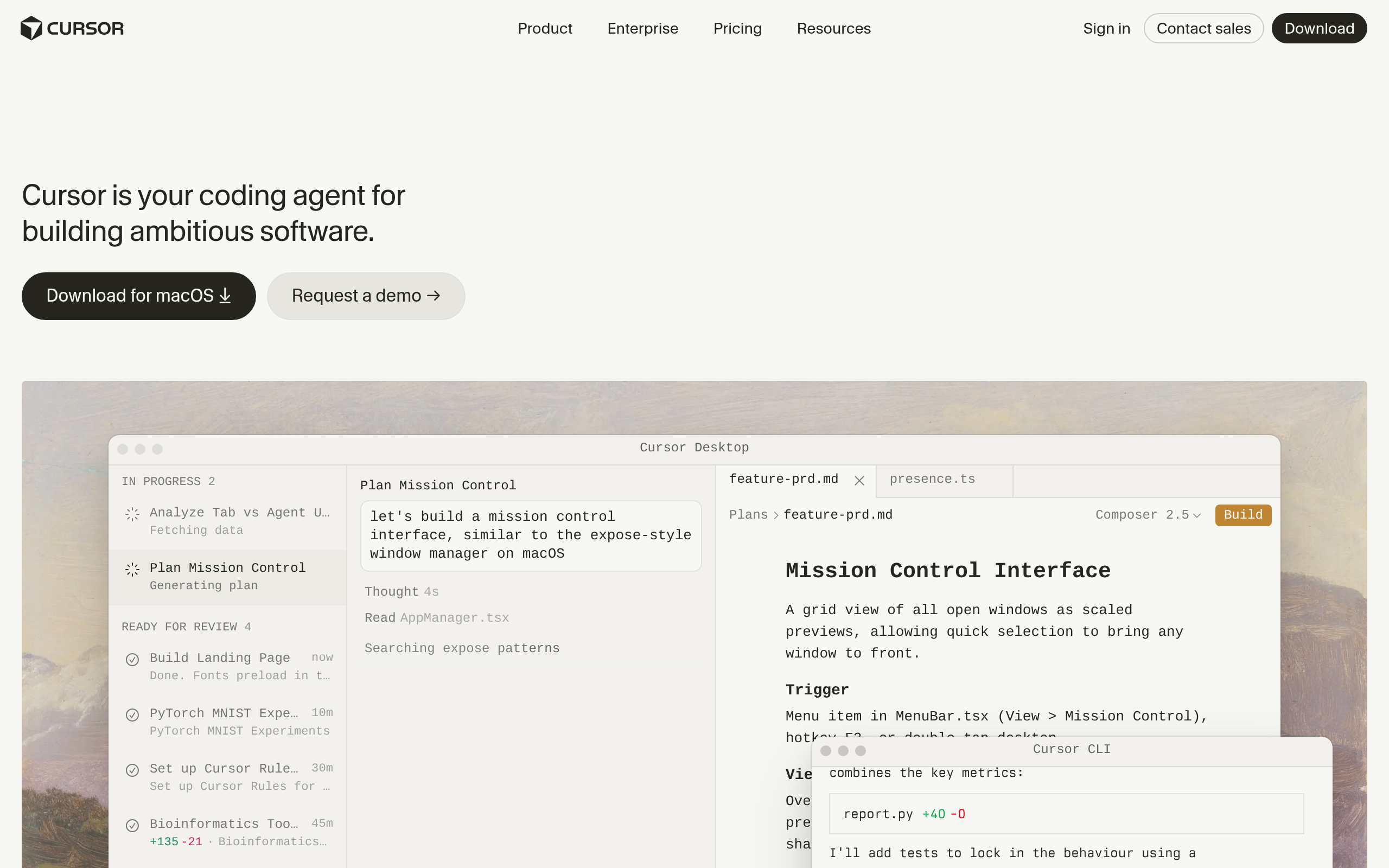
Pricing, features and model availability can change over time. Always verify current details on each tool's official website before deciding.
Frequently Asked Questions
Is it true that SpaceX is buying Cursor for $60 billion?
Is it true that SpaceX is buying Cursor for $60 billion?
Why would a rocket company buy a coding tool?
Why would a rocket company buy a coding tool?
Is the deal cash or stock?
Is the deal cash or stock?
What is Cursor and who founded it?
What is Cursor and who founded it?
When will the acquisition close?
When will the acquisition close?
How does this connect to SpaceX's IPO?
How does this connect to SpaceX's IPO?
Are these numbers confirmed?
Are these numbers confirmed?
Sources
- Ars Technica — SpaceX will acquire coding tool Cursor to compete with Anthropic, OpenAI
- CNBC — SpaceX to acquire the AI coding startup Cursor for $60 billion
- TechCrunch — SpaceX to acquire Cursor for $60B in stock, days after blockbuster IPO
- Quartz — SpaceX agrees to buy Cursor parent Anysphere for $60 billion
- Wikipedia — Cursor (company)
Don't just pick a tool — get the whole workflow
Tell Comparee your goal and get a complete step-by-step AI workflow with the right tool for every step.